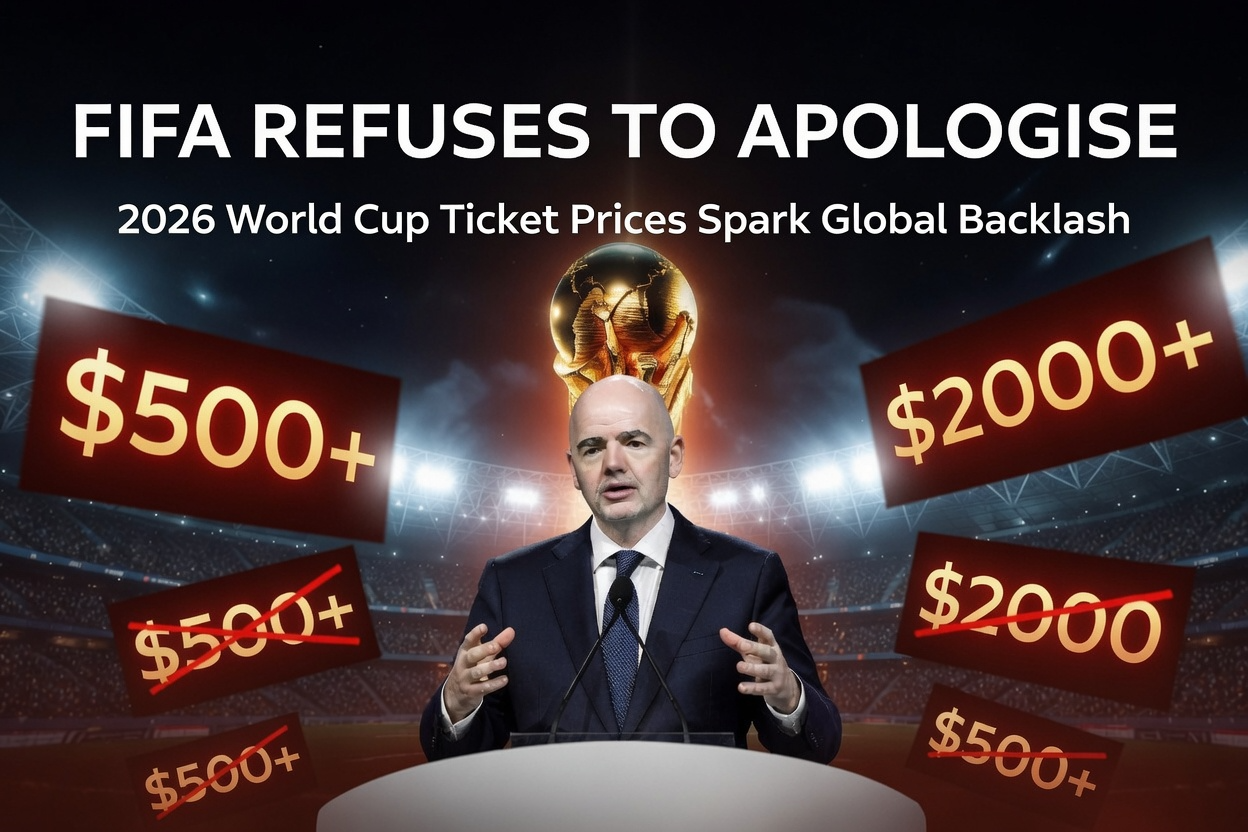
NEW YORK June 10, 2026 — FIFA President Gianni Infantino has pushed back firmly against criticism of soaring ticket prices for the 2026 World Cup, insisting that every dollar generated supports the global development of football and rejecting calls for an apology to fans who feel priced out.
In a press conference ahead of the tournament’s kickoff, Infantino responded to questions from Sky News correspondent Rob Harris, who highlighted concerns from fans, UK Prime Minister Keir Starmer, and even Donald Trump, who said he “wouldn’t pay” high prices for tickets.
“We have starting prices at $60,” Infantino said, pointing to affordability initiatives including 130,000 tickets sold at that level and others at $50 in New York. He emphasised massive demand, with over 150 million ticket requests for around 7 million seats in the expanded 48-team tournament hosted across the United States, Canada, and Mexico.
Infantino argued that setting prices too low in the U.S. market—where resale is legal—would simply hand profits to secondary sellers and scalpers rather than FIFA. “Every dollar that comes in goes back into the development of football,” he stated, noting that the World Cup is FIFA’s primary revenue source every four years, funding growth in 150 countries and keeping matches on free-to-air television.
Fan groups and supporters have decried the pricing as exclusionary. Group-stage tickets often exceed $500, while final tickets have face values reaching thousands, with resale listings climbing into the tens of thousands—or even millions in extreme cases. Critics, including Football Supporters Europe, have labelled the structure a “monumental betrayal.”
Infantino compared prices to U.S. sports events, arguing they align with market rates for premium entertainment. However, many international fans, particularly from lower-income countries, report feeling shut out despite the “low” entry-level options.
The controversy has drawn legal scrutiny, with ongoing probes by attorneys general in New York and New Jersey into alleged price inflation and sales practices.
As the World Cup gets underway, Infantino also addressed other challenges, including visa issues affecting some officials and teams. He maintained that revenues are essential for the sport’s future, allowing FIFA to invest beyond the event itself rather than maximising short-term gains through pay-per-view models.
Whether the defence satisfies frustrated fans remains to be seen, as many opt for public viewing or skip the tournament altogether in favour of more accessible local football. The tournament continues amid record interest—and record prices.
About The Author