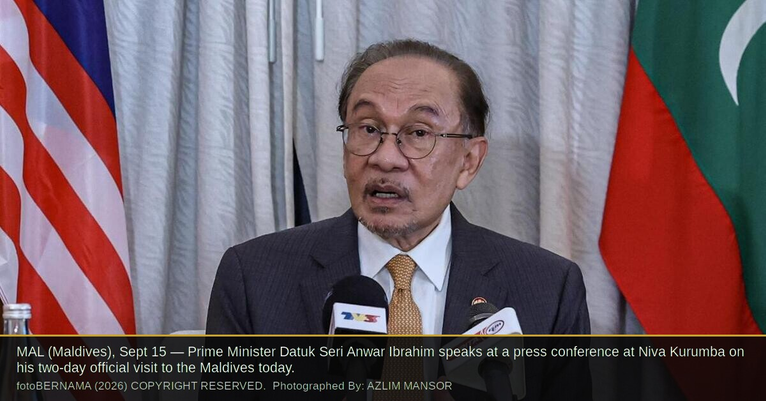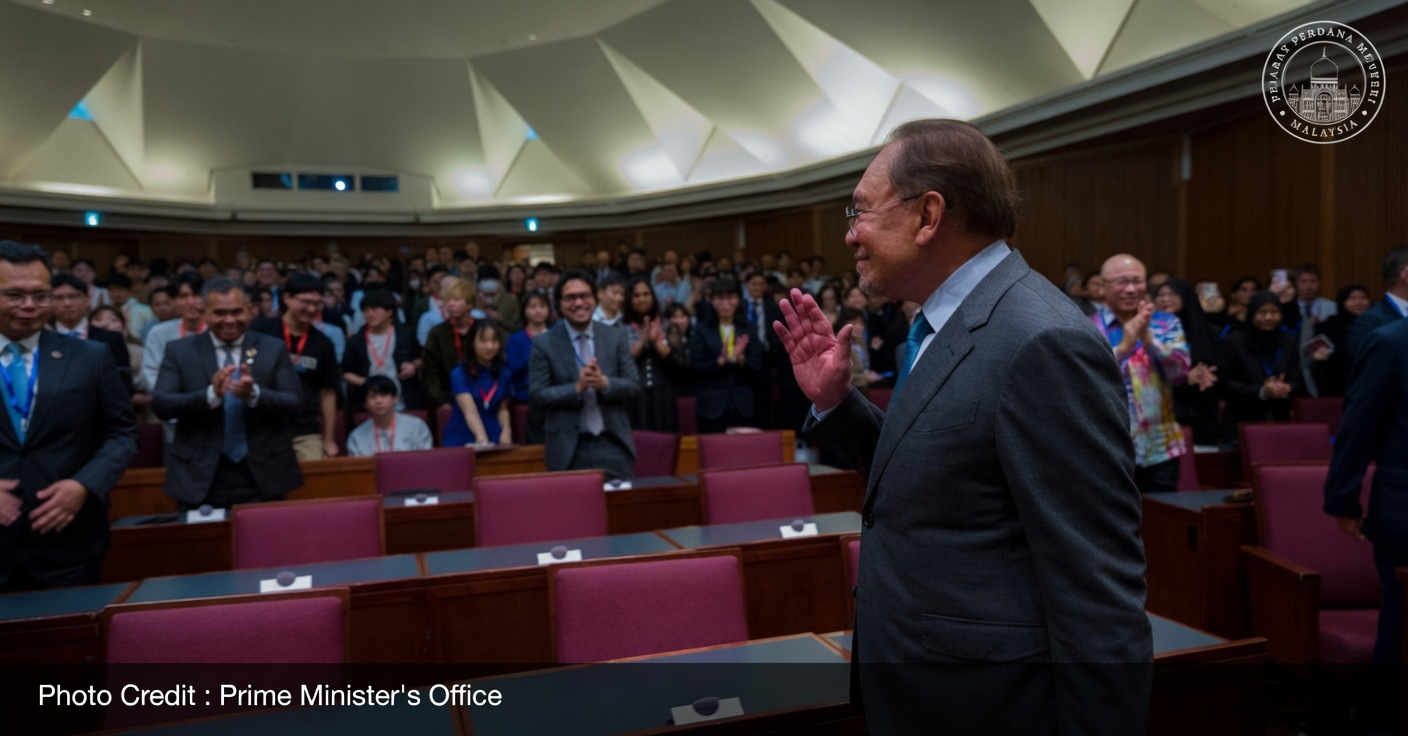
TOKYO June 9, 2026 — Malaysian Prime Minister Dato’ Seri Anwar Ibrahim delivered a thought-provoking special lecture titled “Humanity in a Human-Machine Civilisation” at the University of Tokyo today, urging global leaders to ensure artificial intelligence (AI) advances serve humanity rather than erode its core values.
In his address at the Research Centre for Advanced Science and Technology (RCAST), Anwar reflected on the profound ethical challenges posed by rapid AI development. “What becomes of humanity when the technologies we create grow increasingly capable of imitating the way we think, communicate and exercise judgement?” he asked.
He acknowledged AI’s remarkable potential to drive progress but stressed a deeper question: “The greater challenge before us is not technological, but human.” Anwar warned that while the world celebrates technological breakthroughs, conflicts and suffering persist — citing the situation in Gaza, Lebanon, Iran, and the global energy crisis linked to the Strait of Hormuz — sometimes amplified by these very technologies.
Drawing on Japanese philosopher Watsuji Tetsurō’s concept of ningen (人間), which emphasises humans as relational beings shaped by family, community, history, and shared experiences, Anwar highlighted what machines cannot replicate: genuine loss, love, remorse, or moral weight in decision-making. “Technology may be capable of producing comforting words or persuasive answers, but it cannot truly know grief,” he noted.
Anwar reiterated Malaysia’s goal to become an AI Nation by 2030, framing it within the Madani framework that prioritises human-centred development. He called on Asia not to be merely a market, manufacturing base, or data source for AI, but to actively shape “a digital civilisation worthy of humankind” grounded in justice, shared prosperity, and ethical values.
He emphasised the need for stronger national capabilities in talent development, infrastructure, and data governance. “The better ambition is the capability to decide where AI should be used, where it should be limited, and where human judgement must remain paramount,” Anwar said.
The Prime Minister also addressed concerns over power concentration in AI, noting that a small group of countries and corporations control critical infrastructure, models, platforms, and standards. This, he argued, raises issues of sovereignty, fairness, and accountability.
Responding to a Malaysian student, Anwar highlighted the role of over 2,000 government-sponsored Malaysian students in Japan. He encouraged them to blend technical excellence with societal understanding to advance Malaysia’s AI agenda, joking that “AI” could also stand for “Anwar Ibrahim,” which drew laughter from the packed 500-seat hall.
The lecture followed a courtesy call with University of Tokyo President Prof Dr Teruo Fujii and forms part of Anwar’s three-day official visit to Japan.
Anwar’s speech underscores a growing global debate: as AI reshapes economies, work, knowledge, and power, technological progress must be anchored in ethics, conscience, and human dignity to truly uplift society.
The full text of the lecture is available on the Prime Minister’s Office website.
About The Author