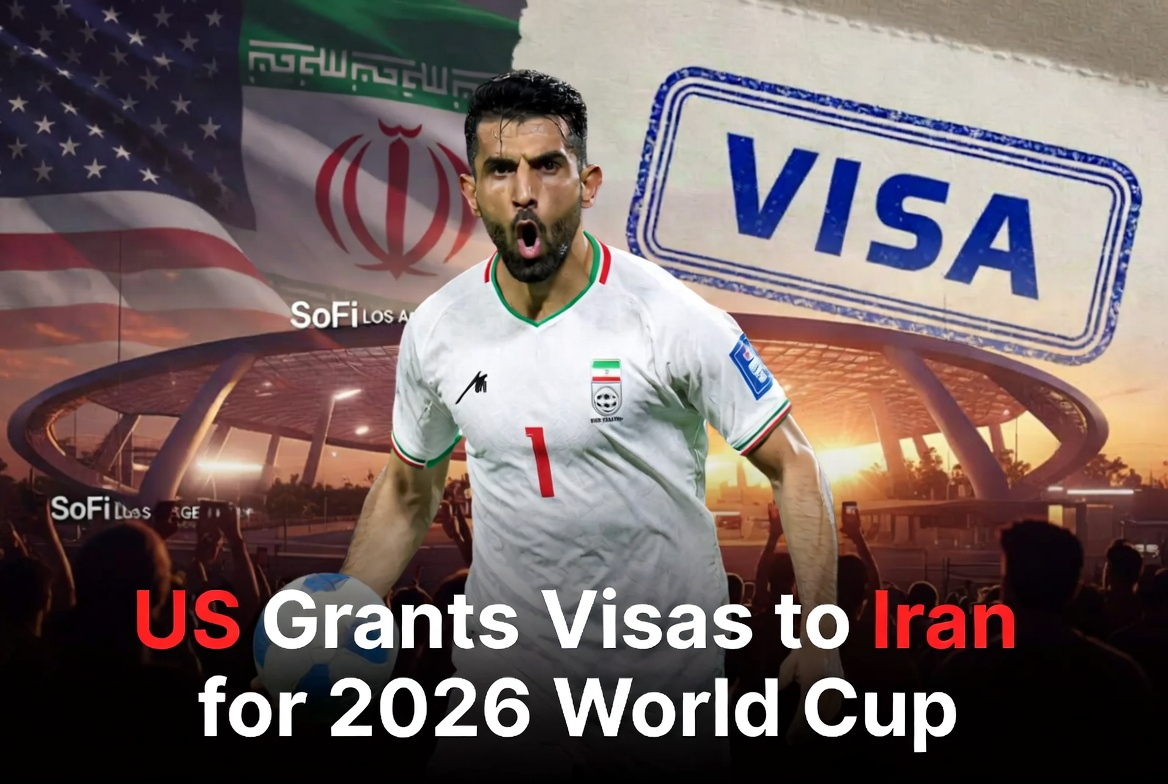
WASHINGTON D.C June 5, 2026 — Iran’s national football team has received US visas, clearing the final hurdle for their participation in the 2026 FIFA World Cup just days before the tournament kicks off, officials confirmed on Friday.
A White House official told Reuters that the visas were approved overnight, resolving weeks of uncertainty amid heightened US-Iran tensions. Iran’s Ambassador to Mexico, Abolfazl Pasandideh, had previously indicated that the squad had not yet received approval as of late Thursday.
The decision allows Team Melli to travel for their Group G matches scheduled in the United States:
- June 15: vs. New Zealand at SoFi Stadium in Los Angeles (Inglewood)
- Later match: vs. Belgium (location in Inglewood area)
- June 26: vs. Egypt at Lumen Field in Seattle
Due to ongoing diplomatic and security concerns, the Iranian team has established its primary training base in Tijuana, Mexico. Players are expected to make day trips into the US for matches and return to Mexico afterward, with multiple-entry visas facilitating this arrangement. Some support staff visas remain under processing.
The visa issue had raised fears that Iran could be forced to forfeit matches or face logistical nightmares in the expanded 48-team tournament co-hosted by the US, Canada, and Mexico. Iran qualified in March 2026, but US travel restrictions — including elements of broader policies targeting certain nationalities and heightened scrutiny due to regional conflicts — complicated entry.
FIFA and Iranian officials had pressed for guarantees, with the federation relocating preparations to Mexico to minimize risks. US Ambassador to Türkiye Tom Barrack highlighted the embassy team’s efforts in processing the visas, stating that sports can transcend borders.
The announcement has drawn mixed responses online and from the public. Many football fans welcomed the move as a victory for the sport over politics, with comments emphasizing that “the World Cup is bigger than politics” and calling for fair play.
However, some Iranian opposition voices abroad have criticized the team as unrepresentative of the Iranian people, vowing to support the traditional Lion and Sun flag instead of the current national emblem at stadiums. Security concerns and potential protests have also been raised.
This development comes against the backdrop of broader US-Iran hostilities, including recent conflicts, yet allows the tournament to proceed with all qualified teams. The 2026 World Cup opens soon, promising high drama both on and off the pitch.
About The Author