By Ng Kwan Hoong
Some years ago, I visited a museum in France and stood before a familiar sculpture, The Thinker by Auguste Rodin. The bronze figure leaned forward, his chin resting upon his hand, his body still yet full of quiet tension. There was no movement, no action, and no visible outcome, yet the figure conveyed a depth of engagement that was unmistakable.
What struck me at that moment was how unusual such an image has become. In a world that increasingly values speed, efficiency and visible productivity, the act of pausing to think, without doing anything else, feels almost out of place. As I stood there observing that silent figure, I found myself wondering not so much what he was thinking about, but what it means, today, to think at all.
In recent years, artificial intelligence has become deeply embedded in our daily lives. It assists us in writing, summarising, analysing and deciding, often completing tasks within seconds that once required a great deal of time and effort. The convenience is undeniable, and in many situations the benefits are significant. Yet beneath this convenience lies a quieter shift in how we approach the process of thinking itself.
More often, we find ourselves turning to these tools before we have fully engaged with the task at hand. A question arises, and instead of sitting with it, we look for an immediate answer. A piece of writing is required, and instead of shaping our own ideas, we begin with what has already been generated. In this way, the process of thinking, which once unfolded gradually, is increasingly compressed into something faster and more efficient.
It is not that thinking has disappeared, but that it may be changing in ways we do not always notice.
The philosopher and mathematician René Descartes once wrote, “I think, therefore I am.” While this statement is often understood as a reflection on existence, it also points to something more fundamental about what it means to be human. Thinking is not merely a function we perform, but part of how we understand ourselves, how we make sense of the world, and how we take responsibility for the choices we make.
To think is to question, to weigh the possibilities, to hesitate, and sometimes to remain uncertain. It involves not only arriving at answers, but also recognising the limits of what we know. When this process is shortened or bypassed, something subtle may be diminished, even if it is not immediately apparent.
Artificial intelligence is highly capable of processing information and identifying patterns, producing responses that are coherent, structured and persuasive. In many situations, it performs these tasks much more efficiently than a human. However, there remains a difference between producing an answer and understanding it, and this difference becomes more significant as we rely increasingly on such systems.
Understanding often requires time. It develops through reflection, through revisiting an idea from different angles, and through the experience of engaging with questions that do not yield immediate clarity. It is shaped not only by information, but also by judgement, context and a sense of responsibility. These are qualities that do not emerge instantly, but take form gradually through experience.
In our growing reliance on intelligent systems, the more subtle concern is not that machines are thinking for us, but that we may become less attentive to our own thinking. When answers are readily available, the effort to question them may feel unnecessary. When conclusions are presented clearly, the need to examine them more closely may seem less urgent. Over time, this may lead to a quiet shift in how we relate to knowledge itself.
We may begin to accept what is presented without asking how it was formed, or rely on conclusions without fully engaging with the reasoning behind them. The habit of reflection, which once required time and patience, becomes less familiar. This is not a sudden change, but one that develops gradually, often without drawing attention to itself.
Human beings have always used tools to extend their capabilities, and there is nothing inherently wrong with this. What matters is whether, in the process, we remain actively engaged in the very capacities that define us. Thinking is not only about solving problems or completing tasks, but also about discernment, about recognising what matters, and about understanding the implications of our decisions.
These dimensions of thinking are closely tied to conscience, to responsibility, and to the search for meaning in our lives. They cannot be transferred or delegated in the same way that information can be processed or tasks can be completed.
As I stood before The Thinker, I was reminded that the act of thinking does not always produce something immediately visible, nor does it generate output in the way machines do. Yet it is in these quiet moments of reflection that much of our understanding takes shape, often slowly and without immediate reward.
Perhaps the challenge before us is not to resist the use of intelligent tools, but to remain aware of how we use them, ensuring that in gaining speed we do not lose depth, and that in seeking efficiency we do not overlook the importance of reflection.
In that sense, the question is not simply whether artificial intelligence can think, but whether we will continue to do so ourselves. And what it means to remain fully engaged in the act of thinking in a world where it can so easily be done for us.
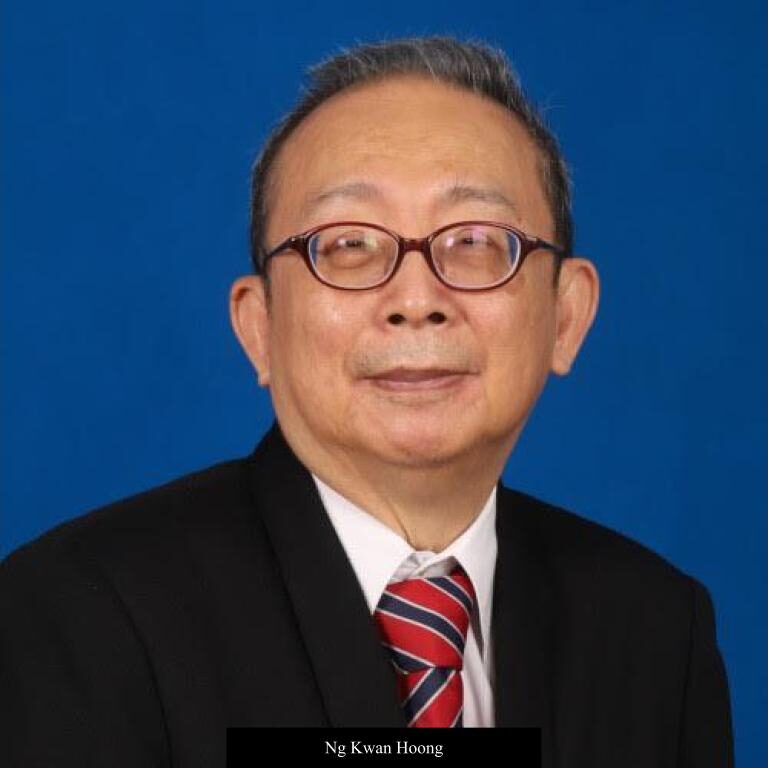
The author is an Emeritus Professor of Biomedical Imaging at the Faculty of Medicine, Universiti Malaya.
About The Author