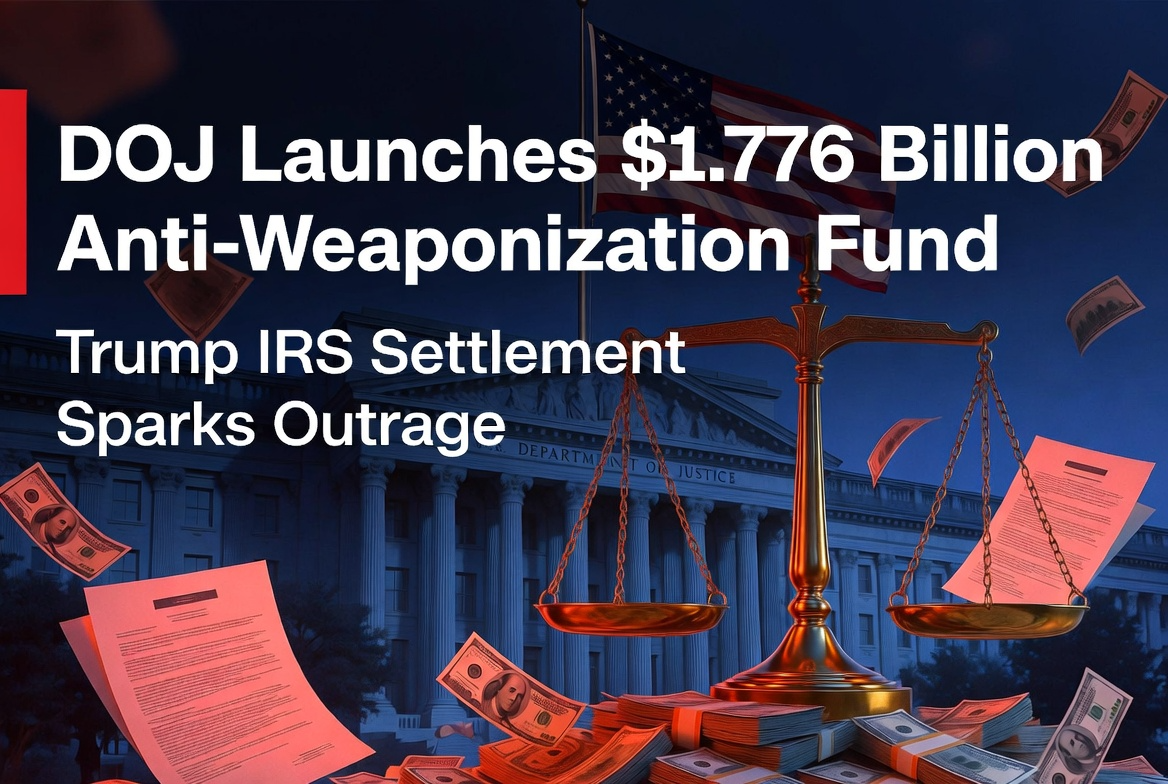
WASHINGTON, D.C. May 20, 2026 — The U.S. Department of Justice announced Monday the creation of a $1.776 billion “Anti-Weaponization Fund” to compensate individuals who claim they were victims of government “lawfare” and politicized investigations during the prior administration. The fund is part of a settlement resolving President Donald Trump’s $10 billion lawsuit against the IRS over the unauthorized leak of his tax returns.
According to the DOJ, the fund draws from the Judgment Fund — a longstanding congressional appropriation used for settling claims against the government — and will provide monetary relief and formal apologies to eligible claimants. Trump and his co-plaintiffs (Donald Trump Jr., Eric Trump, and the Trump Organization) agreed to drop their lawsuit with prejudice, withdraw related administrative claims (including those tied to the Mar-a-Lago search and the Russia investigation), and receive only a formal apology with no direct monetary payout.
Acting Attorney General Todd Blanche described the initiative as a “lawful process for victims of lawfare and weaponization to be heard and seek redress,” emphasizing that there is “no partisan requirement” for claims and that unspent funds will revert to the federal government.
Democratic Criticism and Cory Booker’s Response
The announcement drew swift condemnation from Democrats, who labeled it a “slush fund” for Trump allies, including potentially January 6 defendants. Sen. Cory Booker (D-NJ) posted on X, calling it “one of the most brazen and corrupt acts in modern presidential history.”
“Donald Trump is committing one of the most brazen and corrupt acts in modern presidential history. He and his inner circle are shamelessly enriching themselves with taxpayer dollars, while working families are being crushed by skyrocketing prices.”
Booker urged accountability for enablers in Congress and vowed Democrats “will not be silent.”
Rep. Jamie Raskin (D-MD) echoed the criticism, describing the fund as a “racket” to funnel taxpayer money to “insurrectionists, rioters, and white supremacists,” including some involved in the January 6 Capitol attack.
Two Capitol Police officers filed a lawsuit against the fund, arguing it could compensate those who assaulted law enforcement.
Republican and Administration Defense
Supporters frame the fund as long-overdue restitution for what they describe as years of politically motivated prosecutions and investigations under the Biden DOJ. They point to cases involving Trump associates, parents protesting at school boards, and non-violent January 6 participants as examples of alleged overreach.
The settlement also includes protections barring the IRS from pursuing certain past claims against Trump and his businesses.
Broader Context and Reactions
- Oversight Concerns: Democrats have called for greater congressional scrutiny, with some introducing measures to block payouts to January 6 defendants.
- Legal Basis: The DOJ maintains the action complies with existing authorities for settlements. Critics question the scale and lack of traditional judicial oversight.
- Public and Political Fallout: The story has fueled intense debate on social media and Capitol Hill, with Republicans accusing Democrats of hypocrisy over past government actions and Democrats warning of unchecked executive power.
The fund is set to operate until December 15, 2028, with quarterly reports to the Attorney General detailing disbursements. Its creation comes amid ongoing national discussions about government accountability, prosecutorial discretion, and the use of taxpayer funds.
This developing story is being closely watched by legal experts, lawmakers from both parties, and advocacy groups on all sides.
About The Author