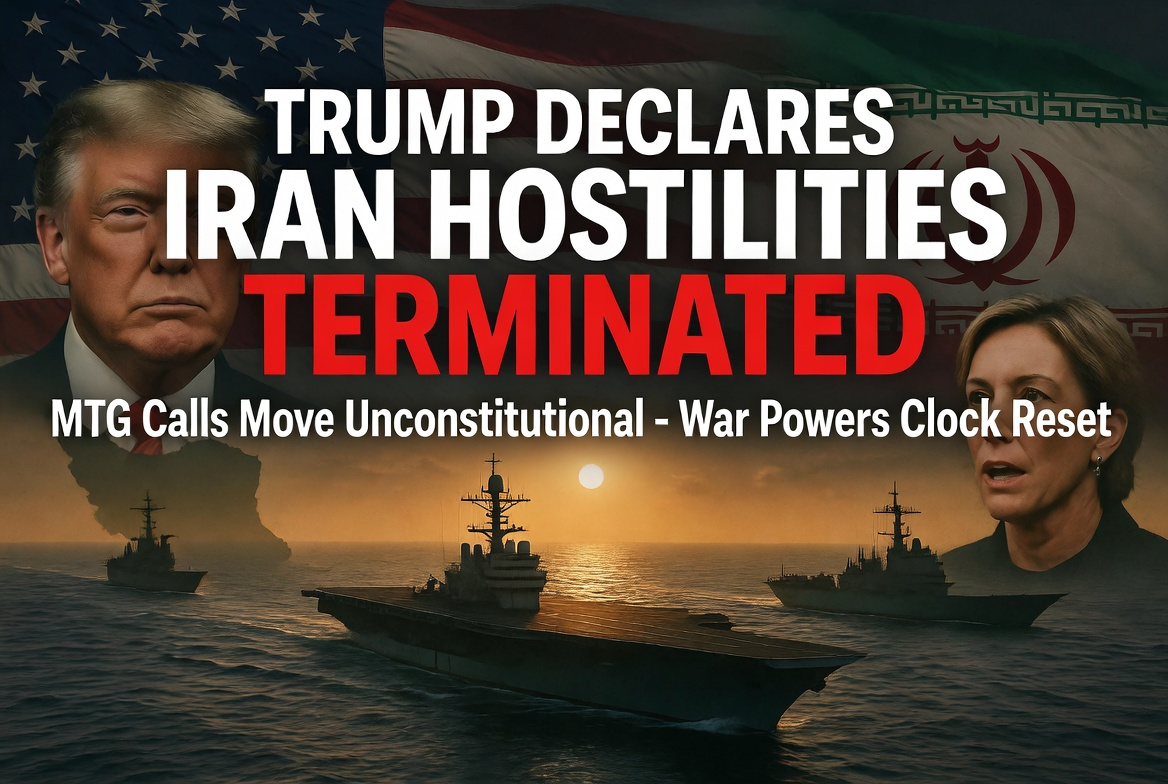
WASHINGTON D.C May 1, 2026 – President Donald Trump notified Congress on Friday that U.S. military hostilities with Iran have “terminated,” citing the expiration of the 60-day period under the War Powers Resolution and effectively restarting the authorization clock without requiring an immediate congressional vote.
In letters sent to House Speaker Mike Johnson (R-La.) and Senate President pro tempore Chuck Grassley (R-Iowa), the White House stated that there has been “no exchange of fire between the United States Forces and Iran since April 7, 2026,” and that “the hostilities that began on February 28, 2026, have terminated.”
The declaration follows a fragile ceasefire Trump initiated in early April. By formally ending the initial phase of operations, the administration avoids triggering the War Powers Resolution’s requirement for congressional approval to continue or expand military involvement. U.S. naval forces continue to enforce a blockade in the region, and peace negotiations remain stalled amid ongoing tensions in the Strait of Hormuz.
Former Rep. Marjorie Taylor Greene (R-Ga.) sharply criticized the move in a post on X, arguing it is a procedural maneuver rather than a genuine end to the conflict.
“Trump just sent a letter to Congress saying the war in Iran is ‘terminated’ because today marks 60 days… But the war is not really terminated,” Greene wrote. “Trump is just restarting the clock to avoid a vote from Congress that may limit his power to wage a war on Iran, and the war is absolutely not over just because there has been a ceasefire. Also, Trump is about to start military actions again very soon. It never ended. This is unconstitutional and Congress should reclaim its constitutional authority.”
Greene’s comments reflect broader debate over the 1973 War Powers Resolution, which limits presidents to 60 days of unauthorized military action (plus a 30-day withdrawal period) unless Congress approves an extension. Successive administrations from both parties have often interpreted ceasefires and lulls in fighting as opportunities to reset that timeline.
The White House has signaled that it remains prepared to resume strikes if Iran violates the ceasefire or if U.S. interests are threatened, though no immediate escalation has been announced.
This development comes as lawmakers in both parties continue to grapple with their constitutional role in authorizing sustained overseas operations. No vote on an Authorization for Use of Military Force (AUMF) has been scheduled.
Life News Agency will continue to monitor developments in U.S.-Iran relations and any congressional response.
About The Author