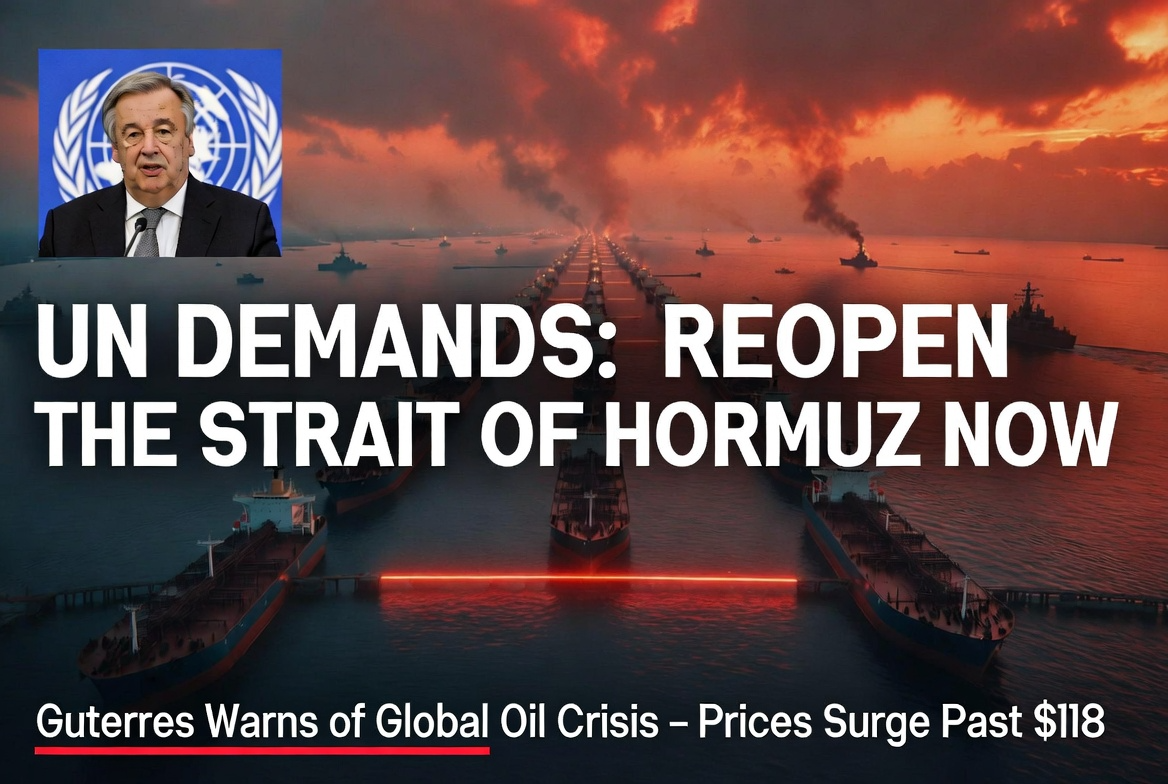
NEW YORK April 30, 2026 – United Nations Secretary-General António Guterres issued an urgent appeal today for the immediate reopening of the Strait of Hormuz, warning that the prolonged closure is inflicting severe economic and humanitarian damage on the world amid the ongoing US-Israel-Iran conflict.
In a statement posted on X (formerly Twitter) and delivered during a Security Council media stakeout, Guterres declared: “The longer the Strait of Hormuz is choked, the higher the cost to humanity. My message is clear: Open the Strait. Let all ships pass. Let the global economy breathe again.”
The 38-second video accompanying the post shows Guterres speaking at UN headquarters, referencing Security Council Resolution 2817 and stressing the need to restore navigational rights and freedoms. He emphasized that safe, predictable, and insurable shipping must resume without delay, while calling on all parties to avoid actions that could undermine the fragile ceasefire.
The Strait of Hormuz, a narrow waterway between Iran and Oman, has been largely paralyzed since late February 2026, when Iran began restricting passage in response to US and Israeli military strikes that killed Supreme Leader Ali Khamenei. The Islamic Revolutionary Guard Corps (IRGC) initially barred vessels linked to the US, Israel, and their allies, later imposing tolls and fully closing the route amid a US naval blockade of Iranian ports.
Despite a conditional ceasefire brokered in early April and extended during Pakistan-mediated talks, shipping traffic has plummeted to a fraction of pre-conflict levels. Insurance costs have skyrocketed due to mine threats, drone attacks, and naval tensions, effectively halting the flow of approximately 20% of the world’s seaborne oil and 20% of liquefied natural gas (LNG).
Global oil prices have surged in response. Brent crude hit a four-year high above $121 per barrel earlier today, while West Texas Intermediate traded near $110, fueling fears of recession, inflation spikes, and energy shortages in vulnerable nations.
Guterres has repeatedly highlighted the humanitarian toll, noting disruptions to food, fertilizer, and energy supplies that hit the world’s poorest hardest. In earlier remarks, he warned that “when the Strait of Hormuz is strangled, the world’s poorest and most vulnerable cannot breathe.”
The UN chief’s latest call comes as US-Iran negotiations remain stalled, with Washington maintaining its blockade until Tehran agrees to broader terms on nuclear issues and regional security. Iran has conditioned any full reopening on the lifting of the US naval restrictions.
Analysts say reopening the strait would require coordinated de-escalation, mine clearance (potentially taking months), and international guarantees for safe passage. Several limited passages by non-aligned vessels have occurred, but commercial shipping remains at a standstill.
Life News Agency will continue monitoring developments as the UN Security Council and regional mediators push for a breakthrough to avert further global economic fallout.
About The Author