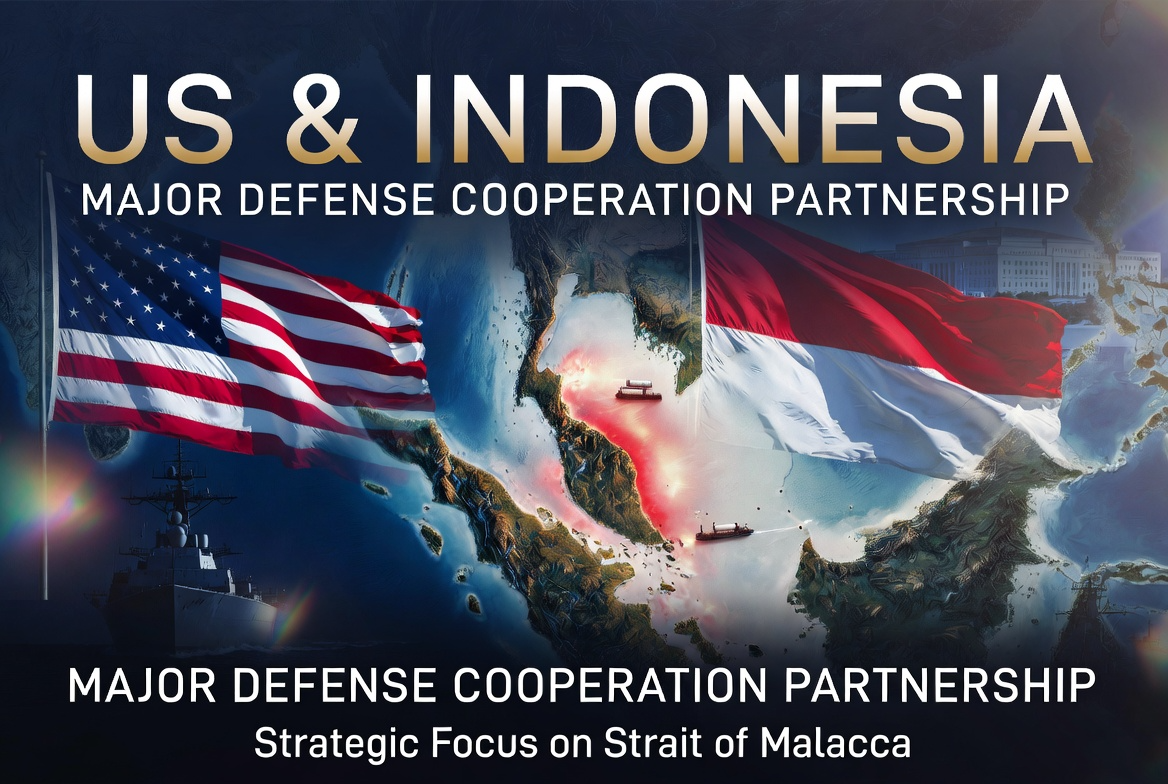
WASHINGTON , D.C. – April 14, 2026 – U.S. Secretary of War Pete Hegseth hosted Indonesian Defense Minister Sjafrie Sjamsoeddin at the Pentagon on Monday, where the two officials announced the elevation of bilateral defense relations to a Major Defense Cooperation Partnership (MDCP).
The new partnership establishes a formal framework to deepen military ties, with three foundational pillars: military organization and capacity building; training and professional military education; and exercises and operational cooperation. Both sides emphasized mutual respect for national sovereignty and a shared commitment to peace and stability in the Indo-Pacific region.
“It was an honor to host Indonesian Defense Minister @sjafriesjams at the Pentagon today. I was proud to announce that we are elevating our relationship to a Major Defense Cooperation Partnership, in recognition of the strength and potential of our bilateral defense ties,” Hegseth stated in a video posted to X.
The announcement quickly drew attention for its potential strategic implications. Defense observer Jacob Creech (@WarClandestine) highlighted the geographic significance in a widely circulated post on X, noting that Indonesia sits astride the Strait of Malacca – the world’s highest-volume oil shipping chokepoint.
“Eyes on,” Creech wrote, attaching a map of the strait. “Hegseth just hosted Indonesian counterpart and announced a ‘Major Defense Cooperation Partnership’. The Strait of Hormuz is 2nd highest volume oil chokepoint on Earth. What’s the 1st? The Strait of Malacca, INDONESIA (80% of China’s oil imports pass through here). Global oil shipping chokepoints are being secured by the US MIL and their partners. Trump is securing the board! It’s happening.”
The Strait of Malacca, which runs between the Indonesian island of Sumatra and the Malay Peninsula (shared jurisdiction with Malaysia and Singapore), is a critical artery for global energy and trade. Roughly 80% of China’s oil imports transit the waterway, making it a linchpin for East Asian energy security.
The MDCP builds on existing cooperation, including more than 170 annual joint military exercises between the U.S. and Indonesia. Officials described the partnership as a step toward enhanced interoperability, defense modernization, and operational collaboration without compromising either nation’s independence.
Analysts view the timing as significant amid broader U.S. efforts to strengthen maritime security partnerships in the Indo-Pacific. The move follows recent developments around other critical energy routes and underscores Washington’s focus on securing vital sea lanes through alliances rather than direct confrontation.
Life News Agency will continue monitoring developments as the U.S. and Indonesia implement the new partnership framework.
About The Author