KYIV April 3, 2026 – In a bold diplomatic move amid the ongoing Middle East energy crisis, Ukrainian President Volodymyr Zelensky has offered his country’s proven maritime warfare experience to assist in unblocking the Strait of Hormuz, a vital chokepoint for global oil supplies currently disrupted by Iran.
The announcement, made on March 30, 2026, during a WhatsApp briefing with journalists following Zelensky’s tour of Gulf states including Saudi Arabia, the UAE, Qatar, and Jordan, ties into new 10-year defense cooperation agreements. Ukraine will supply Gulf nations with advanced weapons, defense technology, and maritime security know-how – including sea drones and systems developed during its Black Sea operations against Russia.
“The experience of unblocking sea trade routes with the help of, among other things, sea drones – could this experience help unblock the Strait of Hormuz?” Zelensky asked reporters, referencing Ukraine’s success in challenging Russia’s naval blockade in the Black Sea from 2023–2024. He emphasized that Gulf partners are eager for this expertise as they face an acute energy crisis triggered by the waterway’s closure.
The Strait of Hormuz, which handles roughly 20% of the world’s daily oil and LNG shipments, has been effectively blocked by Iran in retaliation for U.S. and Israeli military strikes that began in late February 2026. The disruption has sent shockwaves through global energy markets, driving up fuel prices and raising fears of a wider economic impact.
Zelensky framed the offer as support for U.S.-led or international efforts to restore freedom of navigation, while positioning Ukraine as a key exporter of battlefield-tested defense solutions. The deals also reportedly include air defense systems, electronic warfare tools, and maritime drones to counter threats similar to those faced in the Black Sea.
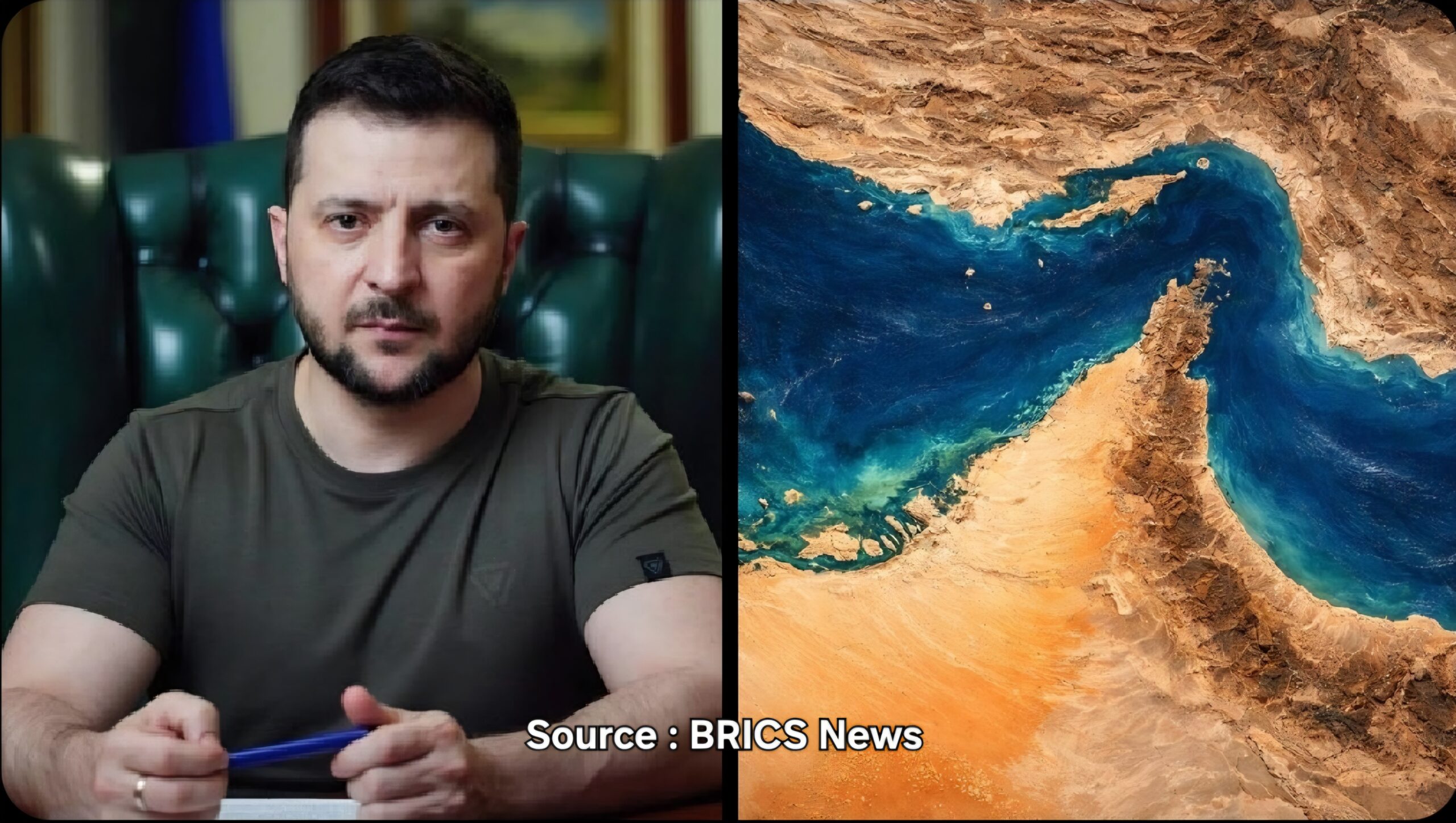
The development was first highlighted in real-time by BRICS News on X (formerly Twitter), which shared a portrait of Zelensky and a satellite image of the narrow strait, underscoring the strategic stakes. The post quickly drew widespread reactions online, with some users mocking the proposal given Ukraine’s ongoing war with Russia, while others viewed it as a pragmatic bid to expand Kyiv’s global influence and secure new revenue streams through defense exports.
Analysts note that while Ukraine’s asymmetric naval tactics have proven effective in the Black Sea, applying them to the heavily contested Persian Gulf would involve complex geopolitical and operational challenges. Iran has already issued warnings against foreign interference in the strait.
This latest chapter in Ukraine’s foreign policy highlights Kyiv’s determination to translate wartime innovations into peacetime diplomatic and commercial leverage, even as its own conflict with Russia continues. Global energy markets are closely watching whether Zelensky’s offer translates into concrete action to ease the Hormuz crisis.
Life News Agency will continue monitoring developments in the Middle East and their implications for global stability.
About The Author