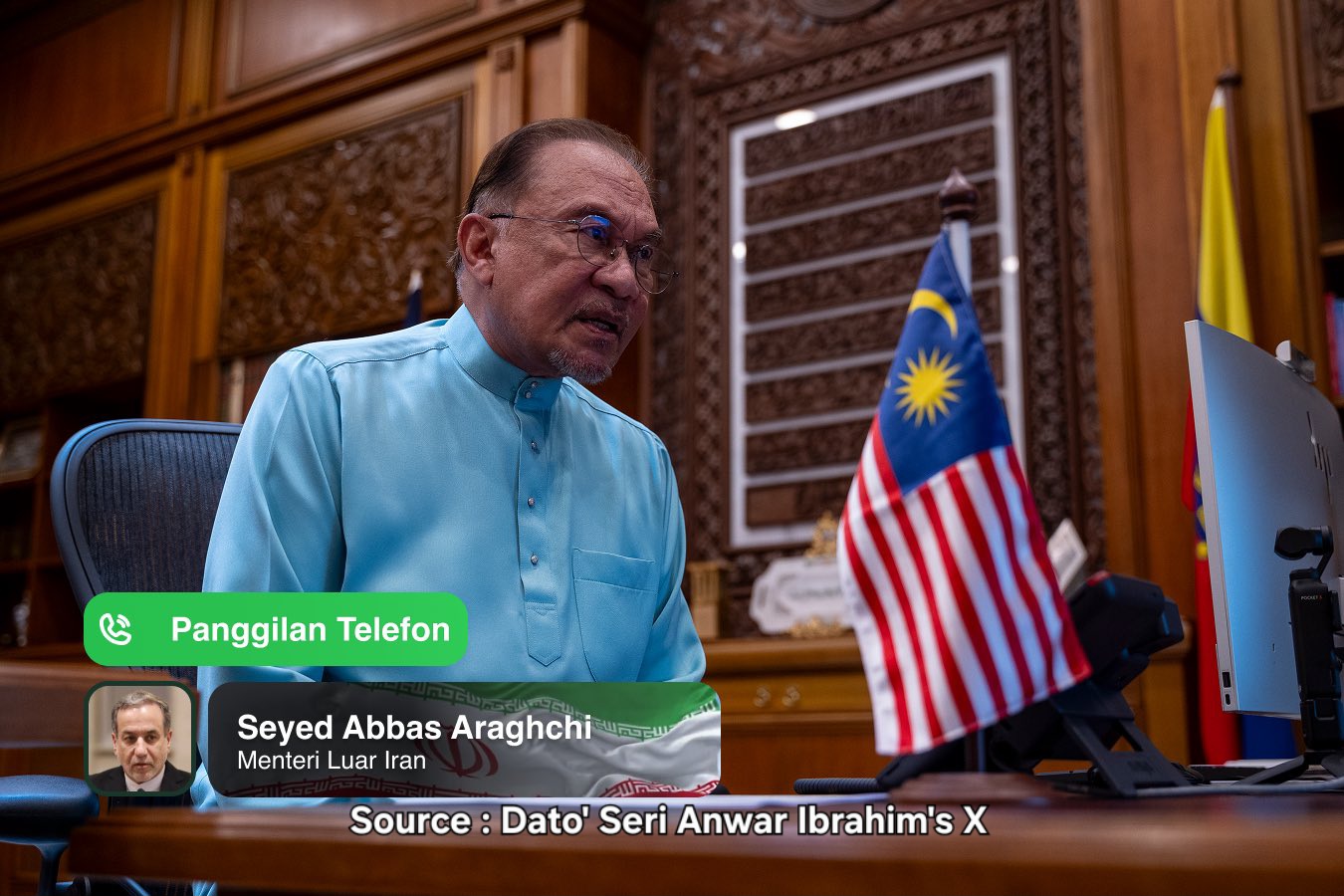
KUALA LUMPUR, MALAYSIA March 7, 2026 – Malaysian Prime Minister Dato’ Seri Anwar Ibrahim held a phone conversation with Iranian Foreign Minister Seyed Abbas Araghchi last night (Friday), expressing Malaysia’s sympathy and solidarity with the Iranian people during what he described as an “extremely difficult time.”
In a post on X (formerly Twitter), Anwar detailed the discussion, conveying condolences for the lives lost in recent attacks on Tehran, including Iran’s Supreme Leader Ayatollah Ali Khamenei and 165 school students. He attributed the strikes to the “Israeli regime together with the United States,” reaffirming Malaysia’s firm stance against military actions that violate national sovereignty.
The call comes amid escalating tensions in the Middle East following joint U.S.-Israeli airstrikes on Iran that began on February 28, 2026, which resulted in the confirmed death of Khamenei on March 1. Iranian state media reported that Khamenei was killed in an early morning strike on his office in Tehran, part of a broader operation targeting high-ranking officials, including the defense minister and Revolutionary Guards commander. The attacks have sparked widespread protests and celebrations in parts of Iran, with monuments toppled in some cities.
Iran has responded aggressively, launching missiles and drones at Israeli targets and U.S. military bases in the Gulf, including in Bahrain, Kuwait, Qatar, and the UAE. U.S. President Donald Trump has indicated that strikes on Iran would continue, describing the operation as crossing a “dangerous red line” for Tehran. Iranian officials have condemned the assaults as a violation of sovereignty, vowing further retaliation.
During the conversation, Anwar emphasized the need to de-escalate tensions through diplomatic efforts and peaceful resolutions, including addressing the ongoing Palestinian issue, which he noted demands international attention. Malaysia, under Anwar’s leadership, has consistently voiced support for Palestinian causes and criticized actions by Israel and its allies in the region.
The strikes on Iran were reportedly planned over years, involving Israeli intelligence agencies like Mossad and Unit 8200, with U.S. support from the CIA, including cyber surveillance and hacking of Tehran’s infrastructure to locate targets. Casualties from the initial attacks included civilian deaths, with reports of over 100 children killed at an elementary school near a military base.
Anwar’s outreach underscores Malaysia’s role in advocating for global peace and stability, particularly in Muslim-majority nations affected by the conflict. The Iranian regime, despite the loss of its long-time leader, has shown resilience, continuing counterstrikes and maintaining control amid internal unrest.
As the situation evolves, international calls for ceasefires grow, with stakeholders urging restraint to prevent further escalation in the volatile region.
About The Author