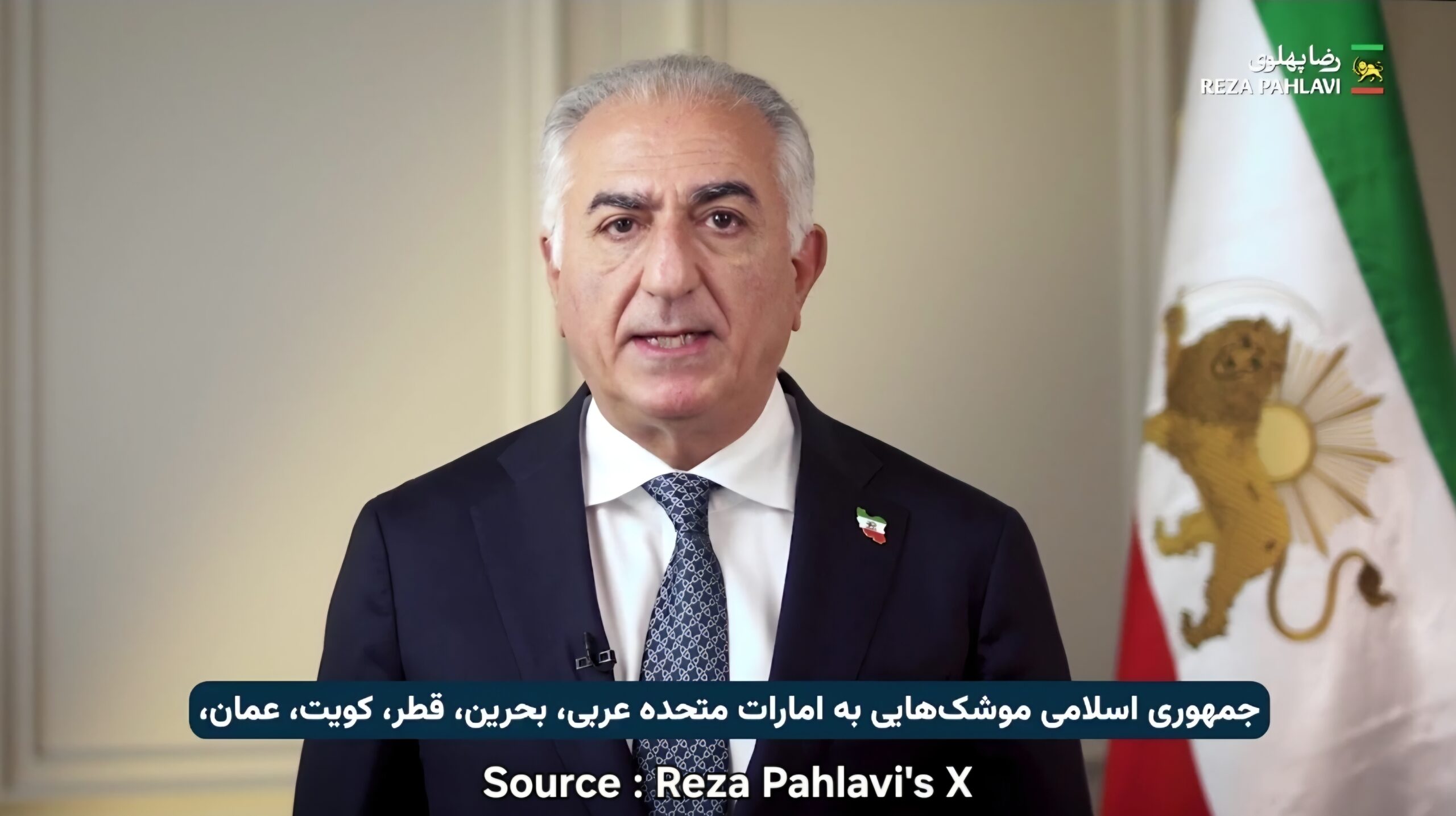
WASHINGTON D.C March 6, 2026 – In a strongly worded video statement posted on X, Iran’s exiled Crown Prince Reza Pahlavi denounced the Islamic Republic’s recent missile attacks on several Arab countries, describing them as unacceptable violations of sovereignty and calling for the regime’s end amid escalating regional conflict.
The attacks, which targeted the United Arab Emirates, Bahrain, Qatar, Kuwait, Oman, Jordan, Iraq, and Saudi Arabia, come in retaliation for joint US-Israeli strikes that killed Iran’s Supreme Leader Ayatollah Ali Khamenei and devastated key military sites. Pahlavi, son of the late Shah Mohammad Reza Pahlavi, emphasized that these actions reflect nearly five decades of the regime’s aggression, including propping up Bashar al-Assad in Syria, establishing Hezbollah in Lebanon, arming the Houthis in Yemen, and empowering militias in Iraq.
“This is who the Islamic Republic has always been. And this is why it must end,” Pahlavi stated in the video, which has garnered over 14,000 likes and thousands of reposts. He highlighted recent setbacks for the regime, including the fall of Assad, the decimation of Hezbollah, delays to Iran’s nuclear program, and economic collapse, asserting that “the pillars of this regime’s aggression are crumbling.”
Pahlavi positioned himself as the leader of a potential transitional government, claiming a mandate from the Iranian people to oversee an orderly shift to democracy. “The Iranian people have called on me to lead the transition after the regime is gone. I have accepted that responsibility,” he said, promising to avoid past mistakes like Iraq’s de-Baathification and to maintain existing bureaucrats for stability. He appealed directly to Arab nations to recognize and engage with this transitional authority, invoking pre-1979 partnerships under his father’s rule, such as aiding Oman against insurgency.
The statement comes amid widespread condemnation of Iran’s strikes. Egypt’s foreign ministry labeled the attacks a “grave risk” to regional stability, while the Palestinian Authority strongly denounced them as threats to Arab unity. Former CIA Director David Petraeus described Iran’s decision to target Gulf states as a “big miscalculation,” potentially drawing more countries into the conflict.
Inside Iran, reports indicate mixed reactions, with some citizens protesting in support of retaliation following Khamenei’s death, while opposition figures like Pahlavi argue the strikes do not represent the Iranian people’s will. Pahlavi has previously characterized US-Israeli actions as “humanitarian interventions” and urged Iranian forces to join the people. He reiterated that a post-regime Iran would focus on mutual respect, shared interests, and economic reintegration, rather than ideological export.
“Standing with the Iranian people is not charity. It is a strategic investment in making our region one of the most stable, secure, and prosperous in the world,” Pahlavi concluded, envisioning a Middle East built on partnership.
The ongoing crisis has raised fears of a broader Middle East war, with Iran launching additional missiles at Israel and US bases. Pahlavi’s call for transition aligns with his recent messages urging the Iranian diaspora to maintain global pressure and protect territorial integrity. As events unfold, regional stakeholders, including Saudi Arabia and the UAE, have yet to respond publicly to his appeal.
This development marks a pivotal moment in the conflict, with Pahlavi declaring it “the beginning of the very end of the regime.”
About The Author