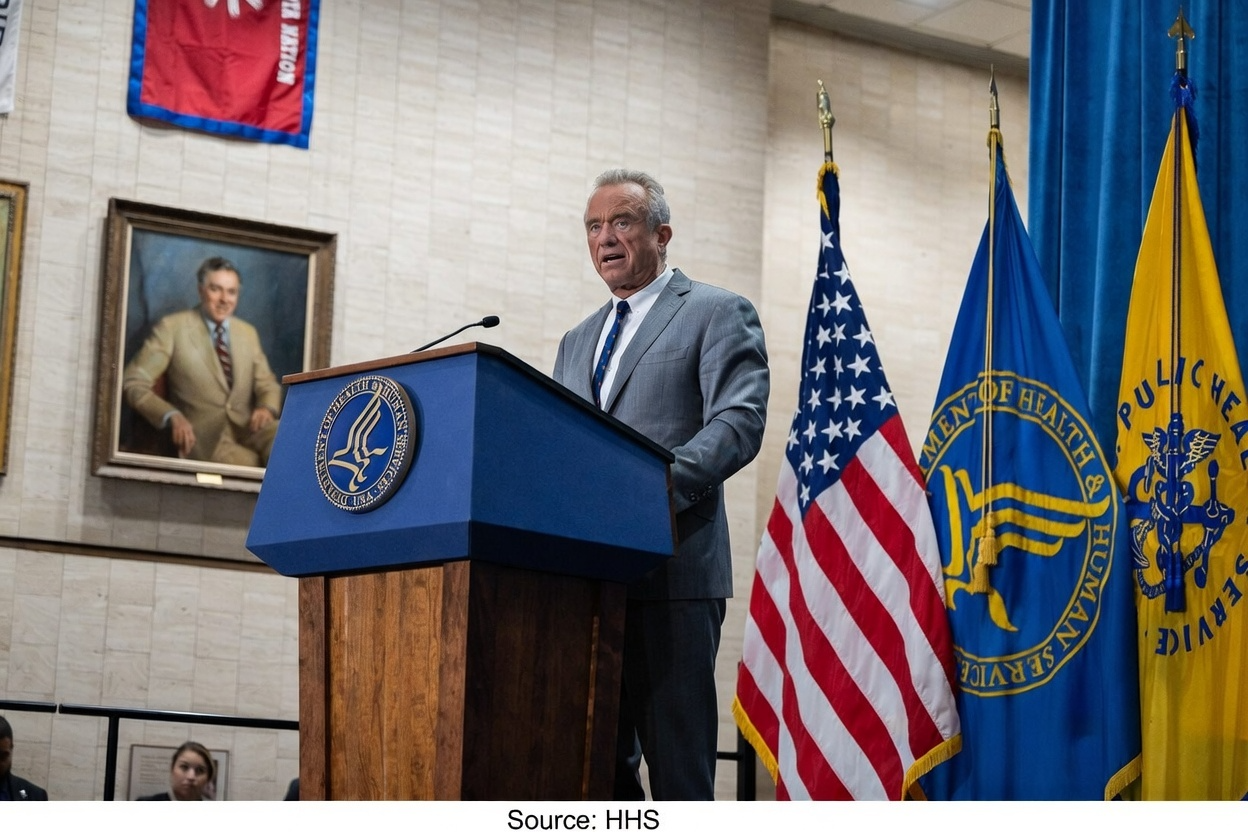
WASHINGTON, D.C. January 23, 2026 – The United States has formally terminated its membership in the World Health Organization (WHO), effective January 22, 2026, following a one-year withdrawal process initiated by President Donald Trump. The move, announced in a joint statement by Secretary of State Marco Rubio and Secretary of Health and Human Services Robert F. Kennedy Jr., fulfills a campaign promise and responds to what the administration describes as the WHO’s profound failures during the COVID-19 pandemic.
In the statement released by the Department of Health and Human Services (HHS), the secretaries highlighted the WHO’s abandonment of its core mission, accusing it of pursuing a “politicized, bureaucratic agenda driven by nations hostile to American interests.” The U.S., as the organization’s founding member and largest financial contributor—providing over $700 million annually—claims the WHO obstructed timely information sharing and concealed failures under the guise of public health protection.
“Today, we right these injustices and bring an end to the bureaucratic inertia, entrenched paradigms, conflicts of interest, and international politics that have rendered the organization beyond repair,” the statement reads. It also notes that even during the withdrawal, the WHO refused to return the American flag displayed at its headquarters and demanded compensation, which the administration views as continued insults to the U.S.
The withdrawal was triggered by Executive Order 14155, signed by President Trump on his first day in office in January 2025. All U.S. funding and staffing for WHO initiatives have ceased immediately, with future engagement limited to completing the exit process and safeguarding American health interests.
Reasons for Withdrawal
The administration cited several key failures:
- Mishandling of COVID-19: The WHO allegedly delayed declaring a global emergency, echoed China’s underreported response, and promoted ineffective measures like lockdowns while ignoring early warnings.
- Politicization: Influence from hostile nations, including China, leading to a loss of independence.
- Financial Burden: Despite the U.S. funding nearly 20-25% of the WHO’s budget, the organization has never had a U.S. director, and contributions from other nations are disproportionately low.
HHS emphasized that the decision addresses harms inflicted on Americans, including those who “died alone in nursing homes” and small businesses “devastated by WHO-driven restrictions.”
Future U.S. Global Health Strategy
Moving forward, the U.S. plans to lead in public health through “direct, bilateral, and results-driven partnerships” rather than multilateral bodies like the WHO. This includes new multiyear bilateral agreements on global health cooperation signed with dozens of countries in December 2025. Officials assert this model will be more focused, transparent, and effective, delivering “real outcomes” without bureaucratic inefficiencies.
A senior HHS official stated during a media call that the U.S. is “walking away from organizations that fail the United States” but remains committed to global leadership in preventing infectious threats.
Reactions and Controversy
The decision has sparked sharp divisions. Supporters, including the Taxpayers Protection Alliance, applaud it as an end to funding a “bloated budget” marred by misinformation and waste. On X, users like @BreitbartNews celebrated the exit, noting it’s “the sound of the United States finally being out of WHO.” Others, such as @deluxe_pepe, called it “good riddance,” highlighting the WHO’s COVID failures.
Critics, however, warn of severe consequences. Representative Gregory W. Meeks, Ranking Member of the House Foreign Affairs Committee, condemned the move, saying it “will only weaken the United States’ capacity to prevent deadly diseases from reaching our shores and put American lives at risk.” He argued it cedes U.S. leadership, allowing China to assert greater influence.
Physicians for Human Rights described the withdrawal as “dismantling global public health institutions,” compounding harm to millions worldwide. The Infectious Diseases Society of America (IDSA) called it “shortsighted and misguided,” noting it hampers efforts like global influenza surveillance for vaccine development. On X, @raghu_venugopal labeled it a “lose-lose,” emphasizing that “diseases don’t respect borders.” Nigerian Senator @ShehuSani called the exit “unfortunate,” urging Europe, China, and Arab nations to fill the financial gap.
Additionally, the WHO contends the withdrawal is incomplete until the U.S. settles outstanding debts of about $278 million for 2024 and 2025. The State Department has stated no payments will be made, citing the high costs already borne by U.S. taxpayers from the WHO’s pandemic failures.
This is the second U.S. withdrawal attempt in recent years; the first, initiated in 2020 under Trump, was reversed by President Biden in 2021. As global health experts debate the long-term impacts, the U.S. shifts toward independent alliances, potentially reshaping international health cooperation.
About The Author