WASHINGTON, D.C. December 23, 2025 — The White House celebrated robust economic data today, highlighting a stronger-than-expected 4.3% annualized growth rate in third-quarter GDP, as President Donald J. Trump declared the arrival of a “Trump Economic Golden Age.”
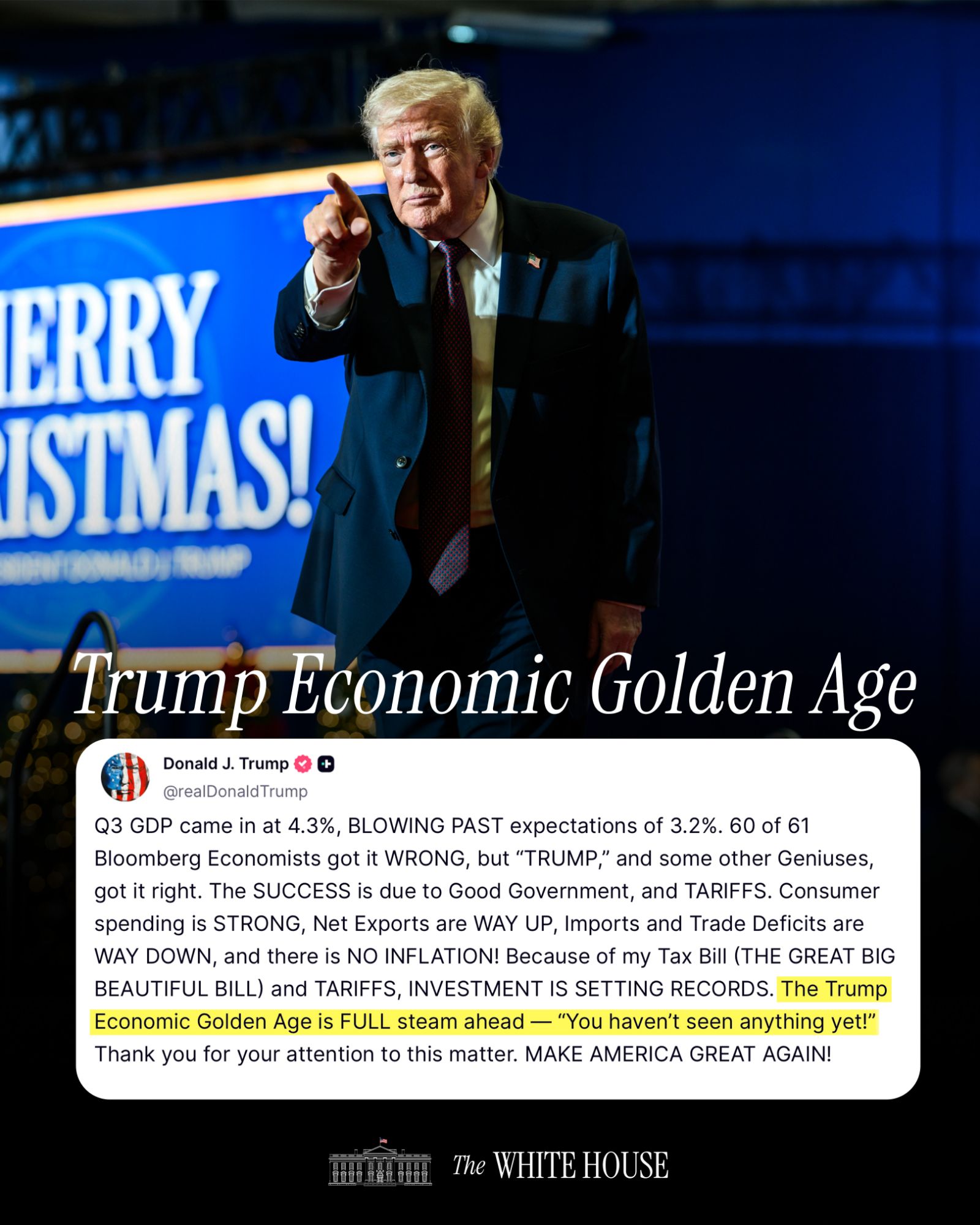
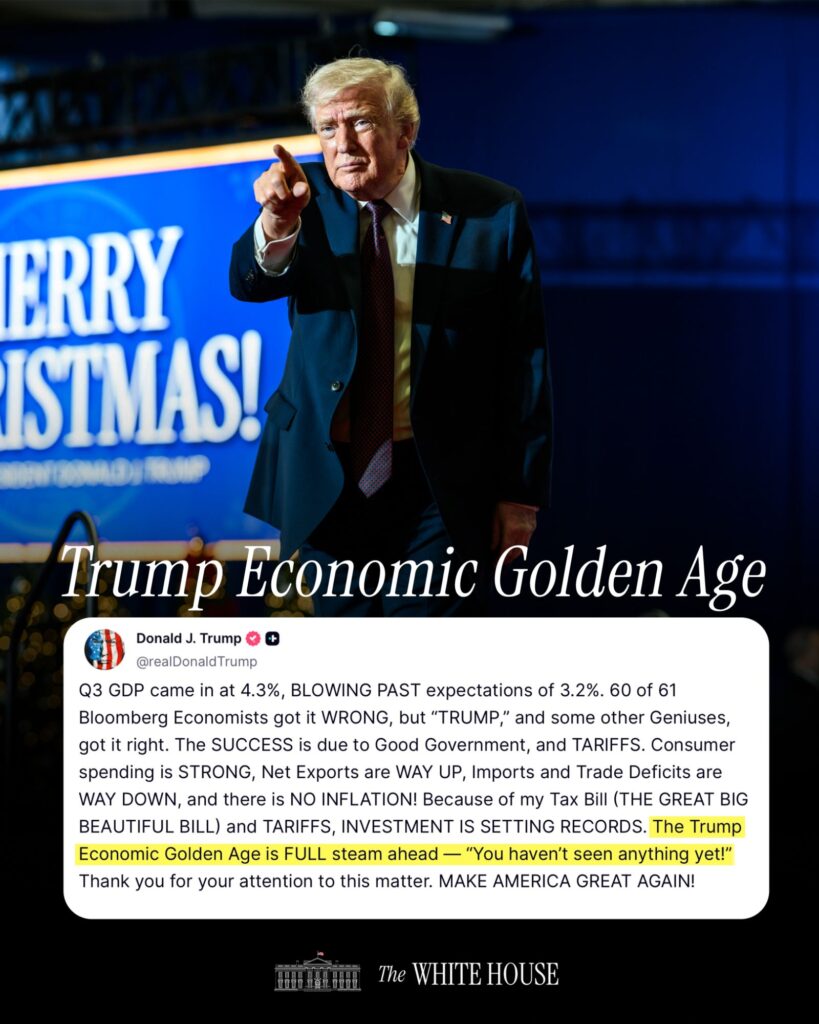
In a graphic shared by the official White House account on X, Trump touted the figures: “Q3 GDP came in at 4.3%, BLOWING PAST expectations of 3.2%. 60 of 61 Bloomberg Economists got it WRONG.” The post attributed the success to “Good Government, and TARIFFS,” noting strong consumer spending, surging net exports, declining imports and trade deficits, low inflation, and record investment driven by his tax policies.
The Commerce Department’s delayed initial estimate, released today due to the recent government shutdown, confirmed real GDP expanded at a 4.3% annual rate from July to September—the fastest pace in two years. This accelerated from 3.8% in Q2 and far exceeded consensus forecasts around 3.2-3.3%.
Key drivers included:
– Consumer spending., the economy’s main engine, rising 3.5%—up from 2.5% in Q2—fueled by healthcare, recreational goods, and services.
– Net exports providing a significant boost, with exports rebounding sharply (up ~8.8%) and imports declining, narrowing the trade deficit.
– Government spending, particularly defense, also contributed notably.
The report aligns with Trump’s claims of “NO INFLATION,” as recent data shows annual inflation cooling to 2.7% in November, the lowest in months.
White House officials credited the administration’s tariffs and the recently passed tax bill—referred to by Trump as “THE GREAT BIG BEAUTIFUL BILL”—for spurring record investment and reshaping trade flows. Tariffs have generated substantial revenue this year, supporting fiscal goals while encouraging domestic production.
“The Trump Economic Golden Age is FULL steam ahead — ‘You haven’t seen anything yet!'” the post concluded, echoing Trump’s optimistic outlook.
Economists note the data reflects resilience amid policy shifts, though some caution that growth may moderate in Q4 due to lingering affordability concerns and labor market softening. Nonetheless, the strong Q3 performance underscores continued momentum heading into the new year.
About The Author