By Professor Dato Dr Ahmad Ibrahim
In every chapter of human progress, science and innovation have played the decisive role in improving lives, transforming societies, and confronting our greatest challenges. From vaccines that have saved millions to technologies connecting distant corners of the globe, it is our collective capacity to discover, invent, and apply knowledge that has shaped modern civilization. At the heart of this engine has been a global ecosystem of scientific research, one where ideas, data, and expertise flow across borders in pursuit of a better future for all. Historically, the United States has been a cornerstone of this enterprise, through its universities, research agencies, and international collaborations. But today, troubling signs from the US and beyond suggest that the delicate architecture of global science may be under threat. The consequences, especially for a world already struggling to meet its sustainability and prosperity goals, could be profound.
In recent years, we have witnessed an unsettling trend, the increasing politicization of science, where evidence-based reasoning is undermined by ideology and short-term political interests. Whether in debates about climate change, public health, or emerging technologies, scientific consensus is too often dismissed or distorted. In the United States, still a major driver of global research, this erosion of trust in science is accompanied by funding uncertainties, anti-science rhetoric, and an inward-looking posture in areas of technology and knowledge-sharing. Compounding this is the rising geopolitical tension between major powers, particularly the United States and China, leading to restrictions on international collaborations, barriers to data sharing, and the risk of fragmented scientific standards. In this climate, science risks becoming a tool of strategic competition rather than a bridge for collective progress. We must wake up to this.
While this might seem a domestic issue for the US or a matter for great power politics, the ripple effects are global. For nations in the Global South, whose development paths increasingly rely on access to cutting-edge science in fields like renewable energy, climate adaptation, public health, and sustainable agriculture, the weakening of open, collaborative science is a serious setback. Key global initiatives, from pandemic preparedness to climate action, demand unified scientific effort. Fragmentation or slowdown in international research not only delays solutions but deepens global inequalities, as countries with limited research infrastructure are cut off from essential data and innovations.
The risks extend beyond policy circles. Without credible, accessible science informing public debates, misinformation thrives. We saw this during the COVID-19 pandemic, where mixed messages and anti-science narratives led to unnecessary suffering and loss of life. The same could happen in the context of climate change, food security, and environmental protection, where public trust in science is critical for driving meaningful action. It is imperative, therefore, that the world does not allow its scientific enterprise to be a casualty of politics or protectionism. Global progress on sustainability and prosperity depends on keeping science open, inclusive, and collaborative.
Emerging economies and regional powers must invest in building robust scientific capacities, reducing over-reliance on a handful of nations. International organizations, universities, and research networks must reaffirm their commitment to free inquiry and open data, especially on issues of global concern. Equally important is fostering a culture of science diplomacy, where countries recognize that, regardless of geopolitical rivalries, shared scientific knowledge is essential for addressing common threats. At UCSI university, we have set up the International Institute for Science Diplomacy and Sustainability, IISDS, to cater for such rising needs. We need stronger mechanisms to insulate critical areas of research from political interference and to promote the free exchange of knowledge and expertise. Finally, investing in public science literacy is no longer optional. Societies must be equipped to understand, trust, and engage with science if we are to navigate the complex challenges ahead. Our Friends of Sustainable Malaysia initiative is geared towards creating a greater public awareness about science.
Science is more than a collection of facts or laboratories. It is a global public good. Its health reflects our collective capacity to build a safer, fairer, and more sustainable future. If one major hub falters, or if collaboration gives way to competition, the whole world pays the price. We must, therefore, defend and nurture science not just as a tool of national interest but as a shared human endeavour, one capable of lifting all nations toward greater prosperity and resilience. The stakes could not be higher.
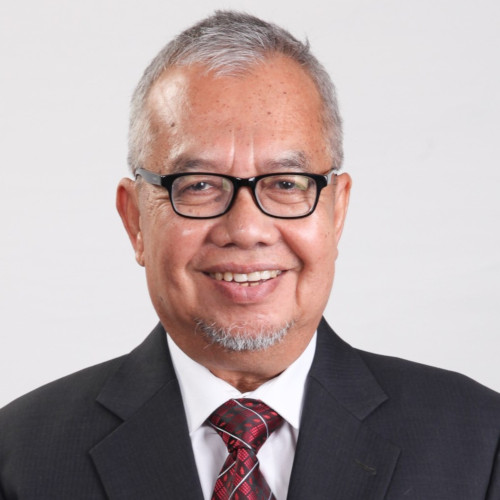
The author is affiliated with the Tan Sri Omar Centre for STI Policy Studies at UCSI University and is an Adjunct Professor at the Ungku Aziz Centre for Development Studies, Universiti Malaya.
About The Author