By Dr Haezreena Begum Abdul Hamid
Malaysia’s Online Safety Act (ONSA), passed in 2025 and came into force on 1 January 2026, is not only timely but essential. The reality today is clear: harmful online content is no longer abstract or distant. Across jurisdictions, digital platforms are actively used to spread hate, facilitate financial scams, exploit children, and mobilise individuals toward real-world violence. Content now travels instantly, reaching wide and often vulnerable audiences within seconds, with little opportunity for reflection or verification.
Malaysia cannot afford to remain passive in the face of these evolving risks.
ONSA represents a decisive and forward-looking response by the government to ensure that digital spaces remain safe, accountable, and responsibly managed. It reflects a firm commitment to safeguarding public order, national security, and societal well-being in an increasingly complex information environment.
Importantly, ONSA adopts a comprehensive regulatory approach, recognising that online harm is multifaceted. It addresses a wide spectrum of harmful content [as per in the First Schedule], including: child sexual abuse material, as provided under section 4 of the Sexual Offences Against Children Act 2017; financial fraud-related content; obscene and indecent content that offends standards of decency; threatening, abusive, or insulting content causing harassment, fear, or distress; content that may incite violence or terrorism; content that encourages self-harm among children; content that promotes hostility, ill-will, or disrupts public tranquillity; and content that promotes the use or sale of dangerous drugs.
This breadth is deliberate and necessary. Online harm does not exist in silos. It operates across emotional, psychological, and ideological dimensions, often with cumulative real-world consequences. Among these categories, content that incites violence or supports terrorism remains particularly dangerous. Such material can rapidly transition from digital influence to physical action, making early intervention not just desirable, but critical.
The urgency of this issue is illustrated by current global developments, particularly the ongoing tensions and conflict in the Middle East, including Iran. Digital platforms have become saturated with highly emotive, polarising, and often unverified content related to these conflicts. Narratives are amplified in real time, some legitimate, others deeply misleading or deliberately inflammatory.
In the case of Iran, for instance, online spaces have been used not only to disseminate state and counter-state narratives, but also to mobilise ideological support, justify acts of violence, and deepen geopolitical divisions. These dynamics do not remain confined within national borders. They spill over into global digital ecosystems, influencing audiences far removed from the conflict itself.
In such an environment, individuals, particularly youth are continuously exposed to content that may normalise violence as a justified response; reinforce binary “us versus them” worldviews; provoke anger, outrage, and emotional radicalisation; blur the line between legitimate political expression and harmful incitement. The speed, scale, and emotional intensity of such content make it increasingly difficult to distinguish between lawful discourse and material that poses genuine risks to public safety.
It is precisely within this context that a regulatory framework such as ONSA becomes indispensable.
Crucially, ONSA recognises a fundamental reality of the digital age: harm is borderless. Its extra-territorial application ensures that the law applies not only within Malaysia but also to service providers operating outside the country, so long as their platforms are accessible to users in Malaysia. This is a significant and necessary development. Without such reach, harmful content could continue to circulate freely through foreign-based platforms, beyond the effective control of national regulators. By extending its scope beyond geographical boundaries, ONSA closes this regulatory gap. It ensures that accountability is not limited by location but anchored in impact.
At the same time, it is crucial to emphasise that ONSA is not designed to suppress legitimate discourse. Freedom of speech remains a fundamental principle within Malaysia’s legal framework. However, like all rights, it is subject to reasonable and proportionate limits, particularly where national security, public order, and the protection of vulnerable groups are at stake. ONSA targets content that crosses the threshold into harm, not ordinary disagreement, criticism, or debate.
One of the key strengths of ONSA lies in its preventive orientation. Rather than reacting after harm has materialised, it enables early intervention where credible risks are identified. In the digital age, where escalation can occur within hours or even minutes, such a preventive approach is not only prudent, but also necessary. Clear guidelines, transparency, and consistent enforcement will be essential to ensure that the law is applied fairly, proportionately, and without arbitrariness. With the appropriate safeguards in place, ONSA has the capacity to strike a careful and principled balance between protecting society and respecting individual rights.
Ultimately, ONSA recognises a simple but critical truth: what happens online does not stay online. It shapes perceptions, influences behaviour, and can have direct consequences for public safety and national stability.
By introducing ONSA, Malaysia is taking a firm, responsible, and necessary step in addressing the realities of the digital age. This is not about control; it is about protection. It is about ensuring that digital spaces remain platforms for constructive engagement, not vehicles for harm. In an increasingly volatile global environment, shaped by conflicts such as those involving Iran and the wider Middle East, such measures are not only justified, they are also essential.
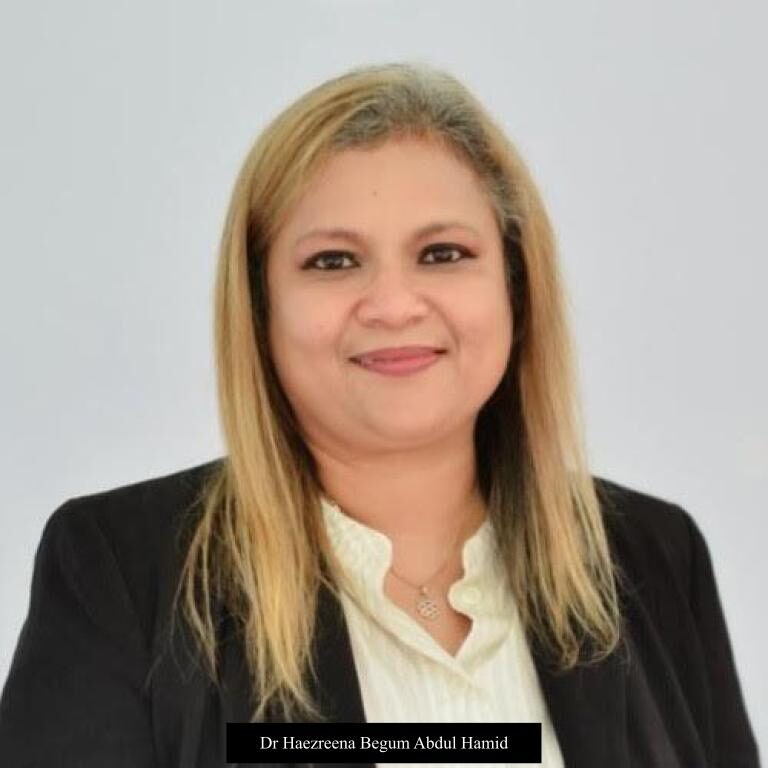
Dr Haezreena Begum Abdul Hamid is a Criminologist and Senior Lecturer at the Faculty of Law, Universiti Malaya
About The Author