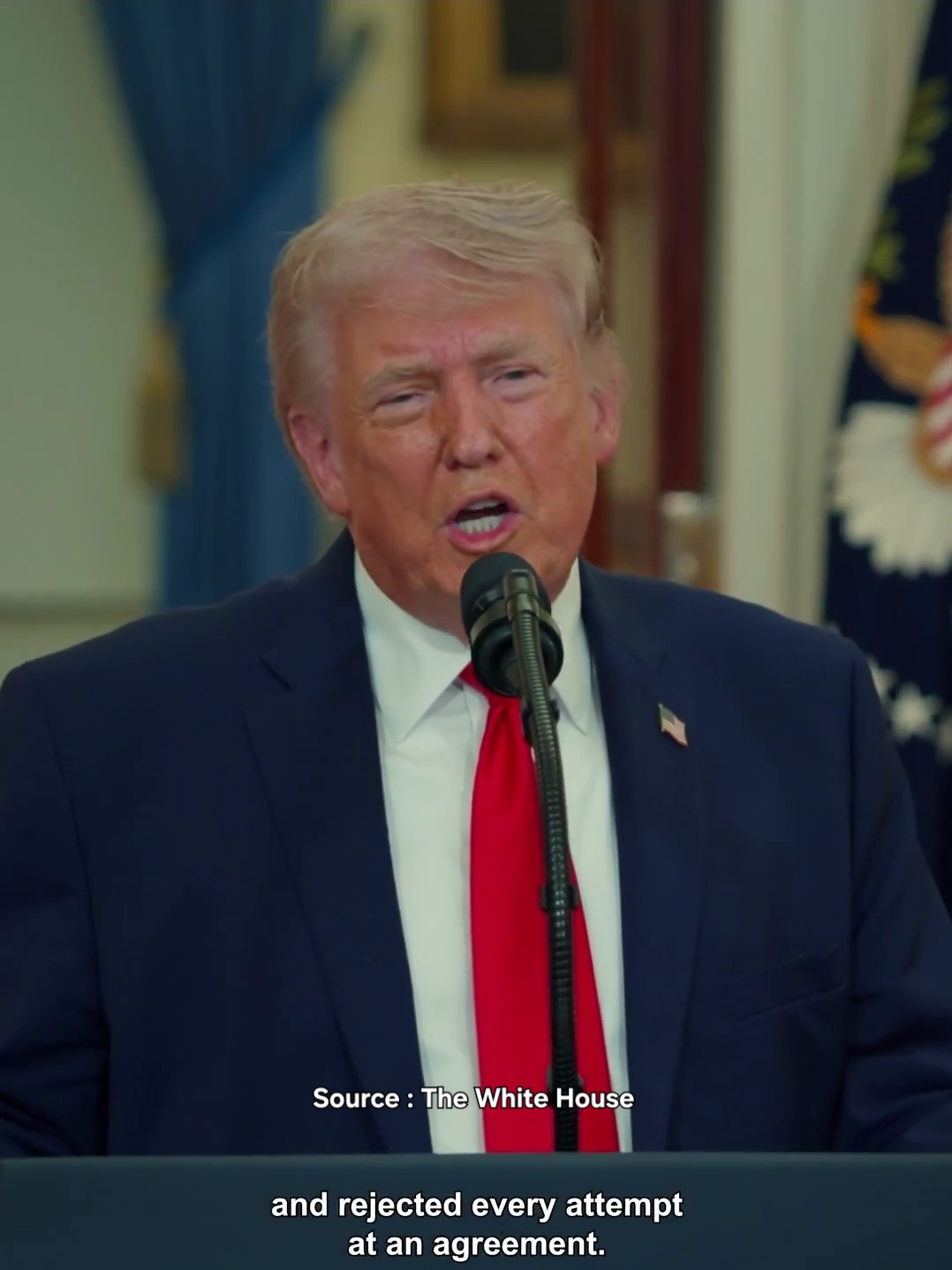
WASHINGTON D.C April 2, 2026 — The White House has officially announced “Operation Epic Fury,” a major U.S. military campaign targeting Iran’s nuclear program, ballistic missile capabilities, naval assets, and support for regional proxies. In a statement posted on X late Thursday (Malaysian time), the official @WhiteHouse account emphasized that President Donald J. Trump’s first choice was always diplomacy, but the Iranian regime’s continued pursuit of nuclear weapons left no alternative.
The full statement reads:
“OPERATION EPIC FURY 🇺🇸
President Donald J. Trump’s preference was always the path of diplomacy — yet, the Iranian regime continued their relentless quest for nuclear weapons & rejected every attempt at an agreement.”
Accompanying the post is a 59-second video featuring President Trump addressing the nation from the White House podium. In the clip, Trump states that the regime not only rejected diplomatic overtures but later attempted to rebuild nuclear facilities at new sites and rapidly expanded its stockpile of conventional ballistic missiles capable of reaching the American homeland, Europe, and other regions. He described earlier precision strikes — including the use of B-2 bombers — as having “totally obliterated” key nuclear sites, yet Iran persisted.
According to U.S. officials, Operation Epic Fury began in late February 2026 and has been underway for approximately one month. Recent updates from the administration and U.S. Central Command (CENTCOM) indicate that core military objectives are nearing completion, with President Trump stating on April 1 that the mission could conclude within the next two to three weeks.
The operation has involved coordinated strikes with regional partners, particularly Israel, aimed at neutralizing what Washington describes as an existential threat to global security and non-proliferation efforts. Iranian officials have condemned the campaign as unprovoked aggression, while international reactions remain sharply divided. Allies of the U.S. have largely supported measures to prevent nuclear proliferation, whereas several nations have voiced concerns over potential escalation, civilian casualties, and risks to oil shipping through the Strait of Hormuz.
This development marks the latest chapter in long-standing U.S.-Iran tensions, now escalated under the second Trump administration. Life News Agency will continue monitoring the situation for further updates from Washington, Tehran, and regional capitals.
About The Author