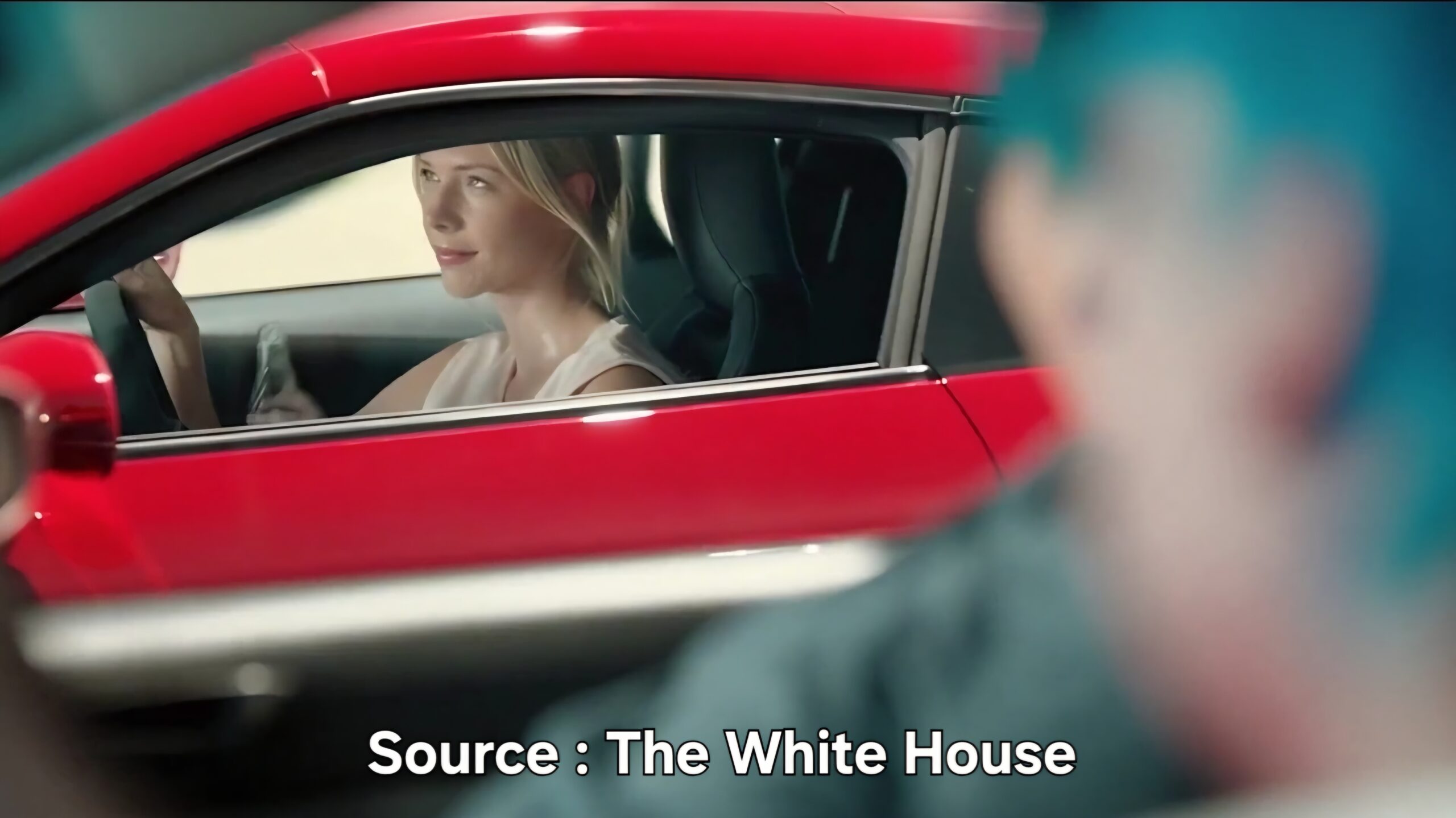
WASHINGTON D.C February 13, 2026 – The White House has announced that automatic engine start-stop technology—commonly found in many modern vehicles—has been effectively eliminated as a regulatory requirement or heavily promoted feature.
In a post from the official @WhiteHouse account, the administration declared: “Keeping cool while Making America Hot Again. 🏁 Auto start-stop is officially dead.”
The accompanying short video (approximately 27 seconds long) humorously depicts a stereotypical frustrated Prius driver dealing with the auto start-stop feature. It shows a person in a hybrid vehicle at a traffic light, where the engine repeatedly shuts off and restarts, accompanied by exaggerated expressions of annoyance. The clip ends with a scene poking fun at environmentalist stereotypes, featuring a car covered in numerous progressive-themed bumper stickers (such as climate action, peace signs, and similar messages), emphasizing the administration’s view that the feature is unpopular and ineffective.
The post aligns with broader deregulatory moves under the current administration, targeting rules perceived as burdensome or offering minimal real-world benefits. EPA Administrator Lee Zeldin has previously described auto start-stop systems as a “universally hated” feature and a “climate participation trophy,” arguing that it causes unnecessary wear on vehicle batteries while delivering negligible environmental gains.
Reactions on X were swift and polarized:
– Supporters celebrated the change as a win for driver convenience and common sense, with many calling the feature “annoying” and praising the humorous tone of the White House communication.
– Critics dismissed the announcement as petty or symbolic, with some accusing the administration of prioritizing culture-war messaging over substantive policy.
The announcement comes amid the administration’s ongoing push to roll back certain environmental and fuel-efficiency mandates introduced in prior years, framing the move as part of “Making America Hot Again”—a play on revitalizing American industry, energy production, and consumer freedom.
This development is likely to be welcomed by many car owners and manufacturers who have long criticized the technology for its real-world drawbacks in stop-and-go traffic, particularly in hot climates where air conditioning performance can suffer during engine-off periods.
About The Author