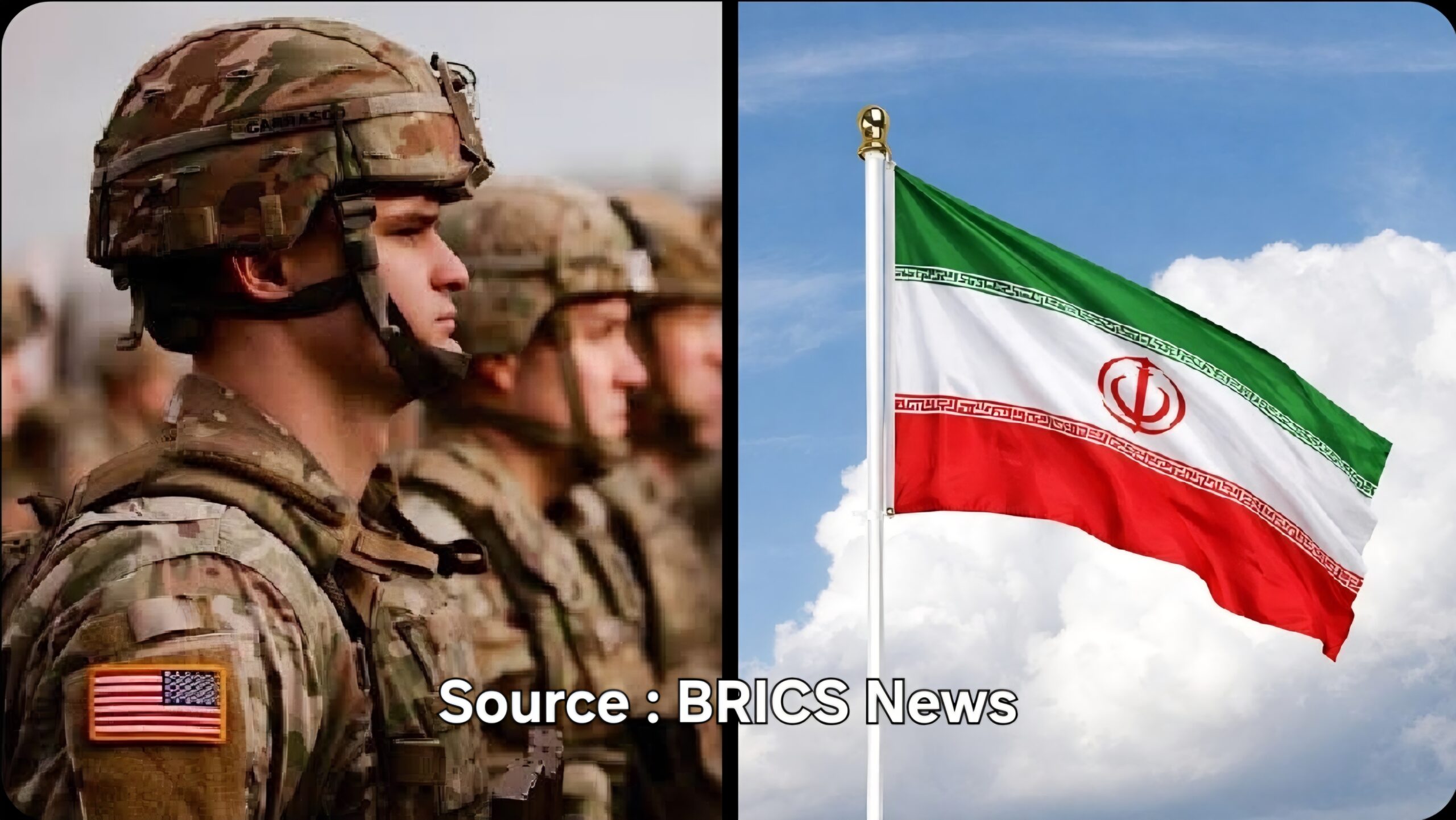
MANAMA, BAHRAIN / WASHINGTON D.C. – February 26, 2026 – The U.S. Navy has sharply reduced staffing at its 5th Fleet headquarters in Bahrain to “mission-critical” levels, with fewer than 100 personnel now remaining on site, multiple U.S. officials confirmed.
The move — reported first by BRICS News on X and corroborated by Fox News, the Associated Press and other outlets — is widely interpreted as a precautionary step ahead of potential U.S. military strikes on Iran.
Satellite evidence confirms preparations
High-resolution satellite images captured by Planet Labs PBC on February 24-25, 2026, and analyzed by the Associated Press, show the harbor at Naval Support Activity Bahrain completely empty. Warships that normally dock there have been dispersed into open waters to reduce vulnerability to Iranian retaliation.
A similar evacuation of the 5th Fleet headquarters occurred in June 2025 immediately before “Operation Midnight Hammer,” the U.S. strikes that targeted Iranian nuclear facilities.
Context of escalating tensions
The reduction comes as the United States and Iran hold another round of indirect nuclear talks in Geneva on Thursday. President Donald Trump has repeatedly warned that failure to reach a deal will trigger fresh American military action.
The Pentagon has assembled one of the largest U.S. naval and air armadas in the Middle East in decades — including two carrier strike groups — to apply maximum pressure on Tehran.
Iranian officials have responded defiantly, stating that any U.S. attack would make all American bases in the region “legitimate targets.” Tehran has also threatened to strike Israel in retaliation.
Strategic importance of the 5th Fleet
Headquartered in Manama since 1995, the 5th Fleet commands U.S. naval forces across the Persian Gulf, Red Sea, Arabian Sea and parts of the Indian Ocean. It plays a central role in protecting maritime trade routes, countering Iranian naval activity and supporting allies in the Gulf.
Market and regional reaction
Oil prices spiked more than 3% on the news amid fears of renewed conflict that could disrupt supplies through the Strait of Hormuz. Gulf stock markets also opened lower.
Regional analysts warn that any new U.S. strikes could escalate into a broader confrontation, especially while the embers of last year’s Israel-Hamas war and the brief 2025 U.S.-Iran clash are still smoldering.
Life News Agency will continue to monitor developments in Geneva and the Gulf as the situation evolves.
About The Author