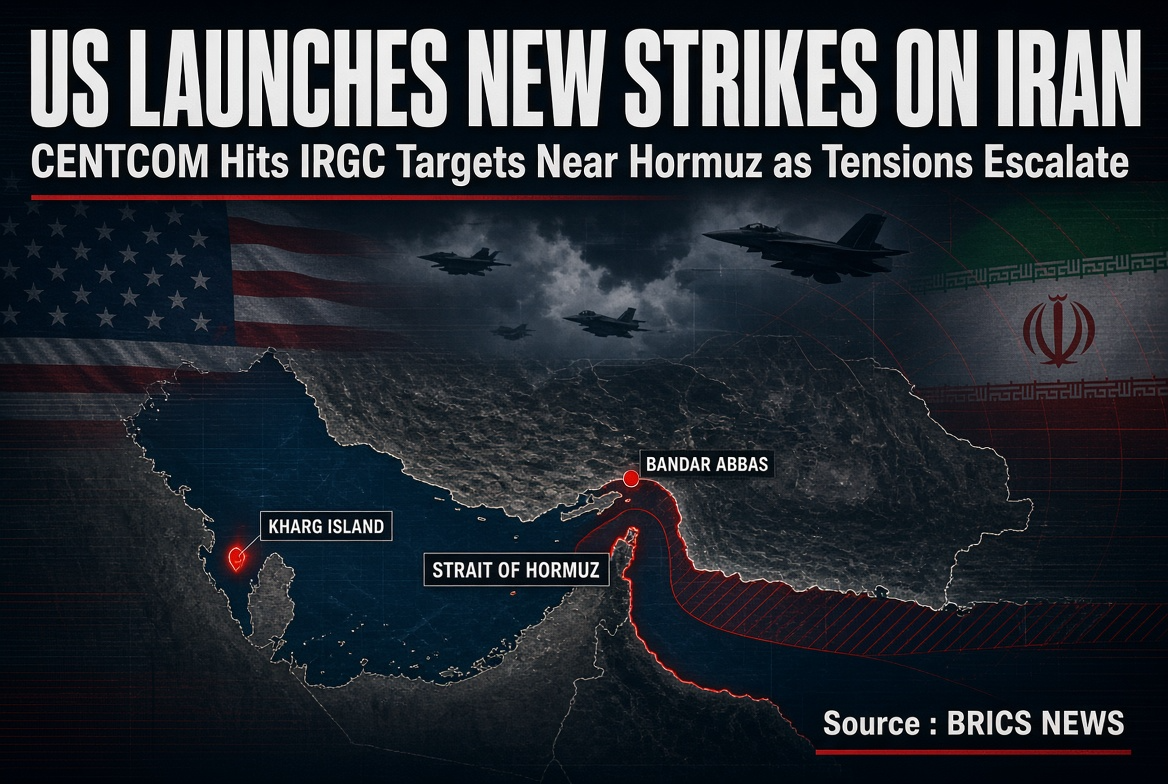
WASHINGTON D.C Sept 8, 2026 – The United States has launched additional military strikes against Iranian targets, according to reports circulating Tuesday evening. Independent geopolitical account @BRICSinfo posted “JUST IN: 🇺🇸🇮🇷 US launches strikes on Iran,” framing the development as breaking news amid months of intermittent fighting.
The post comes as the latest chapter in a series of U.S. operations that began in early September. U.S. Central Command (CENTCOM) announced on September 1 that American forces had struck Islamic Revolutionary Guard Corps (IRGC) targets in southern Iran, including sites around Bandar Abbas, Qeshm Island, and Konarak. CENTCOM said the action followed attempted IRGC attacks on commercial shipping in the Strait of Hormuz and on U.S. personnel in the region.
President Donald Trump confirmed the September 1 strikes on social media, describing them as retaliation for Iran’s “failed attempt at adding sea mines to the Strait.” He warned that any Iranian response would be met with even stronger force. Iranian state media reported explosions in several southern locations and later claimed civilian casualties, including at a wedding ceremony in Kuhestak; U.S. officials have disputed some of those reports.
More recent activity has focused on Iran’s oil infrastructure and shadow tanker fleet. On September 5, CENTCOM said it disabled or destroyed three Iranian crude oil carriers after the IRGC launched ballistic missiles at U.S. Navy ships. One of the targeted vessels was near Kharg Island, Iran’s primary oil export terminal. Admiral Brad Cooper, CENTCOM commander, stated the strikes imposed “an even higher economic cost.”
On Tuesday, September 8, additional reports emerged of U.S. action against Iranian tankers and explosions near Kharg Island. A U.S. official told The Jerusalem Post that CENTCOM was striking Iranian oil tankers, while Iranian media reported blasts in the vicinity of the island. Iran’s IRGC Navy subsequently warned vessels operating near Kuwait and Bahrain ports that host U.S. forces.
The Strait of Hormuz, through which a significant share of global oil normally passes, has been a central flashpoint since the conflict intensified earlier this year. The United States has described its operations as limited and defensive, aimed at degrading Iran’s ability to threaten shipping and U.S. forces. Tehran has characterized the strikes as aggression and has promised retaliation.
Oil prices have remained elevated on fears of further disruption. Both sides have exchanged threats while diplomatic efforts have produced little lasting progress. The September operations mark a return to direct military action after a period in which the Trump administration had emphasized economic pressure.
Casualties and the full extent of damage from the latest strikes have not been independently confirmed. The situation remains fluid, with both Washington and Tehran signaling they are prepared for further escalation if the other side continues attacks.
About The Author