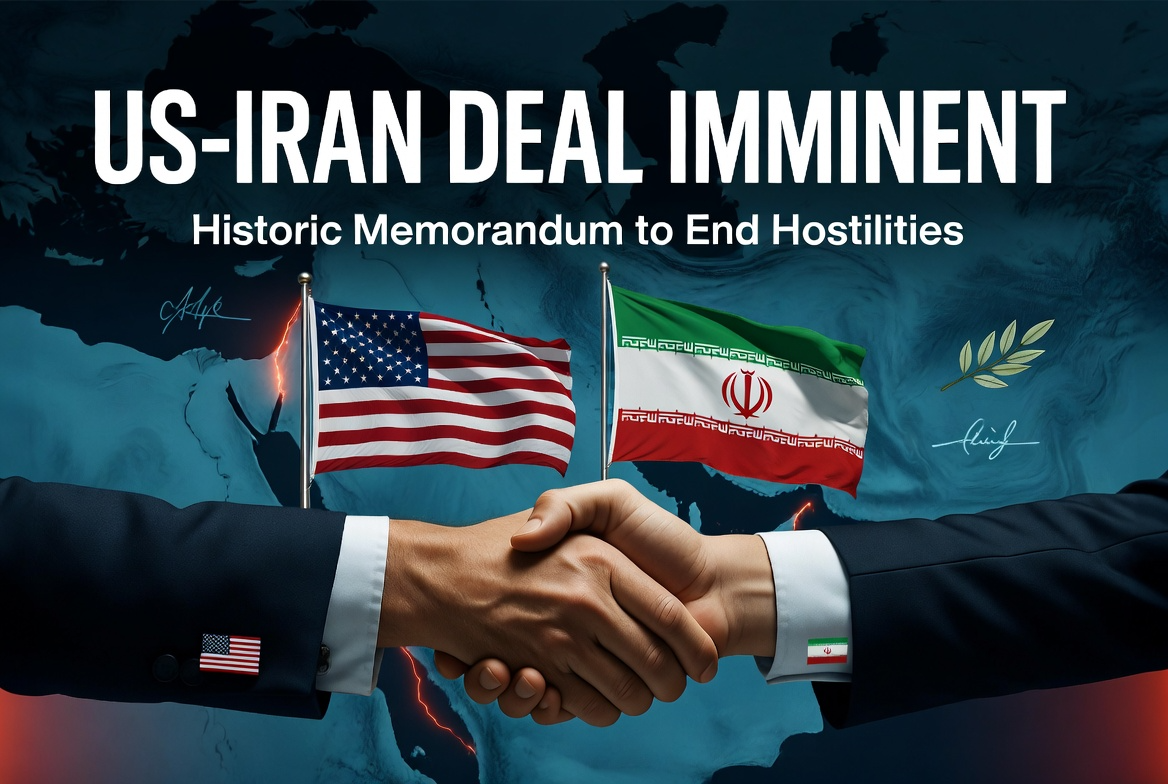
TEHRAN June 13, 2026 — Iranian Foreign Minister Abbas Araghchi announced Friday that a US-Iran memorandum of understanding (MoU), known as the Islamabad Memorandum, “has never been closer” to finalization, with a possible digital signing expected within days.
The agreement aims to extend a fragile ceasefire, reopen the Strait of Hormuz for global oil transit, lift the US naval blockade on Iran, and formally end active hostilities across multiple fronts, including Lebanon. It would also launch a 60-day window for deeper negotiations on Iran’s nuclear program, sanctions relief, and regional security issues.
Araghchi, speaking on Iranian state television and posting on X, emphasized that the deal represents a victory for Iran after weeks of intense conflict. “The best time to end a war is when we hold the upper hand,” he stated, adding that nuclear-related US demands were deemed “absolutely unacceptable” at this stage and deferred to a second phase. He stressed Iran’s commitment to allies, including Hezbollah in Lebanon, and insisted the agreement requires Israeli withdrawal from southern Lebanon.
Pakistan has played a key mediating role, with Prime Minister Shehbaz Sharif claiming a “final, agreed upon text” has been reached and next steps are underway.
US President Donald Trump welcomed Araghchi’s remarks as “very positive” and indicated a deal could be finalized as soon as this weekend or Monday, potentially via remote digital signatures. However, Trump has pushed back against leaked Iranian versions of the terms circulating in media, calling them inaccurate.
Key Elements of the Proposed MoU
- Ceasefire and De-escalation: Formal end to hostilities, including across regional fronts.
- Strait of Hormuz and Blockade: Reopening of the critical waterway and lifting of the US naval blockade.
- Sovereignty and Non-Interference: Mutual commitments to respect sovereignty and refrain from the use of force.
- Nuclear and Sanctions Talks: Initial focus on immediate issues, with broader nuclear and sanctions discussions to follow.
Skepticism remains high on both sides. Iranian hardliners and some US officials question whether the deal will hold, citing past failures and ongoing disputes over Iran’s missile program, proxy support, and nuclear enrichment rights. Leaks have highlighted significant gaps between the two sides’ interpretations of the text.
Global markets reacted positively to the news, with oil prices easing amid hopes of restored energy flows through the Strait of Hormuz, which handles about 20% of the world’s oil supply.
This potential breakthrough follows months of escalation that began with US and Israeli strikes in early 2026, Iranian retaliation, and a US blockade. While optimism is growing, analysts warn that any agreement remains fragile without full trust and verification mechanisms.
Further details are expected to be released publicly once finalized, as both sides urge media restraint on speculation.
About The Author