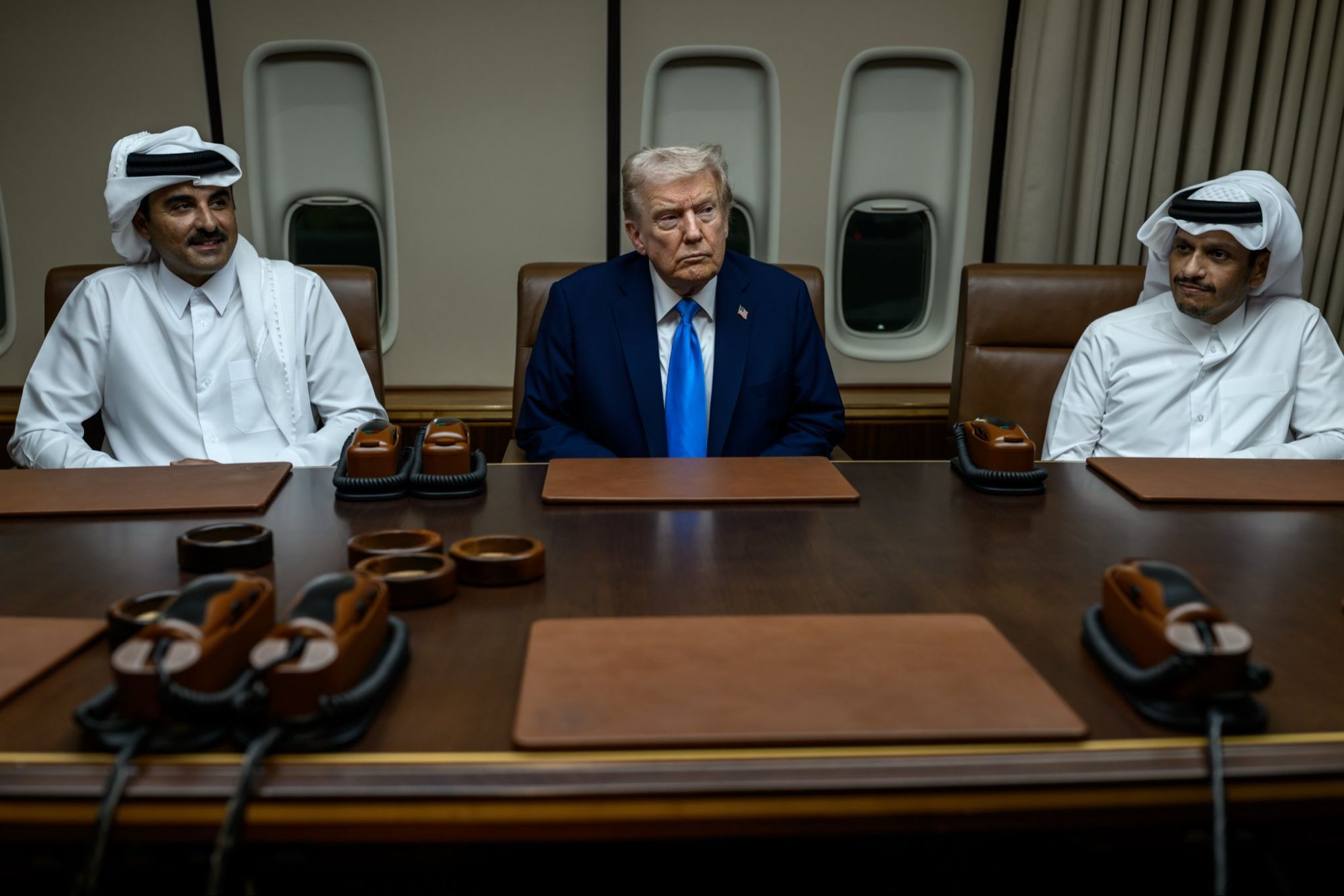
WASHINGTON, D.C. Oct 25, 2025 – U.S. President Donald J. Trump engaged in impromptu diplomacy on Saturday, hosting Qatar’s Emir Sheikh Tamim bin Hamad Al Thani and the country’s Prime Minister aboard Air Force One for discussions on Middle East peace efforts and regional security, according to White House officials.
The meeting took place during a brief refueling stop at Al Udeid Air Base near Doha, Qatar, as Trump en route to Malaysia for a series of bilateral engagements in Asia. Images released by the White House showed the president descending the aircraft’s stairs, greeted by a honor guard of Qatari personnel in traditional white uniforms lining a red carpet on the tarmac under the night sky.
In a statement accompanying the photos, the White House described the encounter as a testament to strengthening U.S.-Qatar ties, emphasizing Qatar’s pivotal role in mediating ongoing Gaza ceasefire negotiations. “President Donald J. Trump meets with Qatar’s Emir and Prime Minister aboard Air Force One during a refueling stop at Al Udeid Air Base, en route to Asia,” the post read, accompanied by American and Qatari flags.
Sources familiar with the talks, speaking on condition of anonymity, revealed that Trump expressed gratitude to Sheikh Tamim for Qatar’s mediation in advancing the second phase of a Gaza reconstruction plan. This phase, part of a broader U.S.-backed initiative, aims to transition from ceasefire to long-term stability in the region, including potential multinational security contributions. Trump reportedly hailed the discussions as a step toward “real peace” through strength, echoing his administration’s foreign policy mantra of prioritizing American interests while fostering alliances.
The conversation also touched on Qatar’s potential role in Gaza’s stabilization, with Trump floating the idea of Qatari troops contributing to a multinational force to secure the area post-conflict—a prospect that could mark a significant shift in Doha’s involvement in Palestinian territories. Al Udeid, home to the largest U.S. military installation in the Middle East, served as a symbolic backdrop, underscoring the deep strategic partnership between Washington and Doha, which includes joint counterterrorism operations and energy cooperation.
Qatar’s mediation has been instrumental in recent de-escalation efforts between Israel and Hamas, building on fragile truces brokered earlier this year. The Gulf nation’s unique position—hosting Hamas political leaders while maintaining close ties with the U.S.—has positioned it as a key broker in the protracted conflict.
Trump’s Asia itinerary, which includes stops in Malaysia and potentially other Southeast Asian nations, focuses on trade deals, supply chain resilience, and countering Chinese influence in the Indo-Pacific. The Qatar stoplighted his administration’s approach to “multipolar diplomacy,” blending high-stakes regional talks with broader global outreach.
Reactions on social media were swift and supportive among Trump’s base, with users praising the move as evidence of restored American respect abroad. “America is respected again,” one prominent commenter noted, while others highlighted the rarity of foreign leaders boarding Air Force One for such meetings.
This is the latest in a series of Trump-era engagements with Gulf leaders, following substantial investments from the region into U.S. infrastructure and defense sectors. As the president continues his trip, analysts say these interactions could accelerate momentum toward a comprehensive Middle East peace framework before year’s end.
The White House has not yet released a full readout of the discussions, but officials indicated further announcements on Gaza progress are expected soon.
About The Author