WASHINGTON, D.C. August 11, 2025 – President Donald Trump has declared a public safety emergency in the nation’s capital, citing a dramatic rise in violent crime that he describes as a “national disgrace” and a threat to the proper functioning of the federal government. The move comes as part of a broader administration effort to address what Trump calls a “crime crisis” in major American cities, with Washington, D.C., at the forefront.
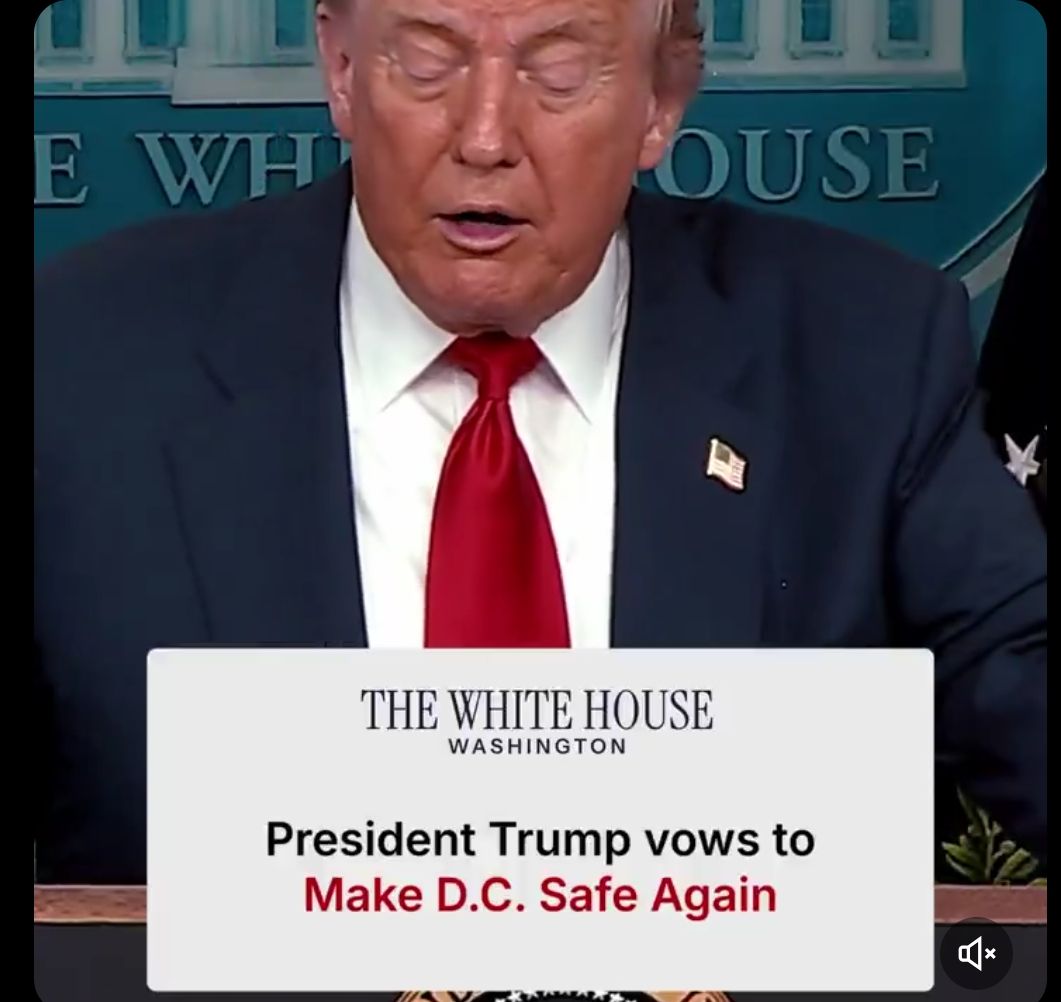
In a video address from the White House, Trump announced the deployment of 800 national guardsmen to the District, with the potential for further increases, to restore law and order. “Our nation’s capital should be a symbol of patriotism for the American people—not a city of lawlessness,” Trump stated, emphasizing that the emergency declaration aims to protect federal buildings, national monuments, and the safety of residents and visitors alike.
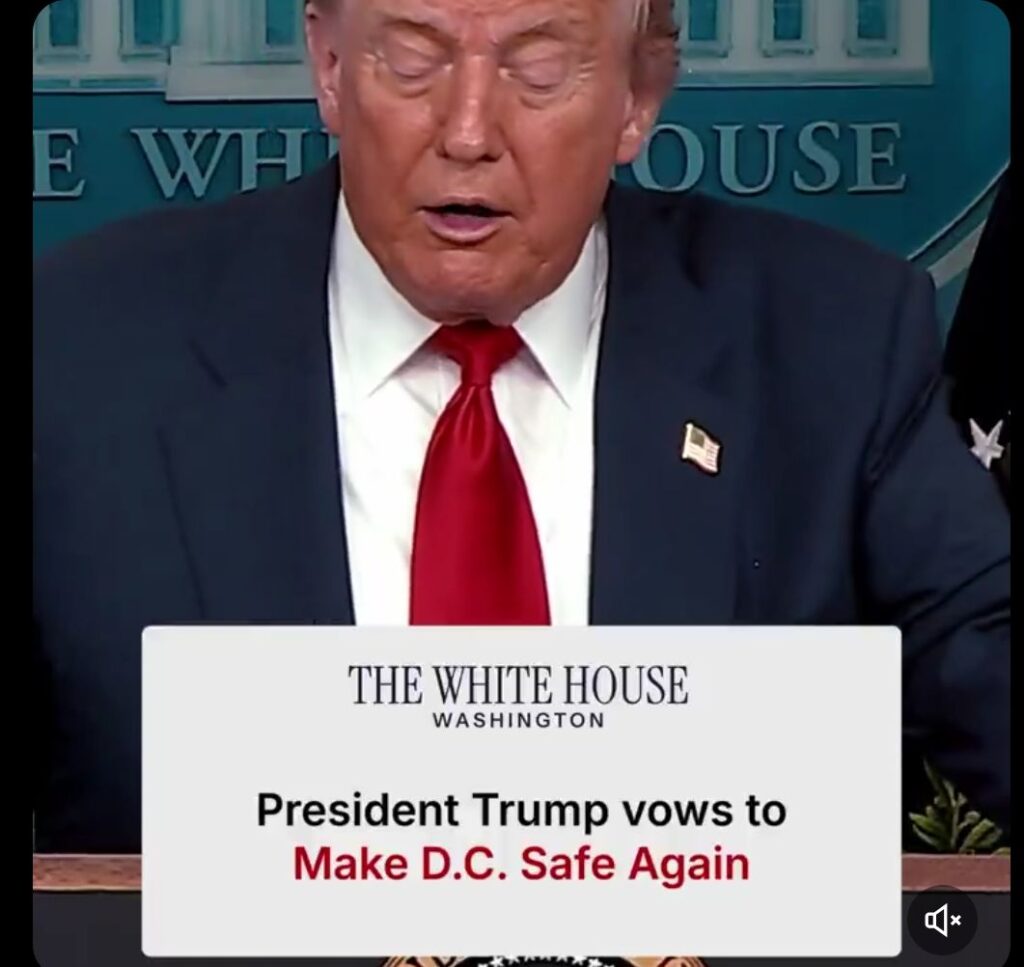
The president’s action follows the establishment of a task force in March dedicated to enhancing safety and infrastructure in D.C., reflecting ongoing concerns about crime rates. Trump’s executive order places the D.C. Metropolitan Police Department (MPD) under federal control for an initial period of 30 days, with the possibility of extension, invoking emergency powers to address what he describes as an “urgent endangerment” to public servants, citizens, and tourists.
Despite the administration’s assertions, recent crime data presents a mixed picture. While violent crime in D.C. reached historic 30-year lows in 2024 and has decreased by 26% this year compared to the same period last year, individual high-profile incidents and persistent challenges in certain neighborhoods have fueled the perception of a crisis. The FBI’s latest statistics show declines in burglaries and robberies nationwide, but Trump has focused on what he perceives as a failure of local governance to manage the situation effectively.
The D.C. Police Union has expressed support for the federalization, with union president Gregg Pemberton stating, “We acknowledge the crime spiral and the need for immediate action to restore public safety.” However, he cautioned that the measure should be temporary, aimed at empowering a fully staffed local force rather than a long-term takeover.
Trump’s declaration leverages his unique authority over the D.C. National Guard, unlike other states where governors hold such command. This move solidifies federal control over the capital, which is already subject to significant oversight due to its status as a federal enclave. The administration’s strategy includes protecting key federal sites, a role typically handled by agencies like the U.S. Park Police and the Secret Service, but now expanded under the emergency powers.
Critics, including D.C. Mayor Muriel Bowser and Congresswoman Eleanor Holmes Norton, have contested the necessity of the emergency declaration, arguing that it misrepresents current crime trends and undermines local autonomy. Norton described the decision as “counterproductive, potentially dangerous, and an egregious assault on D.C. home rule,” pointing to misleading statistics used to justify the action.
Legal experts suggest that the intersection of military use for domestic law enforcement and the implementation of city crime policies could prompt challenges, given the unusual nature of federalizing a local police force. The 1973 Home Rule Act, which grants D.C. limited self-governance, allows the president to take control of the MPD in certain emergency situations, a provision Trump has now activated.
As the administration pushes forward with its law-and-order agenda, the deployment of national guardsmen and the federalization of the D.C. police mark a significant escalation in Trump’s approach to urban crime, raising questions about the balance between federal authority and local governance in the nation’s capital.
About The Author