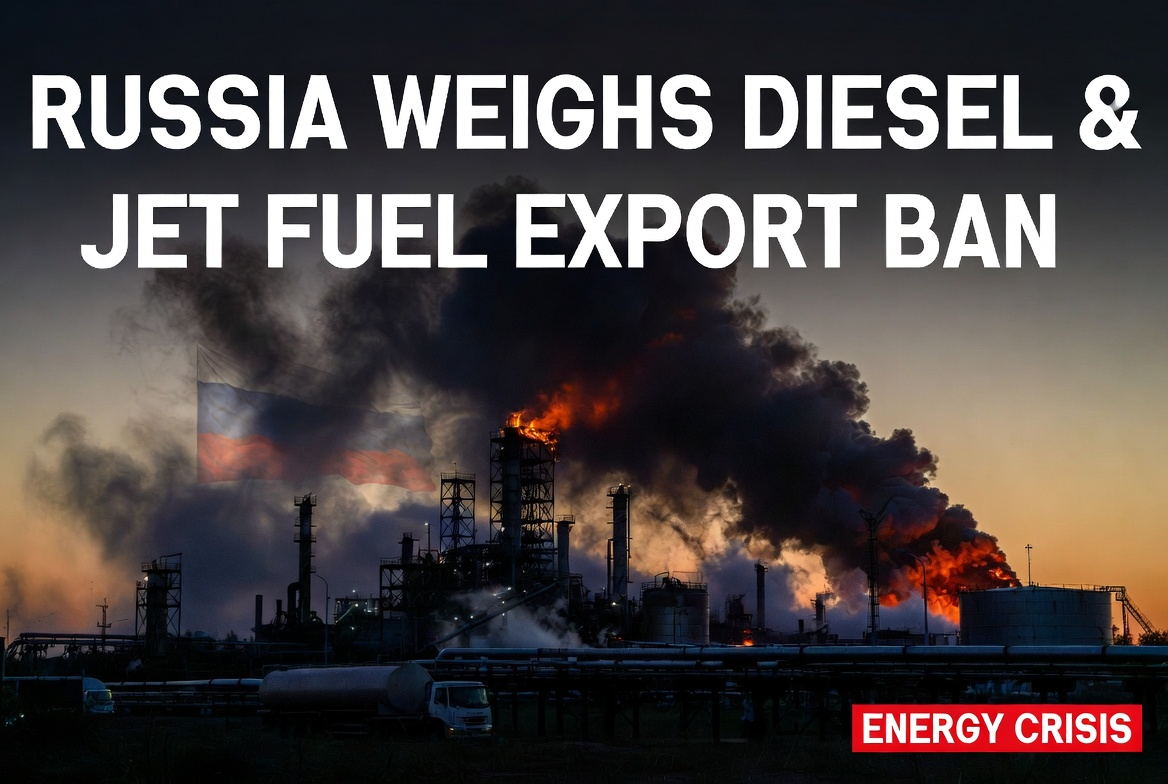
MOSCOW May 26 2026 — Russian authorities are weighing restrictions on diesel and jet fuel exports to prioritize domestic supplies, as intensified Ukrainian drone attacks have slashed refinery throughput to multi-year lows, according to reports from Interfax and industry sources.
Oil companies were advised to curb foreign sales of petroleum products following a May 26 meeting chaired by Deputy Prime Minister Alexander Novak, focused on the domestic fuel market. Sources told Interfax that a potential ban on diesel and jet fuel exports is at an advanced stage of discussion, though no implementation date has been set.
Ukrainian drone strikes have targeted multiple major Russian refineries in recent weeks, forcing partial or full shutdowns at facilities with a combined capacity exceeding 83 million metric tons per year — roughly a quarter of Russia’s total refining output. Key sites affected include:
- The Kirishi refinery (second-largest by capacity), offline since early May.
- Ryazan refinery, which halted operations after a May 15 strike.
- Other central Russian plants like Nizhegorodorgsintez.
The International Energy Agency (IEA) has projected that these attacks will suppress Russian refinery runs through at least mid-2026, with daily processing hovering around 5 million barrels.
Russia is one of the world’s top diesel exporters, shipping approximately 800,000 to 1 million barrels per day — roughly half of its production. Any export curbs would tighten global supplies for trucking, shipping, agriculture, and aviation, potentially pushing fuel prices higher, particularly in Europe and emerging markets.
This move echoes previous temporary export bans imposed in response to domestic fuel shortages and price pressures. Analysts note that while Russia has redirected much of its crude and product exports to Asia following Western sanctions, sustained refinery outages are now straining even domestic priorities.
No official confirmation from the Russian government has been issued yet, and the situation remains fluid. Markets are expected to monitor developments closely, with potential ripple effects on global energy prices in the coming days.
Sources: Interfax, Bloomberg, Reuters, IEA reports.
About The Author