NORTH KOREA March 18, 2026 – North Korea’s Central Election Committee has announced that candidates from the ruling Workers’ Party of Korea (WPK) and its allies have won every one of the 687 seats in the 15th Supreme People’s Assembly, capturing 99.93% of the votes cast.
The parliamentary elections took place on March 15, 2026 — the first in seven years. Official figures show a voter turnout of 99.99%, with only 0.07% of ballots rejecting the pre-selected candidates.
Supreme Leader Kim Jong Un cast his ballot at the Chonsong Youth Coal Mine in South Phyongan Province, where he stressed the strategic importance of the coal industry to the country’s five-year economic plan. In a notable departure from past practice, Kim himself did not appear on the ballot this time.
The Supreme People’s Assembly functions largely as a rubber-stamp legislature, formally endorsing state policies and leadership decisions rather than engaging in genuine debate. Its first session is scheduled for March 22, when lawmakers are expected to discuss constitutional matters and economic priorities.
The results were quickly highlighted on social media by accounts covering BRICS and geopolitics. One widely shared post from @BRICSinfo read:
“JUST IN: 🇰🇵 Kim Jong Un wins North Korea’s parliamentary election with 99.93% of the vote.”
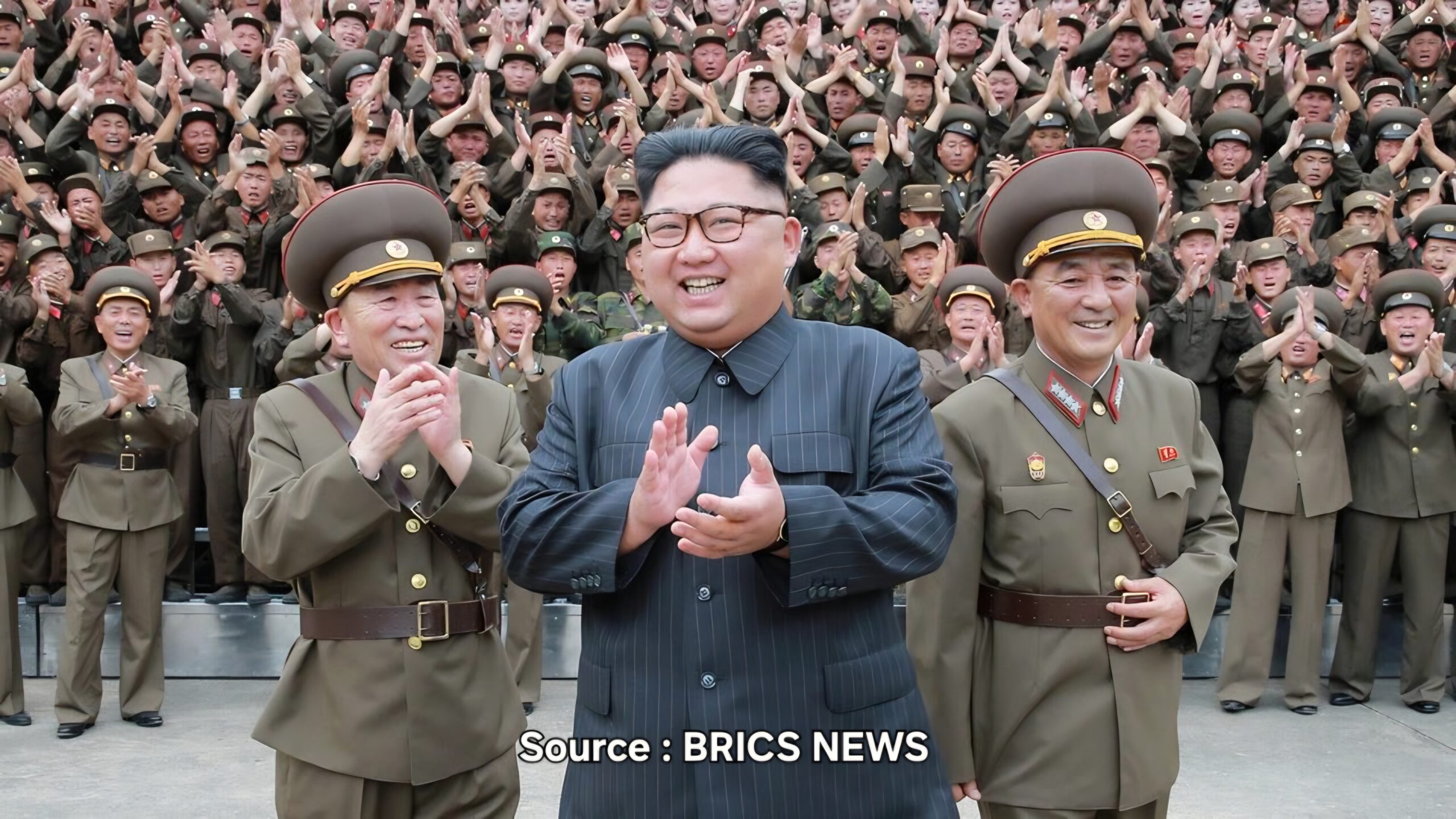
Accompanying the message was a photograph of a beaming Kim Jong Un in a dark pinstripe suit, clapping alongside two senior military officers while surrounded by hundreds of uniformed personnel applauding enthusiastically — a classic image of regime unity and loyalty.
Such near-unanimous outcomes have been the norm in North Korean elections for decades. With only a single approved candidate per constituency and strong social pressure to vote “yes,” the process is widely viewed by international observers as ceremonial rather than competitive.
Life News Agency will continue monitoring developments as the new assembly convenes later this week.
About The Author