
By Professor Dato Dr Ahmad Ibrahim
As chairman of ASEAN in 2025, Malaysia has adopted inclusivity and sustainability as key drivers. Both are not easy to execute. They both require mindset change, behavioural adjustments and more important political will. Financing is always a key enabler. Microfinancing represents an evolution in development finance, from providing small loans to the poor to addressing systemic inequalities and fostering broader social equity. This shift presents both challenges and opportunities in achieving truly inclusive growth. There are key challenges to deal with. One concerns its limited scope. Microfinance primarily focuses on credit access but often fails to address deeper structural barriers like education gaps, gender discrimination, and lack of infrastructure. Over-indebtedness and high interest rates in some microfinance institutions (MFIs) can trap borrowers in cycles of poverty rather than lifting them out.
Moving from microcredit to holistic financial inclusion requires regulatory support and technological adaptation. Many MFIs lack the capacity to expand into broader social equity initiatives like healthcare, education, or gender empowerment. Microfinance alone cannot dismantle entrenched social hierarchies that perpetuate economic exclusion. Without policy reforms such as land rights and labor laws, financial inclusion may not translate into real equity. Then there is digital divide. While fintech and mobile banking offer new opportunities, marginalized communities often lack digital literacy and access, risking further exclusion. Many MFIs struggle to balance financial sustainability with social mission, sometimes prioritizing profitability over poverty alleviation.

What then are the key opportunities? Combining microfinance with education, healthcare, and skills training can break poverty cycles more effectively. Partnerships with NGOs, governments, and private sectors can amplify impact. Microfinance has no doubt empowered many women. Expanding into gender-sensitive policies can deepen social equity. Mobile money, blockchain, and AI-driven credit scoring can reduce costs and expand access to underserved populations. Experiences with government-backed digital ID systems such as India’s Aadhaar can enhance financial inclusion. Aligning microfinance with national social protection programs (e.g., conditional cash transfers) can create safety nets for the poorest. While the advocacy for fairer labor laws and progressive taxation can complement financial inclusion efforts.
The shift from microfinance to social equity requires systemic thinking, recognizing that financial tools alone are insufficient without addressing structural inequalities. By leveraging technology, policy reforms, and cross-sector collaboration, inclusive growth can move beyond credit access to genuine empowerment. The challenge lies in scaling solutions sustainably while ensuring they reach the most marginalized, turning microfinance’s grassroots reach into a springboard for broader social justice.
To transition from microfinance to broader social equity, effective policy frameworks are essential. Many countries have adopted the National Financial Inclusion Strategies (NFIS) to align microfinance with broader development goals. Key components include regulatory sandboxes, allowing fintech innovations to be tested in controlled environments, credit guarantee schemes which help reduce lender risk for underserved groups. Gender-responsive policies mandate women’s representation in financial services. A good example is Bangladesh’s requirement for female loan officers. India’s Pradhan Mantri Jan Dhan Yojana (PMJDY) adopts a national mission for universal banking access. The impact is felt over 500 million bank accounts opened, with direct benefit transfers (DBTs) reducing leakage in welfare schemes.
Policies that integrate microfinance with social welfare include Brazil’s Bolsa Família which ties cash aid to school attendance, health check-ups. Kenya’s Universal Basic Income (UBI) pilot experiments showed UBI plus microfinance improved resilience. Rwanda’s Land Tenure Reform formalizes property rights, enabling women to use land as collateral. Whilst Philippines’ Magna Carta for Microenterprises requires banks to allocate 8% of loans to micro-businesses. The Central Bank of Kenya allowed telecoms to offer mobile money with no traditional banking license required. The impact includes 80% of Kenyan adults use mobile money. And poverty reduced by 2% according to MIT study. In Bangladesh, the Grameen Bank’s evolution expanded into education (Grameen Shikkha), healthcare (Grameen Kalyan), and solar energy. It inspired Bangladesh’s Microcredit Regulatory Authority Act (2006) to prevent predatory lending.
There are some key takeaways for policymakers. Policy must have holistic integration. Microfinance must link with education, healthcare, and digital inclusion. Gender-centric models must feature. There is ample evidence that women’s financial access leads to higher social ROI. Then there is the aspect of regulatory innovation. Sandbox frameworks help fintech scale responsibly. Data-driven targeting is essential. Use AI and machine learning to identify marginalized groups such as caste, disability-inclusive credit scoring. Future directions will include blended finance such as public-private partnerships for affordable housing, clean energy. Also decentralized solutions with blockchain-based identity for stateless populations. Clearly, microfinancing can be a powerful instrument to drive forward on the path of inclusive growth through social equity, a major agenda under global sustainability aspirations. Models are aplenty around the world. What is sorely needed is a strong political will. The rest will take care of itself.
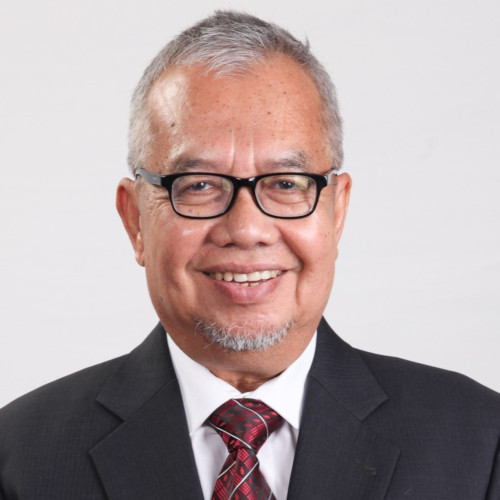
The author is affiliated with the Tan Sri Omar Centre for STI Policy Studies at UCSI University and is an Adjunct Professor at the Ungku Aziz Centre for Development Studies, Universiti Malaya.
About The Author