By Dr Zafira Nadia Maaz and Dr Nor Amaleena Mazlan
Malaysia’s construction sector is being asked to do something fundamentally different from what it did a decade ago.
It must build faster, safer, and more efficiently, while responding to rising expectations on sustainability, reporting, and long term asset performance. Yet when it comes to financing, the construction sector is still too often forced to treat digitalisation and sustainability as separate upgrades instead of part of one integrated shift in how projects are delivered.
That is the real disconnect. Malaysia does not mainly face an ambition gap in construction. It faces a dire financing mechanism gap.
The financing gap behind sustainable construction
To be fair, Malaysia is not standing still. Public policy has, for some time, signalled digital transformation and sustainability both matters. The industry has been encouraged to digitalise, while financing support for sustainable transition has also gained visibility. The direction is clear: Malaysia wants a construction sector that is more productive, more future ready, and more aligned with national sustainability ambitions.
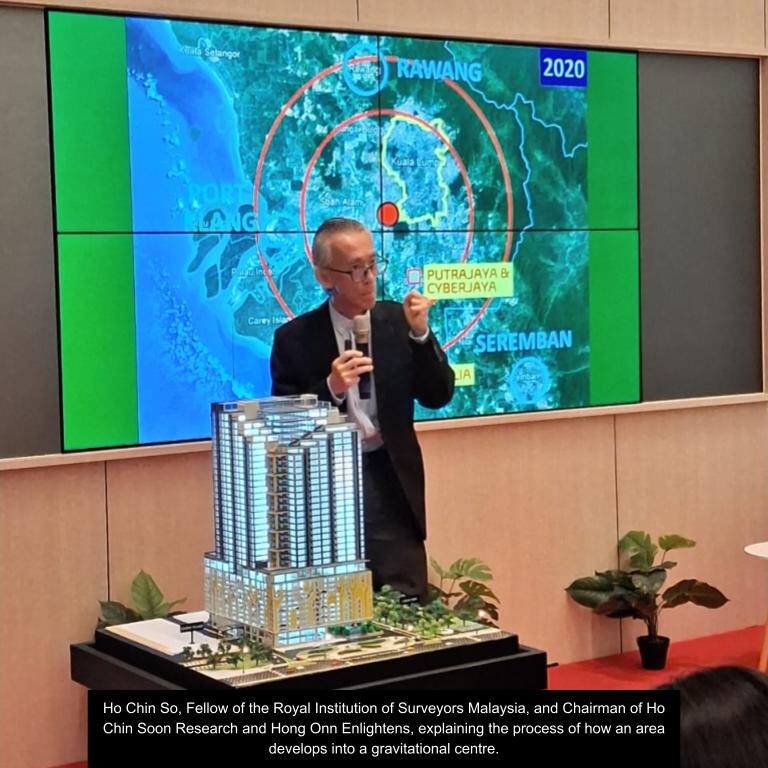
But direction alone does not guarantee transformation. The more important question is whether financing mechanisms reflect how construction stakeholders invest, operate, and deliver projects. The financing gap is also a spatial gap: investment stops at lot boundaries while economic returns and risks flow across entire districts. At the moment, that answer remains uncertain. Digital support tends to sit in one box. Sustainability support sits in another. On paper, that may look manageable. On real projects, it is not how transition happens.
Why fragmented financing no longer fits project reality
Construction firms do not digitalise first and become sustainable later. Increasingly, they do both together.
A contractor investing in BIM, cloud coordination, site analytics, lifecycle costing, and carbon reporting is not pursuing separate agendas. It is building one integrated capability. That capability improves coordination, reduces rework, strengthens traceability, supports better material management, and makes sustainability performance easier to demonstrate. As we look beyond spatial dimension, construction project’s impact on drainage, traffic, and surrounding land value spills across entire districts. Yet financing remains locked to separate building projects.
This is why fragmented incentives are becoming less effective. They may support isolated upgrades, but they do not fully support the integrated systems now needed for sustainable construction. Density makes shared infrastructure viable and land values productive. But fragmented financing, locked to individual lots, cannot capture system-level returns. It treats each lot in isolation. Malaysia’s financing challenge is therefore not simply about how much support exists, but whether that support is designed around project reality.
Sustainable construction now depends on proof
Sustainable construction is no longer only about using greener materials or installing efficient systems. It increasingly depends on the ability to measure, verify, coordinate, and report performance credibly. That is where digital capability becomes critical. BIM-enabled quantities, integrated data environments, AI-enabled monitoring, lifecycle costing, and carbon reporting are not side technologies.
They are part of project backbone which makes sustainability visible. Once performance becomes measurable, it becomes easier to justify investment, defend decisions, and strengthen financial confidence. In simple terms, sustainable construction becomes more bankable when it becomes more measurable.
From sustainable ambition to credible transition
This is where the issue becomes bigger than technology adoption alone. The market is moving away from broad sustainability claims and towards outcomes that are measurable, auditable, and comparable.
That shift matters. One of the biggest risks in the transition is that firms spend on labels, selected green features, or isolated pilot tools without investing in the systems needed to verify whether outcomes are real. In construction, financing can no longer stop at visible green components alone. Not every location delivers the same return. Some corridors, catchments, and districts offer far greater impact per ringgit than others. A credible transition invests where the return is highest first, then expands outward.
Thus, digital and governance capability support which allows firms to track materials, monitor performance, document assumptions, and report outcomes credibly. Otherwise, the sector risks funding sustainability claims without funding the evidence needed to support them. That is not sustainable transition. That is symbolic transition.
Seen through this lens, integrated finance is not only an industry productivity issue. It is also a net-zero credibility issue. If construction stakeholders are expected to contribute meaningfully to a lower carbon economy, financing must help them build the capability to measure emissions, improve resource efficiency, reduce rework, and report progress in a way that can withstand scrutiny. That is very different from simply helping a firm buy software or install a greener component.
The same logic applies to the Sustainable Development Goals. A financing model that helps firms integrate digital tools with sustainable delivery supports more resilient infrastructure, more sustainable cities, more responsible use of materials and resources, and stronger climate action. In other words, this is not a niche sustainability issue. It sits at the centre of how future development will be judged.
From fragmented incentives to integrated finance
Malaysia does not lack policy intent. It does not lack pilot technologies. It does not even lack financing mechanisms. What it still lacks is an integrated financing logic for the sustainable construction future it says it wants to build. If the country wants sustainable construction at scale, it must move beyond fragmented incentives and begin financing credible transition. That means supporting not just greener components or smarter tools, but the integrated systems that make sustainable performance measurable, defensible, and commercially meaningful.
Financing aligned with spatial logic—recognising the connectivity of systems, the diffusion of impacts, and the concentration of returns—transforms fragmentation into integration. That is how sustainable ambition moves beyond policy language and becomes something visible on projects, measurable in outcomes, and credible in the market.


Dr Zafira Nadia Maaz is a Construction Data Specialist and Senior Lecturer at Universiti Malaya, and Dr Nor Amaleena Mazlan is an Urban Economic Development Specialist and Senior Lecturer at Universiti Malaya.
About The Author