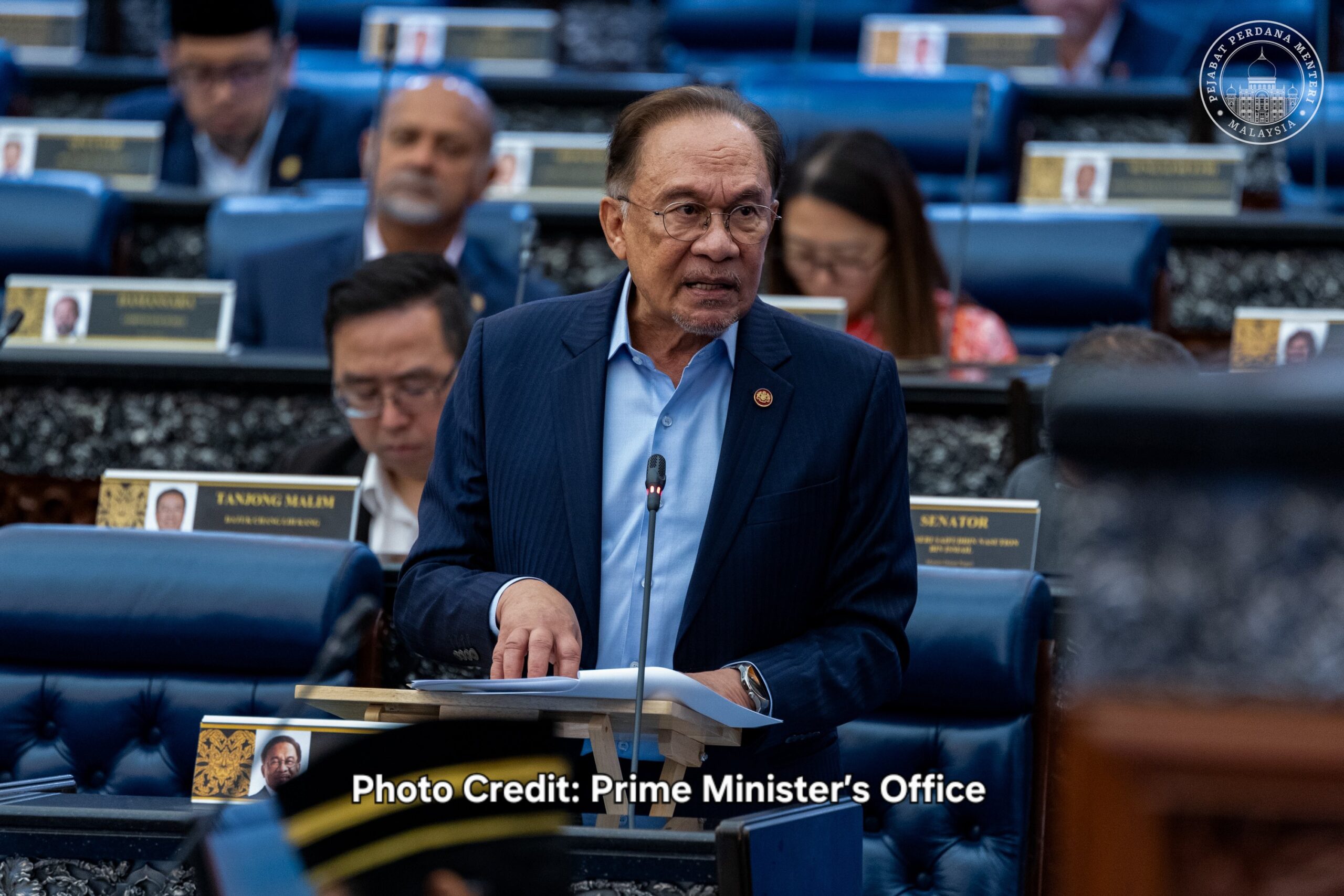
PUTRAJAYA, MALAYSIA March 9, 2026 – In a statement aligning with Malaysia’s bipartisan parliamentary stance, Prime Minister Dato’ Seri Anwar Ibrahim expressed encouragement over emerging calls for restraint from Iranian leadership amid the ongoing conflict in the Gulf and broader West Asia region. The remarks come as tensions continue to mount following Iran’s retaliatory missile and drone strikes on multiple countries, which have drawn widespread international condemnation and raised fears of a wider regional war.
Anwar highlighted the gravity of the situation, noting that nations including Bahrain, Kuwait, Qatar, Saudi Arabia, and the United Arab Emirates have suffered repeated attacks on critical infrastructure such as energy facilities and water installations. The violence has also extended to Azerbaijan, Jordan, and Turkey, disrupting global oil and shipping routes through vital waterways like the Strait of Hormuz. “The situation remains deeply alarming,” Anwar stated, emphasizing that “disruption here carries consequences far beyond the region.”
Urging a shift toward diplomacy, the Prime Minister remarked, “There will always be voices urging a harder line, but history has rarely been kind to those who chose escalation over negotiation when the door to dialogue was still open. Keeping it open takes real courage.” He affirmed Malaysia’s readiness to support any credible efforts for a negotiated cessation of hostilities and called on the international community to act urgently to prevent further loss of life and escalation.
The conflict, dubbed the “2026 Iran War” in some reports, erupted after joint U.S. and Israeli strikes on Iran on February 28, which reportedly killed key Iranian figures, including the supreme leader. Iran responded with widespread retaliatory attacks, targeting U.S. military bases and allied infrastructure in the Gulf states, as well as civilian sites. According to various sources, Iran has launched thousands of missiles and drones, causing casualties across the region: at least two killed in Bahrain, four in Kuwait, and injuries in Qatar and the UAE, among others. The strikes have severely disrupted energy production, with Qatar halting liquefied natural gas exports and Saudi Arabia facing fires at refineries.
The U.S. and its allies, including the Gulf states, have strongly condemned Iran’s actions as “indiscriminate and reckless.” A joint statement from the U.S., Bahrain, Jordan, Kuwait, Qatar, Saudi Arabia, and the UAE denounced the attacks, which have also hit Iraq, Oman, and Syria. Iranian officials have framed the strikes as self-defense against U.S. and Israeli aggression, with President Masoud Pezeshkian issuing an apology to Gulf states while vowing to halt further attacks unless provoked—though subsequent strikes have continued.
Gulf countries, caught in the crossfire despite opposing the initial U.S.-Israeli operations, have reported intercepting most projectiles but face mounting economic fallout, including grounded flights and halted shipping. Analysts warn that the conflict’s spread to over a dozen nations, including non-Gulf states like Azerbaijan and Turkey, could exacerbate global energy crises and draw in more actors, such as Hezbollah in Lebanon or the Houthis in Yemen.
Anwar’s call for dialogue reflects Malaysia’s longstanding advocacy for peaceful resolutions in international conflicts, particularly those affecting Muslim-majority nations. As the situation evolves, observers note that de-escalation efforts may hinge on back-channel diplomacy among the Gulf states and Iran, amid ongoing U.S. and Israeli military responses.
About The Author