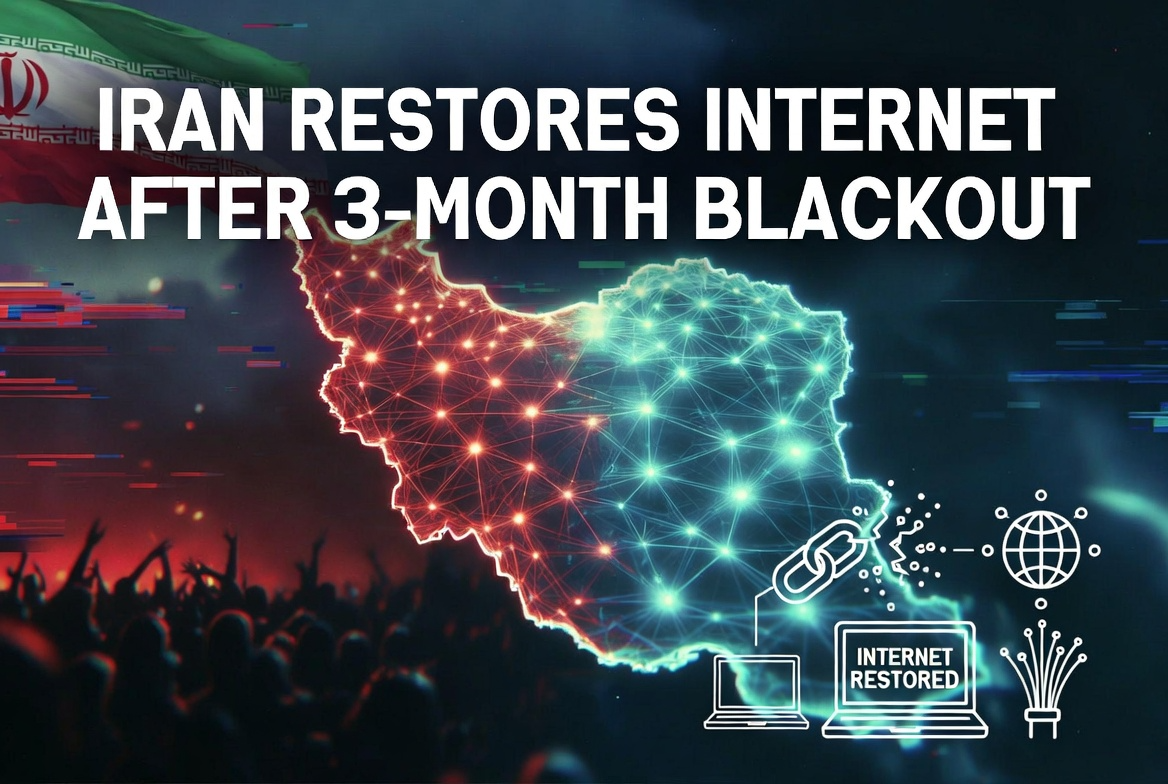
TEHRAN May 25, 2026 — Iranian authorities announced on Monday that international internet access will be gradually restored nationwide, ending one of the longest government-imposed internet blackouts in the country’s history.
President Masoud Pezeshkian ordered the Ministry of Communications to restore connectivity to pre-January levels, according to state media reports. The decision follows a vote by a special cyberspace committee, with nine members in favor and three opposed.
The blackout began on January 8, 2026 — the 12th day of widespread anti-government protests triggered by economic grievances — and intensified dramatically on February 28 following U.S. and Israeli military strikes on Iranian targets. Monitoring group NetBlocks described the disruption as a near-total shutdown, with international connectivity dropping to as low as 1-6% of normal levels for extended periods.
Officials cited national security concerns amid the protests and short-lived war as the reason for the restrictions, which also limited domestic communications and access to independent information sources. The outage, which has lasted over 87 days in its most severe phase, is estimated to have caused more than $1.8 billion in economic damage, severely impacting businesses, digital services, and ordinary citizens.
During the blackout, authorities provided limited “tiered” or “class internet” access to selected groups, including some businesses, officials, and regime-aligned entities, while most Iranians remained largely offline. Satellite services like Starlink were used by some as a workaround, though possession carried risks of confiscation and punishment.
The restoration order comes amid mounting domestic pressure, criticism from rights groups, and calls from within the government for normalization following the ceasefire. Implementation details remain unclear, with officials stating the process will be gradual.
Critics, including activists and opposition voices, have accused the government of using the blackout to suppress information about protests, arrests, and alleged human rights violations. Some remain skeptical about full restoration without approval from hardline institutions and the Supreme National Security Council.
This marks a significant policy shift as Iran seeks to rebuild its digital economy and reconnect with the global community after months of isolation. Further updates on timelines and technical rollout are expected in the coming days.
About The Author