KUALA LUMPUR, MALAYSIA February 6. 2026 – The DAP Socialist Youth (DAPSY) has strongly criticised Perikatan Nasional (PN), particularly PAS, for opposing efforts to democratise local governance in Kuala Lumpur by referencing outdated arguments from the 1960s.
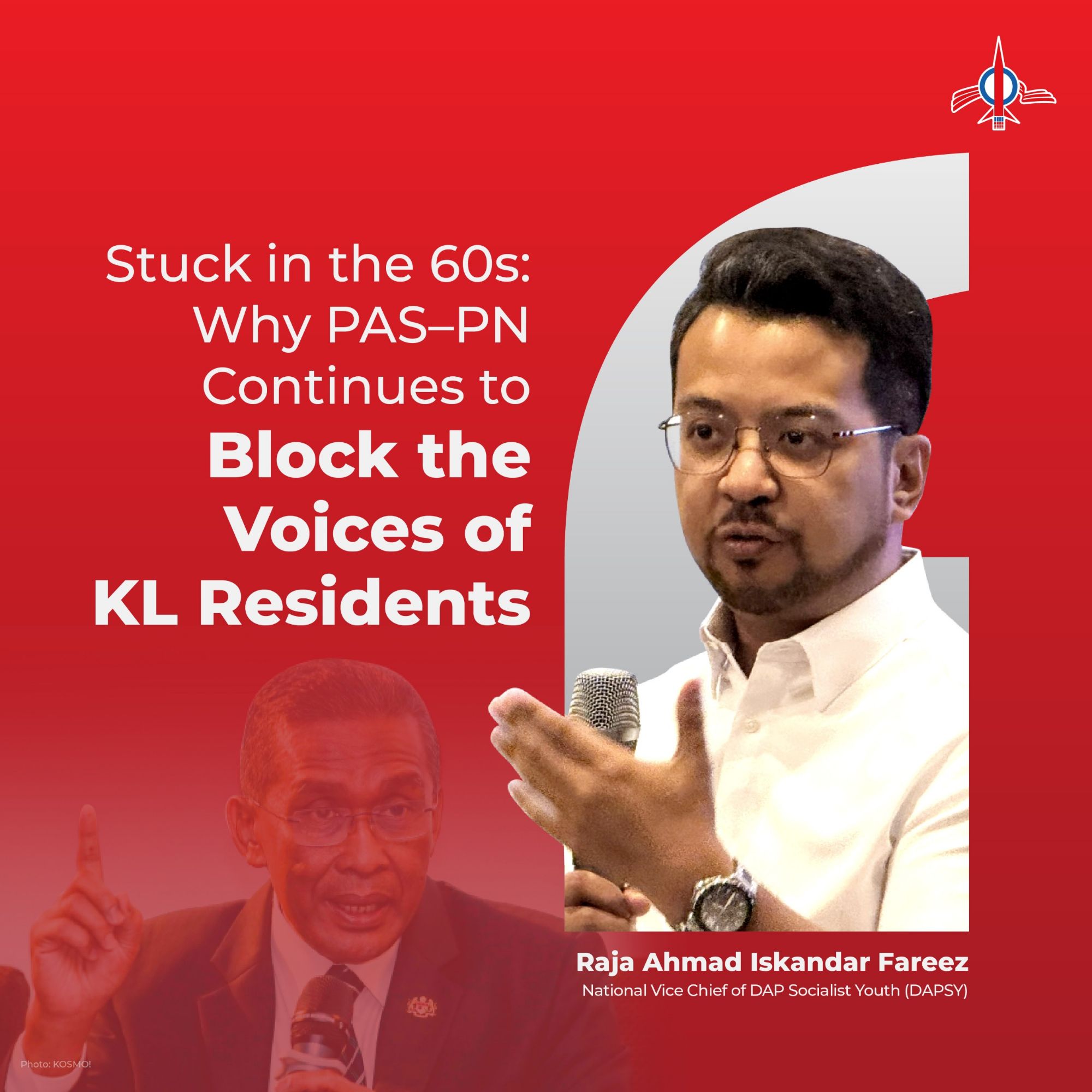
In a media statement issued on Friday, February 6, 2026, in Kuala Lumpur, National Vice Chief of DAPSY Raja Ahmad Iskandar Fareez described PAS-PN’s stance as “stuck in the 60s,” accusing Kota Bharu MP Takiyuddin Hassan of invoking parliamentary debates (Hansard) from 1960 to reject proposals for elected local councillors and a mayor in the capital.
Fareez highlighted Takiyuddin’s reliance on pre-Malaysia era arguments as “peculiar and illogical,” claiming it shows a willingness to “turn back the clock” to deny Kuala Lumpur residents their democratic right to participate in administering their city.
The criticism comes amid ongoing national debate over a government-commissioned feasibility study—led by Federal Territories Minister Hannah Yeoh—into electing the Kuala Lumpur mayor, rather than the current appointment system by the minister. PN leaders, including Takiyuddin, have dismissed the idea as “overly simplistic, naive, and misguided,” arguing it would not inherently improve governance at Kuala Lumpur City Hall (DBKL) and could politicise administration or raise ethnic concerns.
Fareez argued that Takiyuddin’s position is unconvincing and underscores the need for modern, up-to-date studies on the necessity and feasibility of restoring local elections in KL.
He stressed that urban democratisation should be comprehensive, noting that PN’s alternative proposals to enhance DBKL’s structure and operations could proceed alongside reintroducing elections. “Transparency and accountability can only be meaningfully strengthened when KL residents are involved in selecting their leaders and shaping public policies,” he stated.
Fareez pointed out a key gap in checks and balances: while Takiyuddin acknowledged KL’s unique administrative system, he failed to address the absence of elected representatives scrutinising the city, unlike in Malaysian states with Menteri Besar, Chief Ministers, Executive Councils, backbenchers, or opposition voices.
He cited DBKL’s substantial financial scale as evidence of the need for greater oversight. In 2025, DBKL received an allocation of **RM2.8 billion**—exceeding the budgets of several states, including Kelantan (approximately RM1.43-1.45 billion in recent years), Melaka (RM585.7 million), and Terengganu (RM1.887 billion). Yet, unlike state budgets tabled and debated in representative assemblies, DBKL’s funds and development plans face no such public scrutiny or elected oversight, concentrating extensive power in the appointed mayor.
Fareez concluded by emphasising demographic and social changes in KL since 1960, urging empowerment of local communities to shape the city’s future for the well-being of its residents.
This statement reflects broader Pakatan Harapan support (including DAP) for greater local democracy in the capital, contrasting with PN’s resistance, which often frames the issue around governance efficiency, potential populism, and ethnic sensitivities rather than solely historical references. The debate continues as the IIUM-conducted study progresses.
About The Author