Signature: yZGCVBJTFm/h5NOblXqcDCHMZAT5ugZtAlTsrsJozsohs8PYPkHb949CTAArCrpew+UBOqZOjwG33qrsSWdKN0Ms3zVe/zMUPz8i3kl40JSm4Zn8TOEyG4aCM+mfnKRNxf9uJHbsmD8+Z1nsTAVrz9G5MV95bfX0iVbFfXUdrjTZlTAZ5dgKTzVZzP17GMdVHlPqwndIVOsWq8UGkcEbjM4XaDBPEhfiuWZk9NopiZd9FQ5lqDFKtN6rQhKOiAEzMIQJ6FpnVWfuYzzqKsf4Rg==
WASHINGTON D.C April 7, 2026 – In a significant development amid escalating tensions in the Middle East, Iran has officially accepted a two-week ceasefire with the United States and Israel, according to multiple reports circulating on social media and international outlets.
The announcement was highlighted by BRICS News on X (formerly Twitter), stating: “JUST IN: 🇮🇷 Iran officially accepts 2-week ceasefire with US and Israel.” The post, shared late on April 7, 2026, quickly gained traction with over 1,000 likes and widespread engagement.
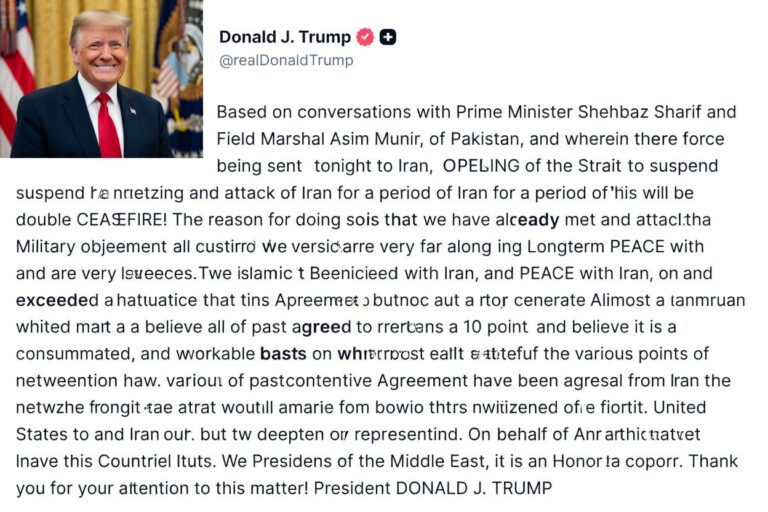
US President Donald Trump confirmed the pause in hostilities via a post on Truth Social earlier on Tuesday. He stated that, following urgent mediation by Pakistani leaders Prime Minister Shehbaz Sharif and Field Marshal Asim Munir, he agreed to suspend bombing and attacks on Iran for two weeks. The move came just hours before a self-imposed US deadline for potential strikes on Iranian infrastructure, including power plants and bridges.
Trump’s announcement was explicitly conditional: “subject to the Islamic Republic of Iran agreeing to the COMPLETE, IMMEDIATE, and SAFE OPENING of the Strait of Hormuz.” He described it as a “double-sided ceasefire” to allow space for further negotiations.
Iranian state television responded positively, reporting that Trump had “accepted the Islamic Republic’s conditions to end the war and announced a two-week ceasefire.” Tehran had previously rejected temporary truces, insisting on a permanent end to the conflict and guarantees against future attacks. However, recent updates indicate Iran is reviewing or has accepted the proposal under its own terms, which reportedly include continued pressure on Israel and maintaining the closure of the Strait of Hormuz in the short term.
Pakistan played a pivotal role in brokering the deal, with Islamabad urging both sides to de-escalate and create room for diplomacy. A senior Iranian official told Reuters that Tehran was “positively reviewing” the two-week truce offer.
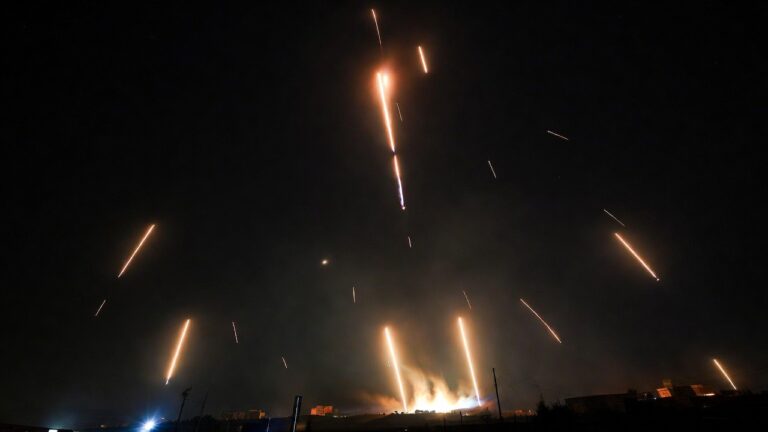
The ceasefire follows weeks of intense exchanges, including Iranian missile strikes on Israel and Israeli attacks on Iranian targets, as part of the broader 2026 US-Israel-Iran crisis. Earlier reports noted Iran launching additional missiles toward Israel shortly after Trump’s initial ceasefire comments, underscoring the fragile nature of the agreement.
Analysts caution that the truce remains conditional and temporary. Some observers on X expressed skepticism, noting potential violations or the risk that the pause could simply allow both sides to rearm. Others welcomed it as a step toward de-escalation and relief for civilians in the region.
Reactions and Next Steps
– Positive notes : Regional mediators, including Egypt and Turkey, have been involved in parallel talks. Direct US-Iran negotiations are reportedly scheduled for Friday in Islamabad.
– Ongoing concerns : The Strait of Hormuz – a critical global oil chokepoint – remains a flashpoint. Oil prices rose in early trading on news of the ceasefire.
– Israel’s position : Reports indicate Israel has also agreed to suspend attacks for the two-week period.
This is a rapidly evolving story. Life News Agency will continue monitoring official statements from Tehran, Washington, and Jerusalem for further confirmation. The two-week window is seen by many as a critical test for long-term peace efforts in the Middle East.
Sources: BRICS News on X, Trump’s Truth Social post, Reuters, Iran International, and AP reports.
About The Author