WASHINGTON, D.C. – August 20, 2025 – In a tense exchange during Tuesday’s White House press briefing, Press Secretary Karoline Leavitt sharply rebuked a New York Times reporter for questioning President Trump’s decision not to include Ukrainian President Volodymyr Zelensky in a recent meeting with Russian President Vladimir Putin.
The confrontation arose when the reporter, identified as Sean, pressed Leavitt on the rationale behind the bilateral talks. “If the point is to get everybody on the same page, why wouldn’t he have invited Zelensky to the call?” the reporter asked, according to accounts from the briefing.
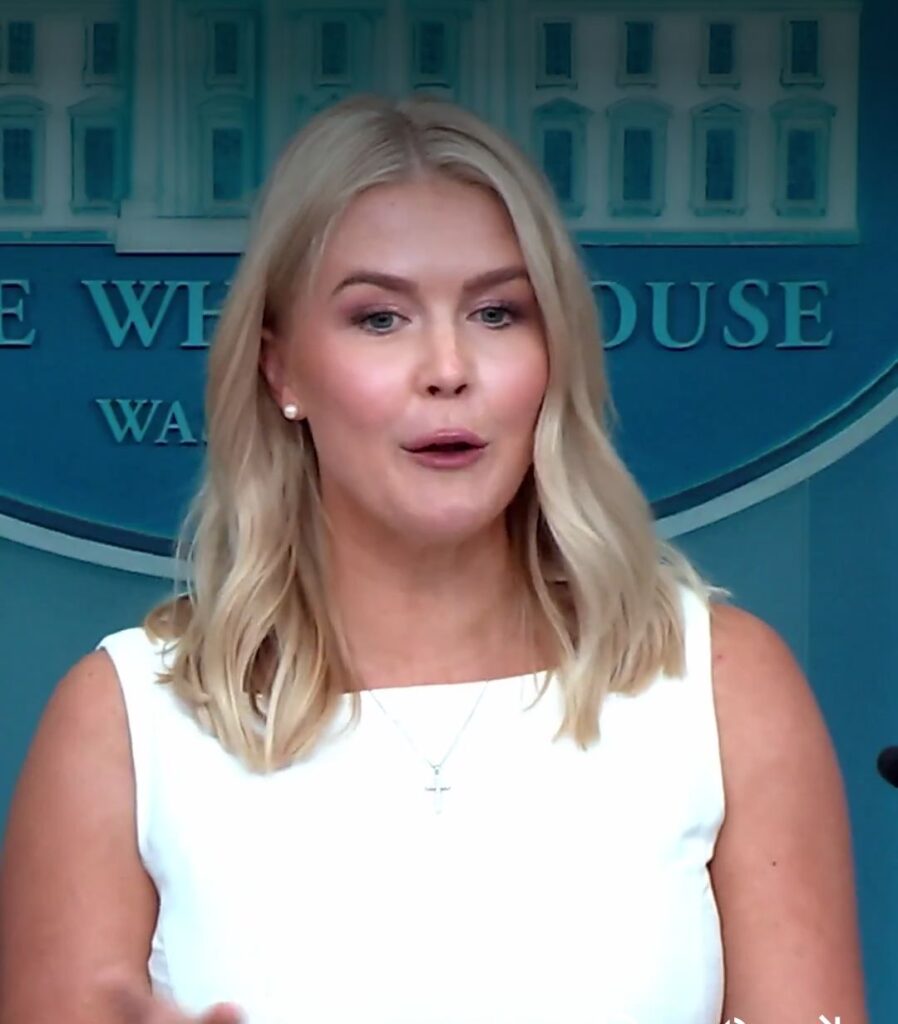
Leavitt fired back immediately, stating, “With all due respect, only a reporter from the New York Times would ask a question like that.” She defended the president’s approach by emphasizing the swift follow-up with European allies, noting that Trump met with them just 48 hours after his discussion with Putin on American soil.
Highlighting what she described as significant progress, Leavitt pointed to positive reactions from key figures. She quoted Zelensky as saying, “It was a very good conversation… We spoke about very sensitive points.” She also referenced NATO Secretary General Mark Rutte, who reportedly said the meeting broke a deadlock by “starting a dialogue.”
Leavitt further underscored the gratitude of European leaders, whose “backyard” is directly affected by the ongoing conflict in Ukraine. She argued that providing them with a direct readout of Russia’s perspective was a step forward, contrasting it with the previous administration’s handling of similar matters.
The White House later amplified the moment on X (formerly Twitter), posting a clip of the exchange with the caption: “Another day, another Fake News reporter called out. 💀 ICYMI: @PressSec RIPS New York Times reporter ⬇️.” The post has garnered over 7,600 likes and sparked widespread discussion online.
This incident comes amid broader diplomatic efforts by the Trump administration to address the Russia-Ukraine conflict, including recent multilateral meetings at the White House. Critics have questioned the exclusion of Zelensky from the Putin talks, while supporters hail it as a pragmatic move toward de-escalation.
The New York Times has not issued an immediate response to the exchange. White House officials maintain that the president’s strategy has yielded tangible advancements, with European leaders expressing optimism about renewed dialogue.
About The Author