Government Sets 30% Local Content Target for New Data Centre Projects, Dewan Told
 Bria AI
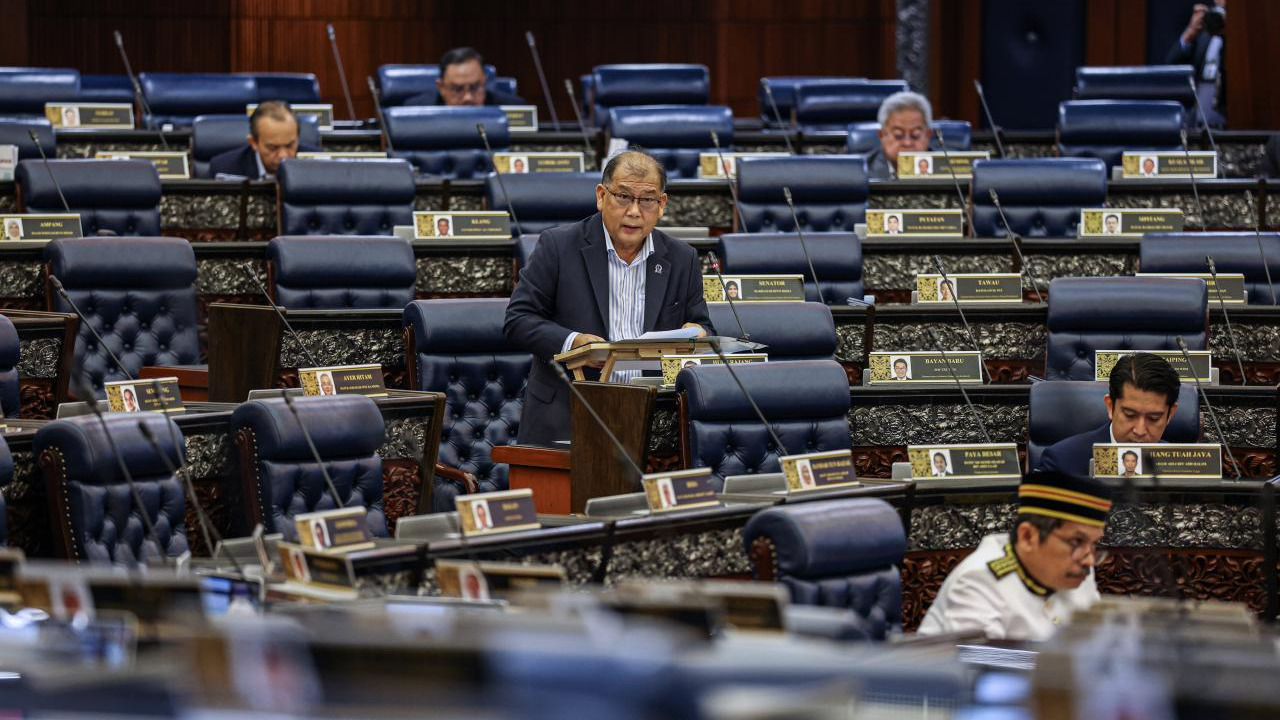
Photo: Bernama
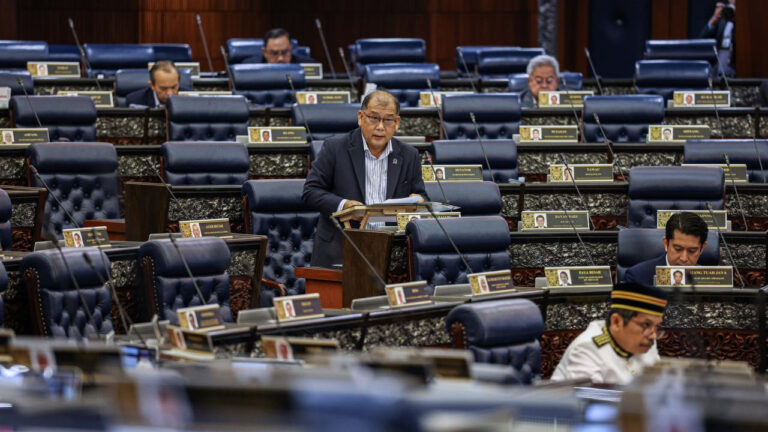
KUALA LUMPUR, November 18, 2026 — The government has set a minimum 30% local content requirement for new data centre projects, Deputy Digital Minister Datuk Wilson Ugak Kumbong told the Dewan Rakyat today, as MPs pressed for evidence that announced investments were delivering jobs, tax revenue and work for local firms.
Wilson said Putrajaya’s priority was to ensure that data centre investments translated into highly skilled jobs, greater participation by local companies, technology development and sustainable economic value, rather than merely making Malaysia a location for data centre development. The investments should also help develop the country’s artificial intelligence and cybersecurity ecosystem, in line with the AI Nation 2030 aspiration, he said, according to The Star.
Accounts of the project tally differ slightly in the detail of timing. The Star reported Wilson as saying that 117 data centre projects were recorded in Malaysia in the first half of this year, with approved investments in the data centre and cloud computing segments amounting to RM95.8 billion. The Edge reported him as saying that, as of October 2026, 117 data centre projects had been approved in Malaysia, while approved investments for the data centre and cloud computing segment in the first half of this year totalled RM95.8 billion.
Both outlets reported that the Data Centre Task Force (DCTF), jointly chaired by the Digital Ministry and the Investment, Trade and Industry Ministry, had approved 27 projects with an estimated value of RM225.97 billion up to last month, or as of October. The Edge said that, based on the outlook up to the second quarter of 2026, those DCTF projects were expected to generate 4,053 jobs, including 3,523 highly skilled positions in electrical and mechanical engineering, networking and cybersecurity, and data centre operations and maintenance. The Star carried the same job figures without the second-quarter qualifier.
Wilson said the industry was capital-intensive, that a large portion of the equipment was imported, and that capital expenditure was realised in stages, so announced investment values could not be equated directly with actual spending, job creation or local value added over a given period, The Edge reported. Although the number of direct jobs was lower than in manufacturing, the roles were more specialised, and the industry also created indirect work in construction, engineering and support services, he said.
The Edge reported that he cited a Bank Negara Malaysia report for the third quarter of 2025. He said entry-level positions in the industry offered salaries of between RM3,000 and RM7,000 a month, while senior positions paid between RM10,000 and RM30,000 a month. Those figures were above the median monthly salary of RM2,793 in 2024.
On tax, he said some projects benefited from investment incentives, with direct corporate income tax contributions expected to rise gradually after those periods ended. Development and operations also contributed through sales and service tax, local authority fees and utility-related charges, he said.
The 30% local content requirement, which The Edge and RTM said applied to new projects approved under the DCTF, covers engineering, maintenance, networking and technology solutions. Wilson said the Malaysian Investment Development Authority monitored compliance through reports submitted by companies every six months, and that operators were encouraged to develop local suppliers and promote technology transfer. The government was also working with operators, industry players and training institutions on industrial training, knowledge transfer and professional certification, he said.
He was replying to Datuk Seri Dr Wee Jeck Seng (BN-Tanjung Piai), who had asked about the actual economic value generated by data centre growth compared with announced investment figures. In a supplementary question reported by The Edge and RTM, Wee asked what mechanisms would ensure that rapid growth in northern Johor, including Sedenak and Iskandar Puteri, also brought spillover benefits to neighbouring areas such as Pontian.
In a separate supplementary question, Dr Halimah Ali (PN-Kapar) asked whether the government had carried out a cumulative impact assessment on a proposed 656.8ha (1,623-acre) industrial park in Bukit Kerayong, expected to house a data centre campus, The Star reported. She raised concerns about flooding, pressure on water and electricity supply, and added strain on roads and drainage. Wilson said data centre applications were assessed for water and electricity supply, infrastructure capacity and energy efficiency before approval, and that operators were encouraged to use renewable energy and more efficient technologies.
Our thanks to Bernama for sharing this photo with LNA.
Sources: The Star; The Edge; RTM.
About The Author








 Lina AI


 Ernie AI

 Laura AI