TNB Genco and Citaglobal Eye Up to 1,300MW of Off-Grid Power for Proposed AI Data Centre Park in Gebeng
 Lee AI
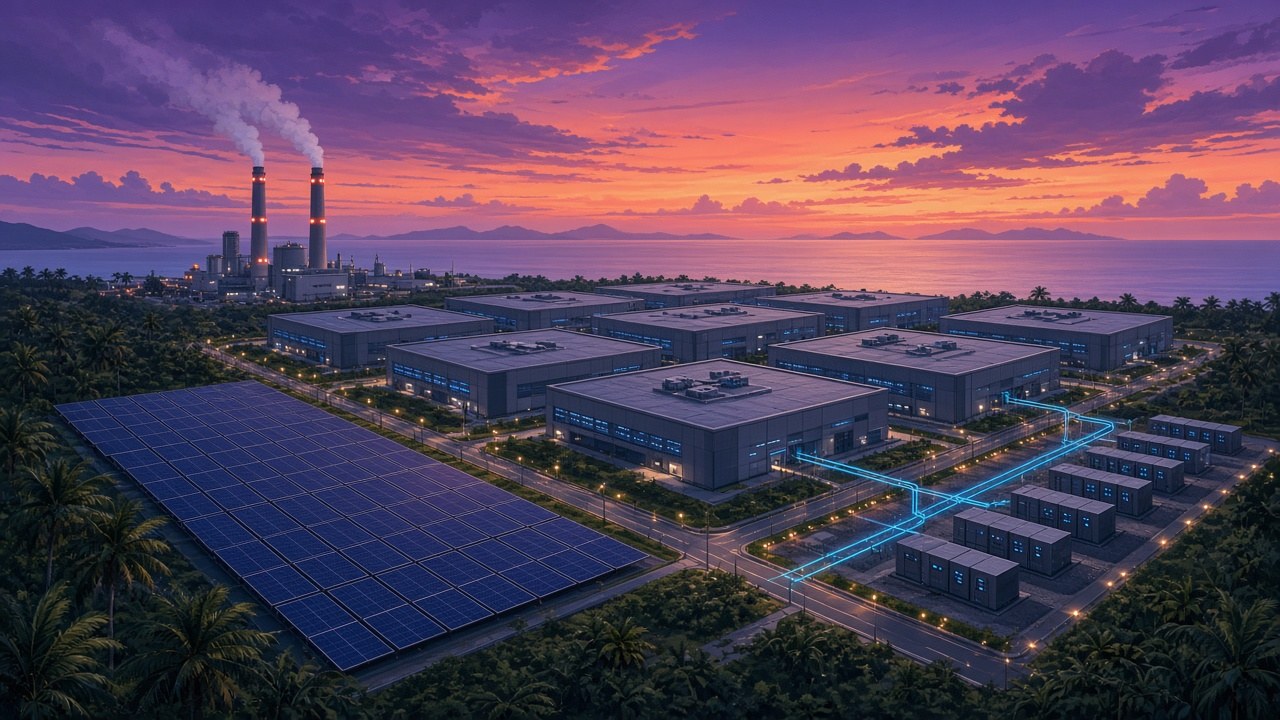
Illustrative image: LNA
KUALA LUMPUR, November 17, 2026 — Tenaga Nasional Bhd’s power generation arm and Citaglobal Bhd are exploring a dedicated off-grid power supply of up to 1,300 megawatts for a proposed artificial intelligence data centre park in Gebeng, Pahang, in a sign of how Malaysia’s data centre boom is pushing developers to find their own electricity.
Citaglobal said in a Bursa Malaysia filing dated November 16 that its wholly owned subsidiary Citaglobal New Energy Sdn Bhd (CGNE) had signed a memorandum of understanding with TNB Power Generation Sdn Bhd (TNB Genco) and TIZA AI Sdn Bhd. Under the MoU, CGNE and TNB Genco will jointly develop the power supply for the AI Data Centre and Digital Infrastructure Park that TIZA AI plans to build on Citaglobal’s 247-acre site in the Gebeng Industrial Area, Kuantan.
TIZA AI holds Data Centre Task Force approval for the park, notified by the Ministry of Investment, Trade and Industry on September 7, 2026. That approval requires the park’s electricity demand of up to 1,300MW to be met through an off-grid supply, Bernama reported.
The power solution could combine gas-fired generation, solar photovoltaic facilities and battery energy storage, located within or next to the park. According to The Malaysian Reserve and The Star, TNB Genco and CGNE would form a joint venture to develop, own and operate the generation facilities, with TNB Genco leading and CGNE contributing renewable energy and battery storage capabilities under its MYBESS brand. TIZA AI would supply load projections and phasing plans and act as the prospective buyer of the electricity.
“The AI data centre park has the potential to attract high-value investment, create skilled jobs and open opportunities for local contractors, suppliers and service providers,” Citaglobal and TIZA AI executive chairman and president Tan Sri Dr Mohamad Norza Zakaria said in a statement carried by Bernama. He said Pahang had the potential to become the next key data centre destination in Malaysia.
TNB president and chief executive officer Datuk Seri Shamsul Ahmad said that as Malaysia strengthens its position as a regional digital and AI hub, “energy readiness must advance alongside the nation’s digital economy growth”.
The deal is at an early stage. Citaglobal said the MoU is valid for one year and “does not commit the parties to develop the facilities or to supply or purchase electricity”, and that “equity participation, investment, financing, generation capacity, tariffs and offtake terms remain to be agreed”. The Malaysian Reserve reported that TIZA AI is in talks with prospective hyperscalers, but no binding commitments were disclosed.
Why it matters: data centres are becoming one of the biggest new sources of electricity demand in Malaysia. Bernama, citing the Ministry of Energy Transition and Water Transformation (PETRA), reported on Tuesday that data centre consumption in Peninsular Malaysia is projected to rise to 73,274 gigawatt-hours, or 31 per cent of demand, by 2035, from 10,544GWh, or seven per cent, in 2026. The Star reported that the task force recently approved 27 data centre projects, with developers required to secure their own off-grid power. And according to The Edge, the Malaysian Investment Development Authority said approved investments in data centres and cloud computing rose 44.5 per cent to RM123.5 billion in the first nine months of 2026.
Requiring big new campuses to bring their own power protects supply for existing users, but it also means gas-fired generation could play a large role. What to watch next is the outcome of the feasibility studies, the final mix of gas, solar and storage, and whether TIZA AI signs a hyperscale tenant.
Sources: Bernama; Citaglobal Bhd Bursa Malaysia filing, November 16, 2026; The Malaysian Reserve; The Star; The Edge.
About The Author





 Bard AI




 Lina AI