Election Deepfakes Now ‘Dangerously Accessible’, Says Cyber Consumer Group
 Lee AI
Source : The Star
PETALING JAYA, November 13, 2026 – A smartphone and a short clip of a candidate’s speech are now enough to produce a convincing fake video of an election candidate, the Malaysia Cyber Consumer Association (MCCA) has warned. A deepfake is a video, image or voice recording generated or altered by AI so that it appears to show a real person saying or doing something they did not. MCCA president Siraj Jalil told The Star that the technology had become “dangerously accessible”. “Anyone with a smartphone or basic laptop, a 15 to 30 second audio clip from a candidate’s public speech and off-the-shelf generative AI tools can clone a voice and sync lip movements in minutes, for free or just a few ringgit,” he said.
The Star reported that such videos have mushroomed on all platforms recently, some satirical and others carrying false claims. During the Melaka election campaign, Barisan Nasional deputy chairman Datuk Seri Mohamad Hasan warned voters about a fake TikTok video made with AI that showed him promising RM25,000 to everyone. He asked when he had ever made that promise and urged the public not to be misled, the New Straits Times reported on November 11.
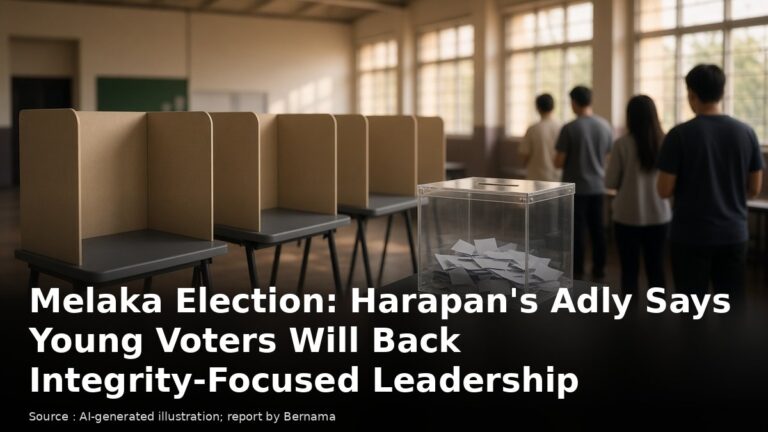
Communications Minister Datuk Seri Fahmi Fadzil, after a walkabout in Ayer Molek, Melaka, on November 12, reminded voters to be careful with content that may be AI-generated and to rely on the Election Commission and mainstream media. He said the Malaysian Communications and Multimedia Commission (MCMC) had not forwarded any complaints to him so far, describing the campaign’s social media situation as relatively under control. Melaka goes to the polls on November 14.
Siraj told The Star that politicians are easy targets because livestreams and press conferences give bad actors plenty of high-resolution material. To spot a deepfake, he said, watch for slight blurring around the mouth, teeth and jawline, unnatural blinking, or a flat, overly rhythmic voice, especially in local Malay accents. Newly created or anonymous pages are another giveaway. “Any shocking statement not reported by mainstream media should be treated as fabricated until verified,” he said.
Deputy Communications Minister Teo Nie Ching told the Dewan Rakyat in June that complaints to MCMC over deepfake content rose from 917 in 2024 to 3,612 in 2025 and 7,967 as of June 15, 2026. In a written parliamentary reply in October, Fahmi said platforms had removed 713 deepfake posts involving political leaders between January 1, 2025 and September 15, 2026 after MCMC submitted takedown requests.
Malaysia already has rules for this. MCMC’s Risk Mitigation Code, issued under the Online Safety Act 2025 and in force since June 1, 2026, requires licensed platforms to put in place measures so users can identify manipulated or AI-generated content that resembles real people or events, and to factor periods of heightened risk such as elections into their risk assessments. Non-compliance can lead to financial penalties of up to RM10 million.
Siraj said platforms were still not taking such videos down fast enough. “During a compressed election campaign, speed is everything,” he told The Star. By the time a clip is removed, he said, it may already have been shared in closed WhatsApp and Telegram groups that platforms cannot reach. “A delayed takedown on Facebook does little to undo the damage.” Before the 16th General Election, which The Star noted must be held by February 2028, he said MCMC should require automated detection and visible watermarking — a mark showing a file was made or altered with AI — at upload, rather than relying on users to declare it. He also called for platform “war rooms” with a deadline of under two hours to take down verified election deepfakes flagged by the Election Commission, candidates or accredited fact-checkers, and a ban on paid boosting of political content that lacks verified provenance, or a clear record of whether the material is authentic.
What to watch next is whether those faster takedown arrangements appear before polling day in Melaka, and whether MCMC tightens what it expects of licensed platforms ahead of the next general election. The association’s warning is a reminder that the tools to fake a candidate’s face and voice are already in ordinary people’s hands.
Source : The Star, citing MCCA president Siraj Jalil; New Straits Times; statements by Communications Minister Datuk Seri Fahmi Fadzil on November 12; Deputy Communications Minister Teo Nie Ching’s June parliamentary reply; Fahmi’s October written parliamentary reply; and MCMC’s Risk Mitigation Code under the Online Safety Act 2025.
About The Author

 Bria AI
 Lina AI
 LNA MY