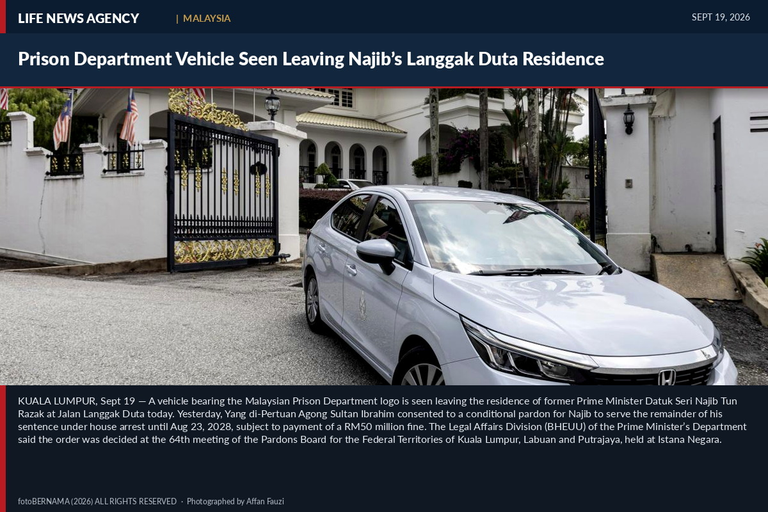
KULIM, Sept 19 2026 — The Malaysian Prison Department is still waiting for an official notification letter on the Pardons Board’s decision granting a conditional pardon to former Prime Minister Datuk Seri Najib Tun Razak.
Home Minister Datuk Seri Saifuddin Nasution Ismail said the department must first examine the official letter before the decision can be carried out under existing law.
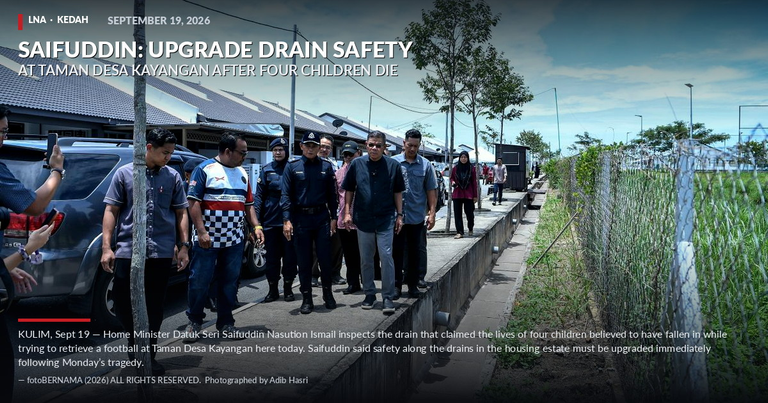
“We need to look at the letter first. At this point, Najib is still serving his prison sentence. House arrest means he will not be in prison but at another premise, and there is a process,” he told reporters after visiting the family of four children who drowned after falling into a drain on Monday.
“To be safe, my comments to the media should wait until the official notification letter is received.”
Saifuddin said the ministry must study the contents of the letter to determine the details of the Pardons Board’s decision, including whether the board has specified the house arrest premise or left that to the Prison Department.
The letter is also needed to establish whether the board has issued any other decisions or directions.
The Yang di-Pertuan Agong, Sultan Ibrahim, yesterday consented to a conditional pardon allowing Najib to serve the remainder of his sentence under house arrest until 23 August 2028, subject to payment of a RM50 million fine and other conditions set by the board.
Saifuddin said that, based on an earlier Pardons Board decision, the Prison Department had received official notice that Najib’s jail term was reduced from 12 years to six years and his fine from RM210 million to RM50 million.
Under that earlier decision, Najib would be released on 23 August 2028 if the RM50 million fine is paid. If it is not paid, the release date would be 23 August 2029.
Malaysia does not yet have a specific law on house arrest. Saifuddin said his ministry has obtained in-principle Cabinet approval to begin drafting a House Arrest Bill, aimed in particular at easing prison overcrowding among remand detainees.
He said house arrest is a mechanism used by prison services worldwide to reduce overcrowding, especially among those held on remand.
Malaysia currently has 41 prisons nationwide, housing about 93,000 inmates against a total capacity of around 75,000.
About The Author