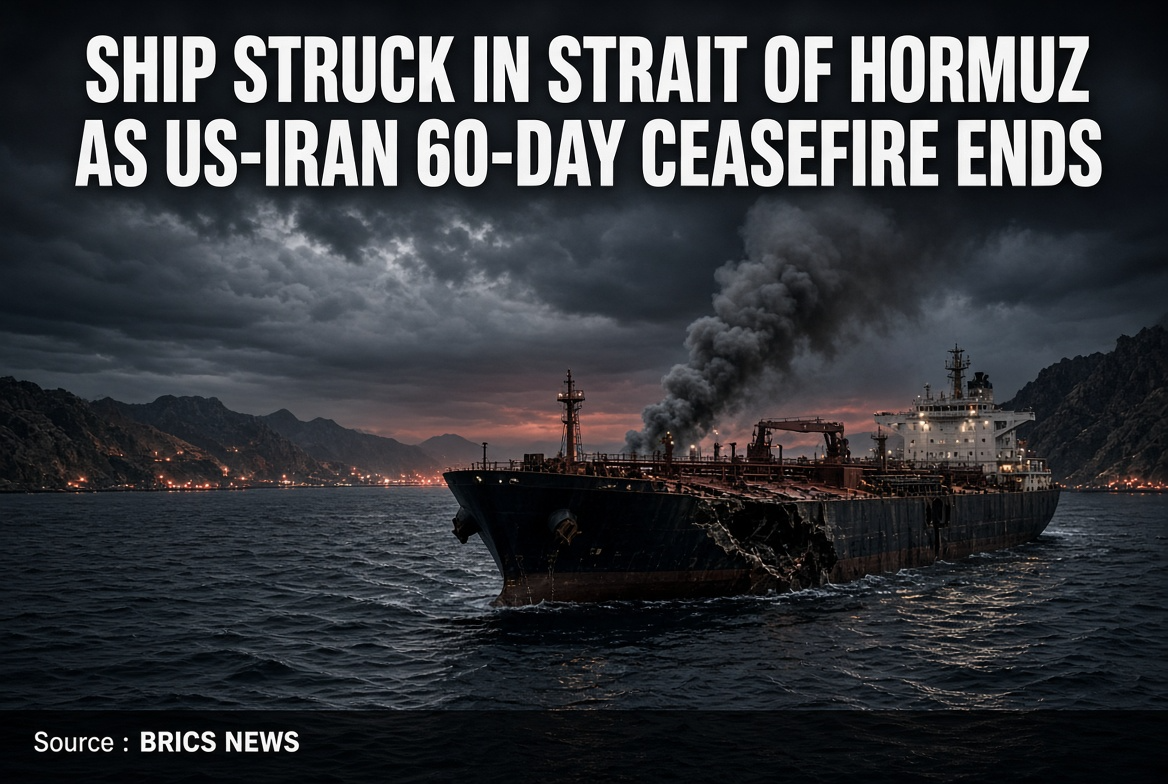
Reports emerged early Tuesday of a commercial vessel being struck in the Strait of Hormuz, coinciding with the formal end of a fragile 60-day US-Iran ceasefire agreement.
Multiple accounts, including independent geopolitics outlet BRICS News, reported the incident under the headline “JUST IN: Ship struck in the Strait of Hormuz as US-Iran 60-day ceasefire ends.” Similar alerts circulated rapidly across social media platforms in the early hours of August 18, 2026.
The 60-day window stemmed from a June 17 Memorandum of Understanding between Washington and Tehran. The deal was intended to halt direct hostilities, reopen the critical waterway for commercial shipping, and create space for broader negotiations on Iran’s nuclear program and regional security. Both sides repeatedly accused each other of violations in the weeks that followed, and talks failed to produce a lasting agreement. The temporary arrangement expired without extension around August 17.
The Strait of Hormuz, through which roughly one-fifth of the world’s oil typically flows, has remained a flashpoint throughout the conflict that began in late February 2026. Even during periods of relative calm under the MoU, vessels continued to face attacks by projectiles and drones. Recent documented incidents include strikes on two unnamed tankers on August 14 and a bulk carrier on August 15, according to the US-led Joint Maritime Information Center. Earlier in the month, UAE-linked tankers were among those targeted, with authorities in Abu Dhabi blaming Iran.
Details of the latest reported strike remain limited. No independent confirmation of the vessel’s identity, flag, extent of damage, or casualties has been released by major maritime authorities such as the UK Maritime Trade Operations at the time of the initial social media reports. Previous attacks in the strait have typically involved unidentified projectiles or drones, often resulting in structural damage but varying levels of crew injury and environmental impact.
The timing of the reports has heightened concerns over further disruption to energy shipping. Traffic through the waterway has already been sharply reduced for months compared with pre-conflict levels of more than 100 vessels per day. Analysts warn that renewed hostilities could push oil prices higher and increase volatility in global energy markets.
Iran has long asserted control over navigation in the strait and has demanded that vessels follow routes it designates. The United States has maintained a naval presence and has conducted retaliatory strikes on Iranian military targets in response to earlier ship attacks. With the ceasefire window now closed and no new diplomatic breakthrough in sight, the risk of further escalation in one of the world’s most strategically important maritime choke points remains elevated.
About The Author