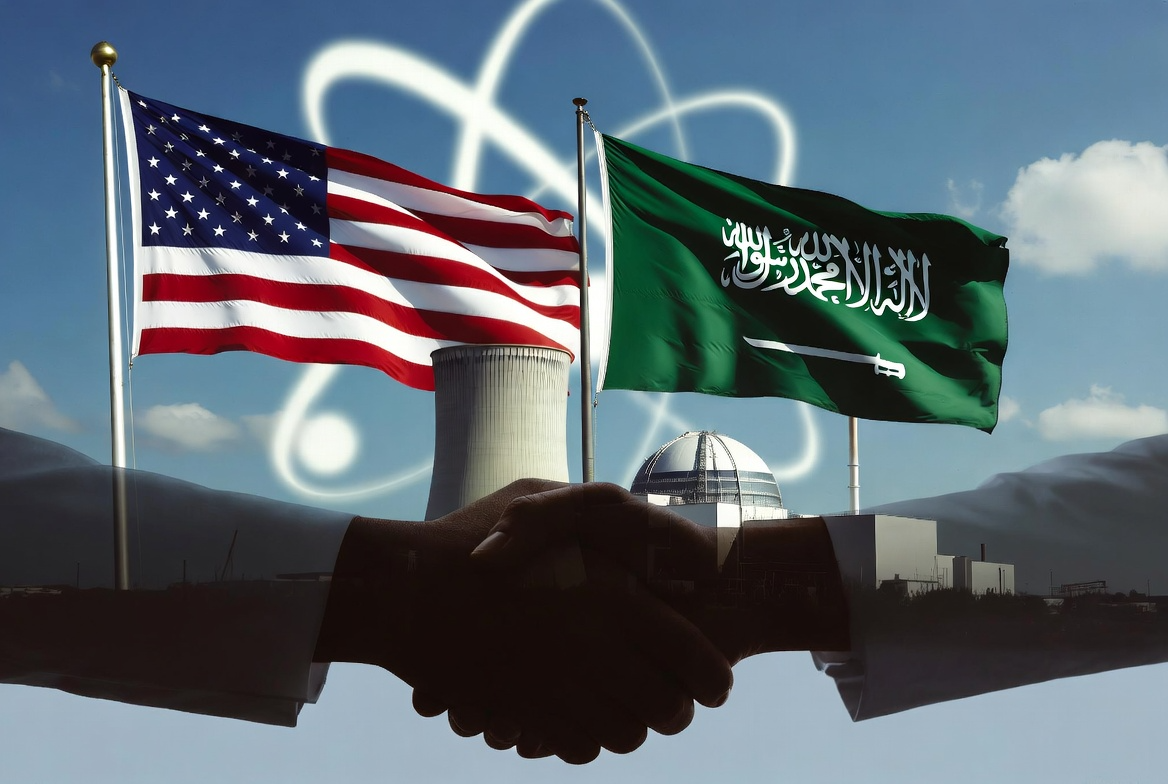
WASHINGTON D.C July 22, 2026 — The United States and Saudi Arabia formally signed a peaceful nuclear cooperation agreement on Wednesday, July 22, 2026, marking a major step toward developing the kingdom’s civilian nuclear energy program with American technology and companies.
U.S. Energy Secretary Chris Wright and Saudi Energy Minister Prince Abdulaziz bin Salman signed the so-called “123 Agreement” under the U.S. Atomic Energy Act, along with a separate bilateral safeguards agreement. The U.S. Department of Energy described the pacts as laying “the legal foundation for a decades-long, multi-billion-dollar partnership that advances several priority economic and strategic objectives, including nuclear nonproliferation.”
The deal grants U.S. firms priority access to supply nuclear reactors, fuel, and related technology for Saudi Arabia’s planned civilian nuclear power plants. Officials estimate the arrangement could be worth tens of billions of dollars over 30 years and is expected to create high-paying American jobs while expanding U.S. nuclear technology exports.
Notably, the agreement does not include the strict “gold standard” nonproliferation provisions that the United Arab Emirates accepted in its earlier deal with Washington, under which enrichment and reprocessing of nuclear fuel were prohibited. Instead, the framework leaves open the possibility that U.S. companies could later build a uranium enrichment facility inside Saudi Arabia if a joint U.S.-Saudi study finds it economically justified.
Wright said in a statement: “These agreements reflect our two nations’ shared commitment to strengthening U.S.-Saudi commercial relations, delivering prosperity at home and security to our allies abroad. Rest assured, these agreements uphold the highest standards of nuclear safety and nonproliferation, while relying on the world’s best nuclear technology and scientists, designed right here in the United States.”
The Department of Energy will submit the agreement to Congress for a 90-day review period. While Republican majorities make outright rejection unlikely, lawmakers from both parties and some Israeli officials have previously expressed concerns that any enrichment capability in Saudi Arabia could heighten proliferation risks in the Middle East.
The announcement comes as the United States remains engaged in military operations against Iran, a conflict driven in significant part by efforts to prevent Tehran from developing nuclear weapons. Critics have noted the contrast between restricting Iranian enrichment while potentially enabling it for Riyadh. The Trump administration maintains the Saudi program is strictly for peaceful energy purposes and includes monitoring arrangements.
Saudi Arabia has long sought nuclear power as part of its Vision 2030 economic diversification away from oil, while the deal strengthens strategic ties between Washington and Riyadh.
About The Author