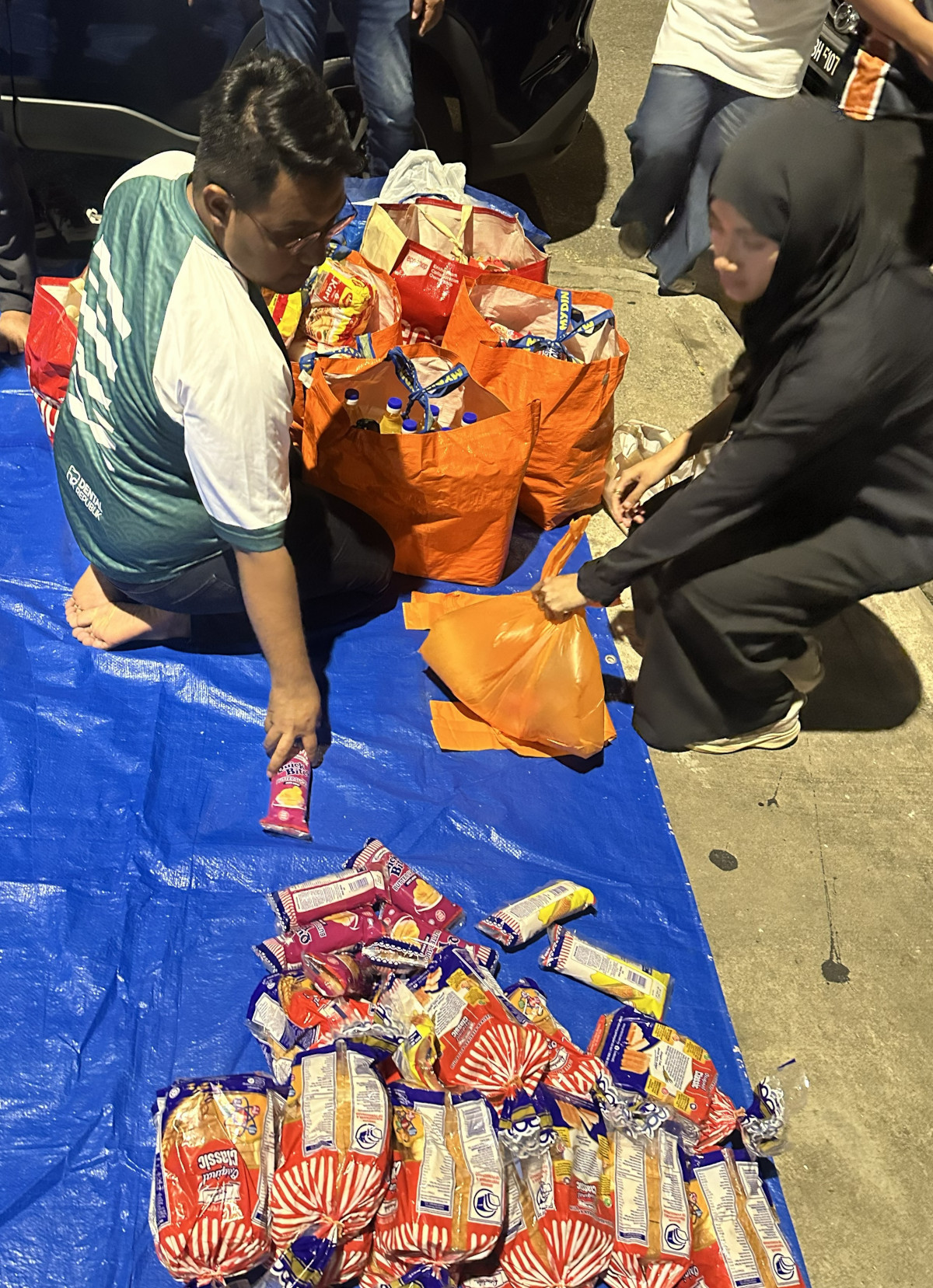
A group of first-year students from the Department of Anthropology and Sociology, Universiti Malaya organised a community service project involving communities that are affected with homelessness and urban poverty around Kuala Lumpur. Specifically, Jalan Silang, Cahaya Suria, UTC Pudu, and Lorong Haji Taib, under the guidance of Dr. Sabri bin Sulaiman and in collaboration with the NGO Food for Gelandangan (FFG). The group, consisting of 27 students, participated in planning, fundraising, and executing a series of activities that combined academic learning with real-world outreach.
The project, “Choweats: Komuniti Disantuni, Kesejahteraan Diperkasa” is a part of the structured community engagement initiative under Universiti Malaya’s SULAM programme. The goal of the project is to provide assistance to the communities by distributing necessities such as food, basic groceries, clothes, and toiletries. Aside from that, the programme has also opened the doors in creating social interactions with children by doing activities like drawing and a birthday celebration.
In addition to its immediate impact on the community, the Choweats project also served as a meaningful learning experience for the students. It allowed them to apply classroom knowledge to real-world social issues, while strengthening their skills in teamwork, planning, communication, and civic responsibility. The initiative was also aligned with the Sustainable Development Goals, particularly SDG 1 (No Poverty), SDG 2 (Zero Hunger), and SDG 10 (Reduced Inequalities), ensuring that its objectives were not only immediate but also connected to broader global commitments.
Choweats represents more than a charity effort; it is a structured partnership between academia and community organisations that delivers tangible aid while promoting long-term social awareness. It demonstrates how student-led initiatives can empower vulnerable communities, raise public consciousness, and nurture empathy and responsibility among future leaders. By bridging academic learning with social action, the project embodies the spirit of service learning and shows how universities can play an active role in addressing societal challenges.
This community service project received positive feedback from the students. One student said, “This programme opened my eyes to the realities of the urban poor in Chow Kit, shifting my perspective from pity to deep empathy. Managing food distribution taught me adaptability and teamwork while dealing with logistical challenges and crowd control. I developed important communication and empathy skills, and realised that structural issues, rather than laziness, are often at the root of homelessness. This experience reinforced the importance of human dignity and the role of social responsibility in supporting marginalised communities.”
Another student shared, “Through this programme, I was exposed to the realities faced by homeless and urban poor communities. It gave me the opportunity to interact with them directly, helping me better understand their struggles and daily challenges. One difficulty I encountered was communicating with people from different backgrounds in a sensitive and respectful manner. Throughout the programme, I improved my communication and media skills. This experience changed my perspective, making it more grounded in real-life interactions rather than assumptions or information from the internet.”
All in all, the project achieved its objectives by providing essential items to the homeless and urban poor people while raising awareness of homelessness and urban poverty. Through the Instagram page @choweat.s, the project sought to encourage people, especially youths, to be more empathetic, socially responsible, and involved in the community we live in. Huge thanks are extended to Food for Gelandangan (FFG), a volunteer group based in Kuala Lumpur founded by Mohd Azizan Zainal Abidin, for its support of homeless and urban poor communities. Without their guidance and expertise, this project would not have been possible.
About The Author