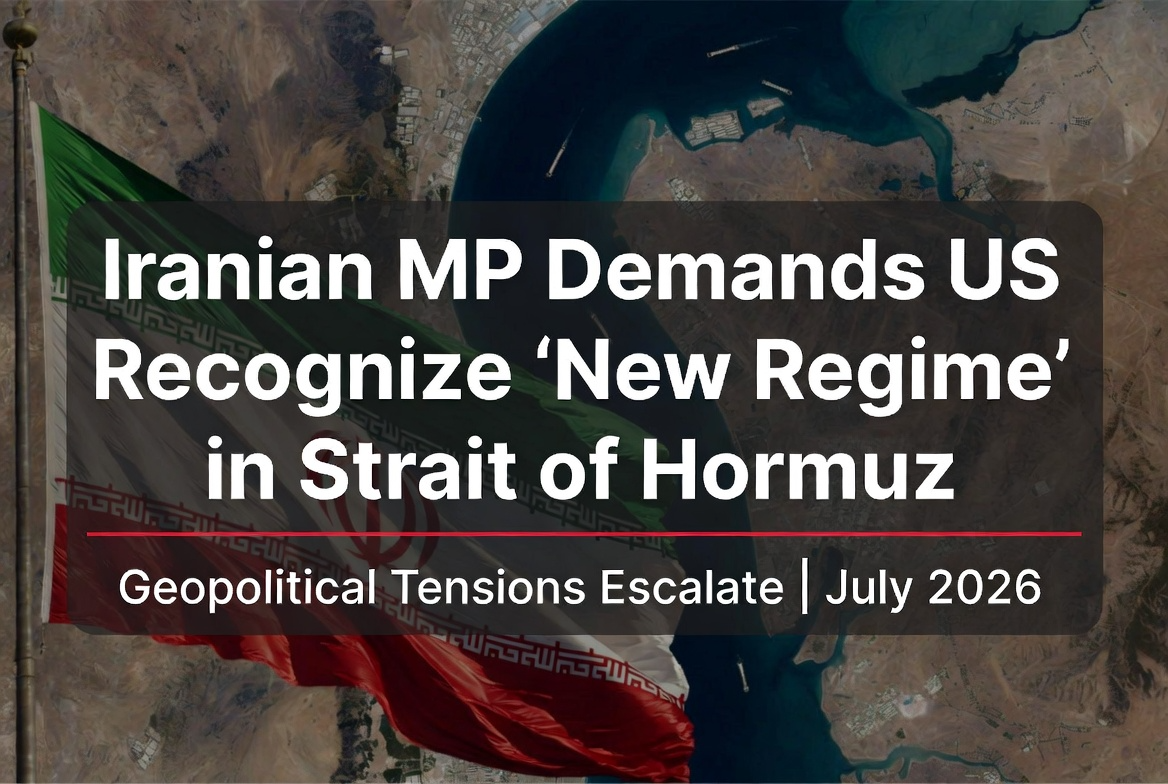
TEHRAN July 8, 2026 — A senior Iranian parliamentarian has stated that the United States must formally recognize what Iran calls its “new regime” in the strategically vital Strait of Hormuz, according to a report circulating on social media.
The comment, shared today by the geopolitics-focused X account @BRICSinfo, comes as fragile ceasefire talks between Washington and Tehran continue following months of conflict over control of the waterway.
The MP asserted that the US must acknowledge Iran’s updated administrative and security framework for the strait. No specific name or direct quote was provided in the initial post, which included images of the Iranian flag and a map of the waterway. The remark reflects Tehran’s broader position in ongoing diplomatic negotiations.
The Strait of Hormuz, located between Iran and Oman, is one of the world’s most critical maritime chokepoints. Approximately 20% of global oil trade and significant volumes of liquefied natural gas pass through its narrow waters daily.
Tensions escalated dramatically in late February 2026 when Iran asserted greater control over the strait amid US and Israeli military operations. Iran established new entities such as the Persian Gulf Strait Authority (PGSA), introduced vessel registration requirements, mandatory Iranian-approved insurance, and signaled plans for transit fees or regulatory oversight.
A memorandum of understanding signed in mid-June 2026 between US President Donald Trump and Iranian President Masoud Pezeshkian aimed to end the fighting and reopen the strait to commercial shipping. However, disputes over long-term management persist.
Iranian officials have consistently argued that any lasting agreement must recognize Tehran’s role in securing and administering the passage. Senior Iranian sources told Reuters earlier this month that Iran is determined to secure international recognition of its control and the right to levy fees.
The United States maintains that the strait is an international waterway subject to freedom of navigation under international law. Washington has supported protected shipping routes and rejected unilateral Iranian control. US naval assets have been active in the region to ensure safe passage.
Any formal US recognition of Iran’s “new regime” would mark a major diplomatic shift and could influence global energy markets and shipping costs. Markets have already shown sensitivity to developments in the area, with analysts warning of potential volatility if talks stall.
The latest statement highlights the deep divide remaining despite the June ceasefire. Both sides continue delicate negotiations over the future administration of one of the world’s most important energy arteries.
Further official confirmation or details from Iranian state media were not immediately available at the time of reporting.
About The Author