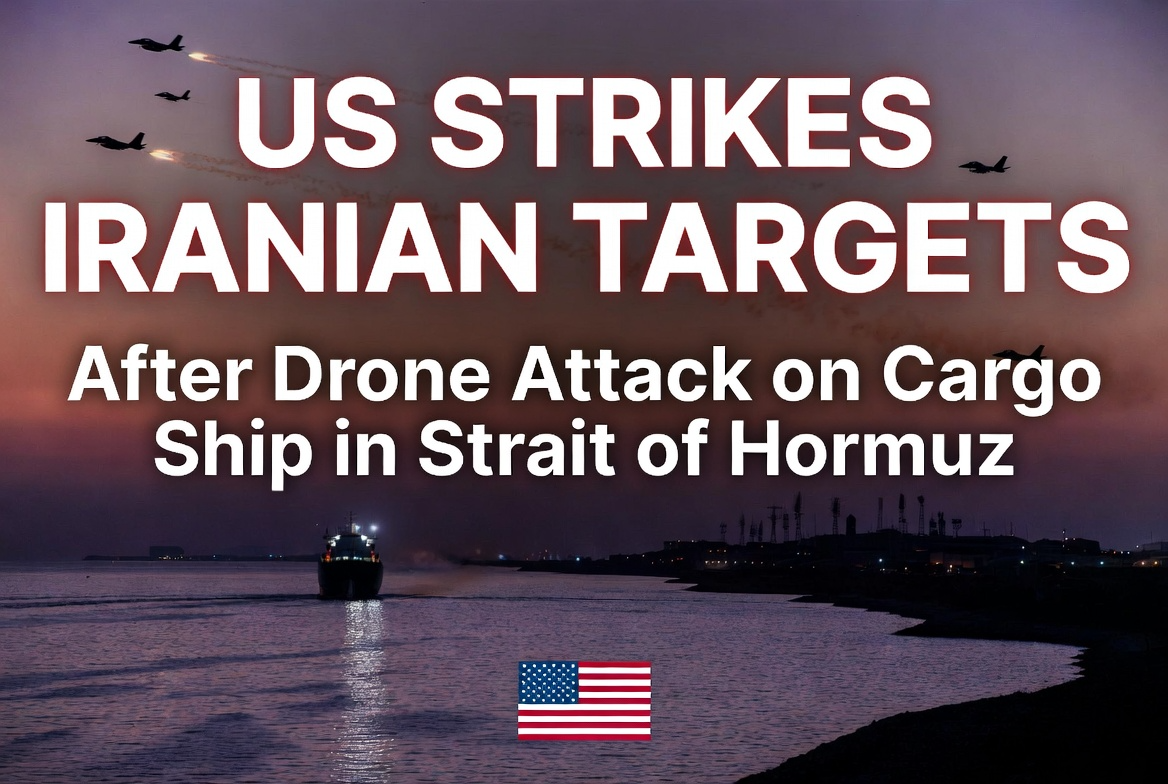
Washington / Tampa, June 27, 2026 — The U.S. military carried out airstrikes on Iranian military sites on Friday in direct retaliation for an Iranian drone attack on a commercial cargo ship transiting the Strait of Hormuz the previous day.
U.S. Central Command (CENTCOM) stated that American aircraft struck Iranian missile and drone storage locations, coastal radar sites, air defense systems, surveillance infrastructure, and minelaying capabilities. The targets were located along Iran’s coastline bordering the vital waterway and on Qeshm Island.
The strikes came hours after Iran launched a one-way attack drone that struck the Singapore-flagged container ship M/V Ever Lovely (also referred to as Ever Lovely) on June 25 while it was exiting the Strait along the Omani coast. One drone hit the vessel’s upper deck and bridge area, causing damage but resulting in no injuries to the crew and no environmental impact. U.S. President Donald Trump said four drones were launched in total, with three intercepted.
CENTCOM described the U.S. action as a “powerful response” to Iran’s “unwarranted aggression” that violated the fragile ceasefire agreement aimed at securing safe passage through the Strait of Hormuz. The command emphasized that U.S. forces remain “present and vigilant to ensure all aspects of the agreement with Iran are adhered to.”
The incident marks the latest escalation in tensions following a mid-June 2026 ceasefire/Memorandum of Understanding (facilitated amid broader 2026 Iran conflict dynamics) designed to reopen the critical chokepoint, through which roughly one-fifth of global oil and liquefied natural gas supplies typically flow.
Disputes have persisted over shipping routes, potential tolls, and enforcement of the agreement. The U.S. has supported a southern transit corridor cleared of mines, while Iran has insisted on routes closer to its coastline and asserted greater control over traffic.
Vice President JD Vance stated on social media: “Iran signed a ceasefire agreement. We have honored it. If they have disagreements about how the MOU is being applied, they can pick up the phone. But violence will be met with violence.”
President Trump had earlier called the Iranian drone attack a “foolish violation” of the ceasefire.
Iranian officials framed their actions differently. Revolutionary Guard statements described the response as part of “ceasefire management” rather than a violation, warning that further aggression would prompt a broader reply. Iranian state media reported explosions at sites including the port of Sirik and noted warning shots or missiles fired in the area.
No casualties have been reported from the U.S. strikes.
The targeted nature of the U.S. response — focusing on capabilities that could threaten commercial shipping — appears designed to restore deterrence and protect freedom of navigation without triggering a wider conflict. CENTCOM confirmed that strikes were conducted using precision munitions from U.S. aircraft.
Global markets are monitoring developments closely, with potential impacts on oil prices and shipping insurance rates in the region.
The situation remains fluid as both sides continue to accuse each other of violations while navigating the terms of the recent agreement.
About The Author