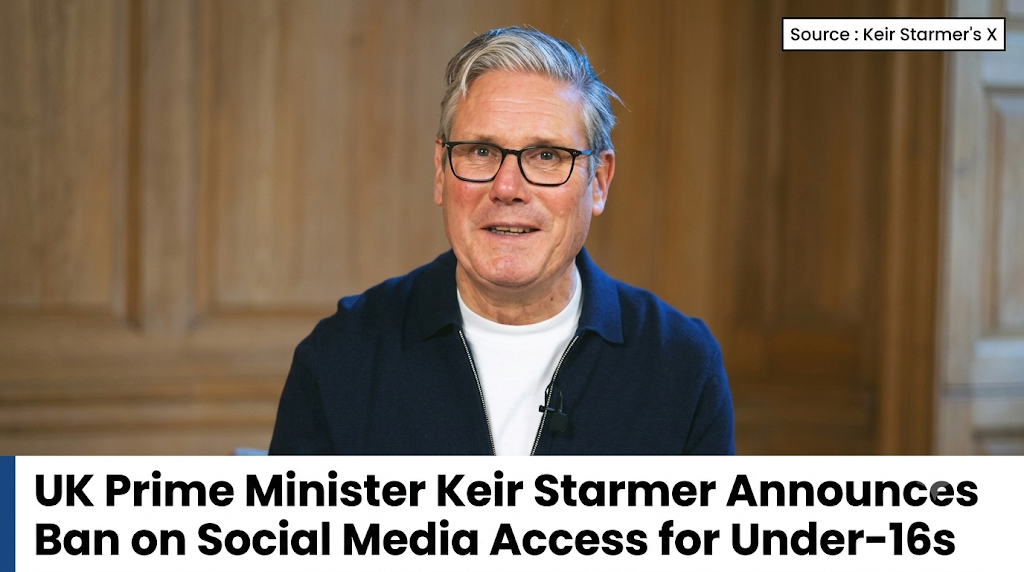
LONDON, June 15, 2026 — Prime Minister Sir Keir Starmer has formally announced a nationwide ban on social media access for children under 16, declaring it a necessary step to “give children their childhoods back” amid growing concerns over technology’s intrusion into young lives.
In a video statement posted to X (formerly Twitter) on Monday morning, Starmer said: “We are banning social media access for under 16s. These days kids must find their feet in a world where technology intrudes into every area of their life. I just can’t let that go on anymore.”
The policy, described as an “Australia plus” approach, follows a government consultation that reportedly received overwhelming support from parents. It draws heavily from Australia’s December 2025 ban but includes additional restrictions. High-risk platforms including TikTok, Instagram, Snapchat, YouTube, X, Reddit, Facebook, Threads, Twitch, and Kick will be prohibited for users under 16.
Key Measures
- Full ban for under-16s on major platforms.
- Feature restrictions on “safer” apps, including bans on livestreaming, disappearing messages, and chats with adult strangers.
- Age verification requirements for platforms, potentially involving facial scanning or other technologies, with heavy fines for non-compliance.
- Possible curfews for 16- and 17-year-olds on certain features.
The move comes after Starmer met with bereaved parents and reviewed evidence of harms linked to social media, including mental health impacts, addiction, and exposure to harmful content. Ministers have positioned it as a “game-changer” for child safety.
Public response on X has been sharply divided. Supporters praise the protection for children, while critics question enforcement feasibility, potential privacy invasions through digital ID systems, and selective application—Bluesky appears exempt, drawing accusations of political bias.
Opposition voices have raised issues around parental responsibility, free speech, and whether the ban addresses root causes like migration or broader societal problems. Some experts warn of unintended consequences, including increased surveillance and limited access to information for young people.
The government plans to embed enforcement powers in the Children’s Welfare and Schools Bill. Details on exact implementation timelines and exempted platforms will follow in coming days.
This announcement marks one of Starmer’s most significant domestic policy interventions as he seeks to demonstrate decisive action on family issues.
About The Author