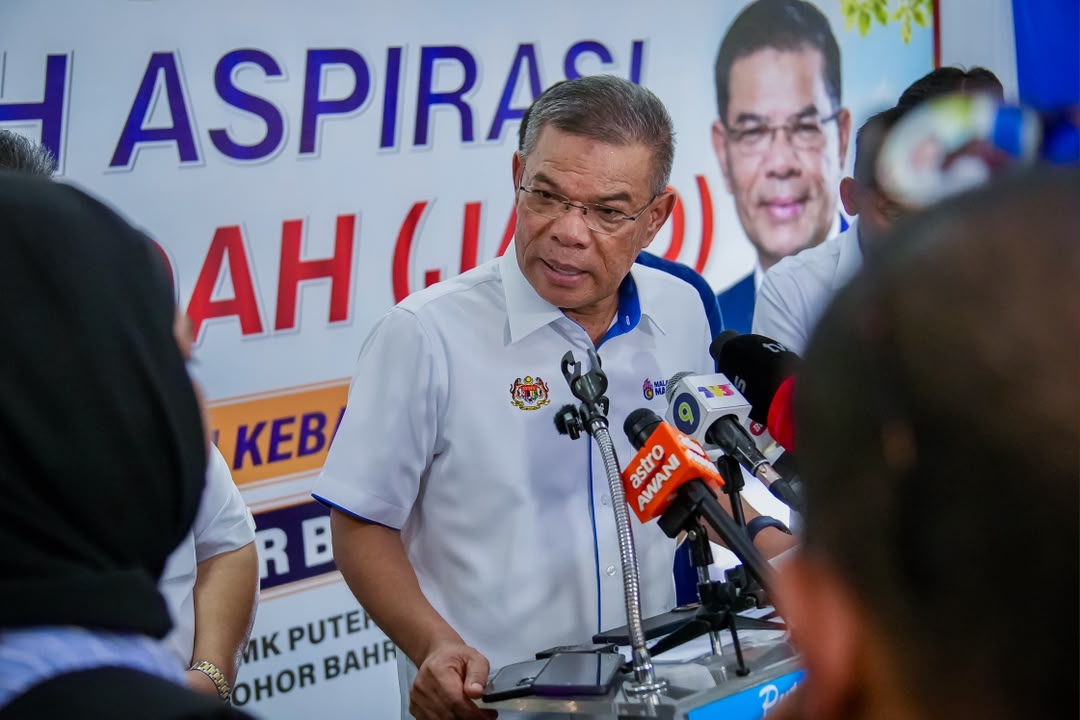
PUTRAJAYA June 13, 2026 — The Ministry of Home Affairs (KDN) today issued a media statement clarifying the government’s approach to managing the refugee issue in Malaysia, emphasising the need to balance national security, law enforcement, and humanitarian responsibilities.
In the statement released in Putrajaya, KDN noted that the refugee issue is not a new phenomenon but a long-standing legacy that has persisted for decades across multiple administrations. The MADANI Government is now adopting a more responsible, structured, and data-driven approach to manage the existing situation.
KDN stressed the importance of distinguishing between refugees and illegal immigrants. Illegal immigrants are subject to the Immigration Act 1959/63, whereas refugees left their countries of origin due to conflict, war, persecution, or threats to their lives.
Under the international refugee system, UNHCR is responsible for registering refugees and facilitating their resettlement to third countries. However, resettlement rates remain significantly lower than the growing number of new registrations, resulting in many refugees remaining in transit countries, including Malaysia, for extended periods.
Public concern has largely centred on the Rohingya community, one of the largest refugee groups in Malaysia. Issues frequently raised include security, public order, health, education, employment, and social integration.
KDN acknowledged that there have been cases involving individuals from the refugee community who committed criminal offences. However, the Ministry emphasised that refugee status does not grant immunity from Malaysian laws.
“Refugee status does not provide immunity from Malaysian laws. Any individual who commits a criminal offence, threatens public safety, or violates the country’s laws remains subject to enforcement action,” the statement said.
As a key initiative, KDN, through the Immigration Department of Malaysia, is implementing the Refugee Registration Document Programme (DPP) in accordance with National Security Council (MKN) Directive No. 23 (Revision 2023).
The programme aims to collect accurate, complete, and verifiable biometric and identity data on individuals categorised as refugees. This data is essential for:
- Strengthening national security
- Improving enforcement effectiveness
- Enabling the government to formulate evidence-based policies
KDN clarified that while UNHCR already holds registration data, the government is now collecting its own data for national security purposes.
The DPP is not intended to grant citizenship, permanent residency, or the right to reside permanently in Malaysia. Refugees’ status remains subject to existing mechanisms, including third-country resettlement processes.
KDN stated that refugees who meet specific criteria may be granted access to legal employment opportunities, subject to strict government policies and controls. Priority will be given to sectors facing labour shortages and high dependence on foreign workers, particularly labour-intensive sectors such as:
- Plantations
- Agriculture
- Construction
Employment priority for Malaysians will continue to be maintained. Any refugee permitted to work legally will be fully subject to Malaysian employment laws, including the minimum wage and worker protection regulations.
Professional and high-skilled jobs will remain subject to strict assessment and regulatory processes.
The statement reaffirmed that national security will never be compromised. Refugee management is viewed as a multi-dimensional issue involving national security, law enforcement, the labour market, public health, and societal well-being.
“The MADANI Government’s efforts through the implementation of the DPP represent an important step towards more organised, data-driven, and responsible refugee management, to ensure that internal security continues to be preserved and the interests of the Malaysian people remain prioritised,” the statement said.
About The Author