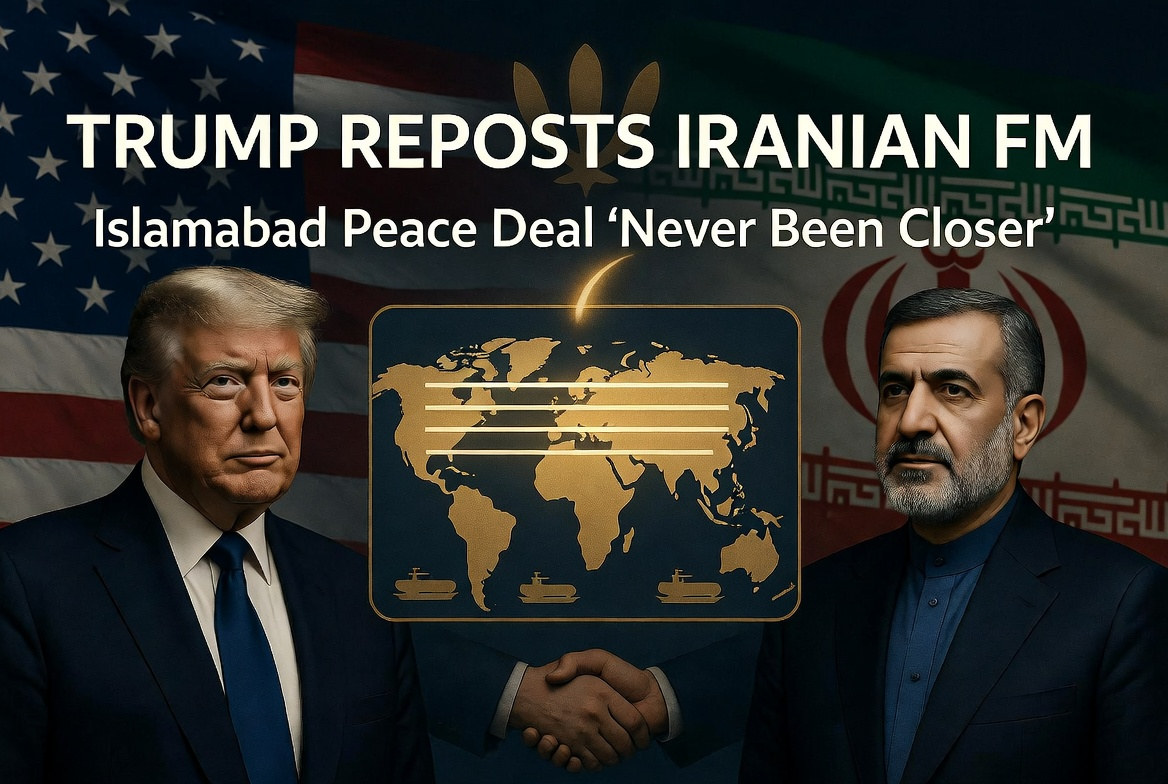
WASHINGTON D.C June 12, 2026 — In a striking diplomatic signal, U.S. President Donald Trump reposted a statement from Iranian Foreign Minister Abbas Araghchi on Friday, declaring that a memorandum of understanding aimed at ending the ongoing U.S.-Iran conflict “has never been closer.”
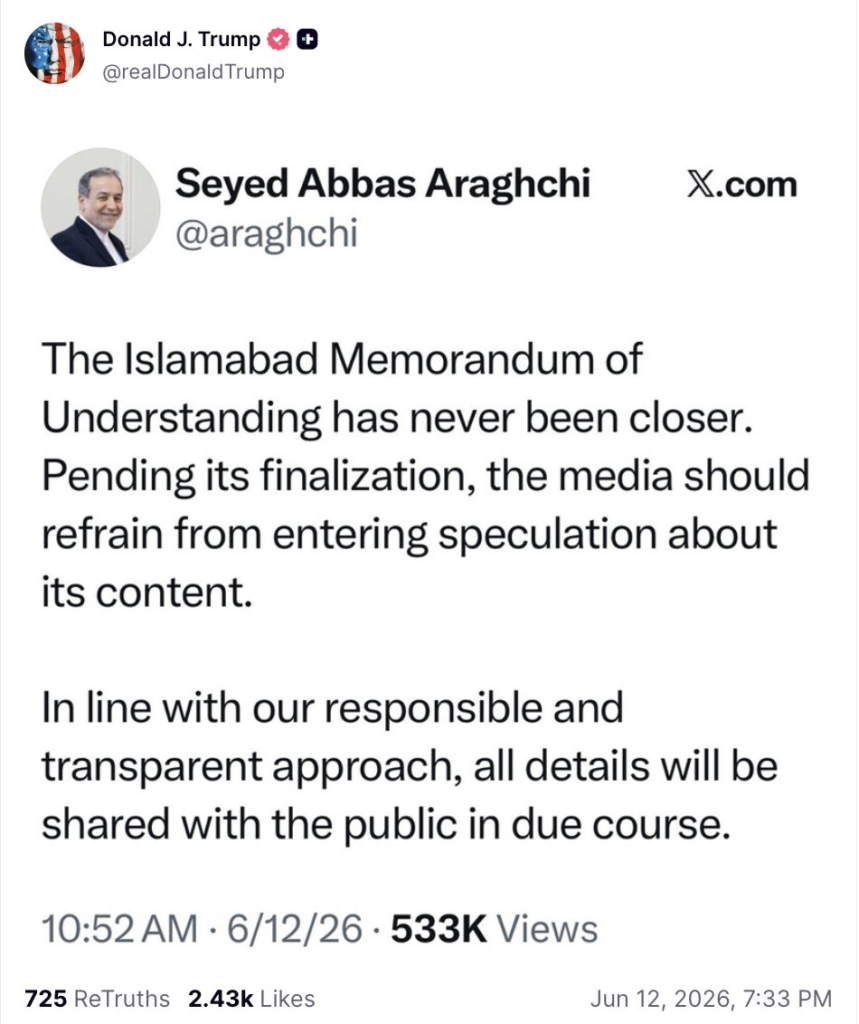
Araghchi’s original post on X stated: “The Islamabad Memorandum of Understanding has never been closer. Pending its finalization, the media should refrain from entering speculation about its content. In line with our responsible and transparent approach, all details will be shared with the public in due course.” Trump shared a screenshot of the message on Truth Social shortly after it was published.
The development comes amid heightened optimism from multiple parties involved in Pakistan-mediated talks. Pakistani Prime Minister Shehbaz Sharif announced that a “final, agreed upon text” of the peace deal has been reached, with Islamabad now working to finalize next steps. The memorandum, named after the Pakistani capital where key negotiations occurred, is expected to extend a fragile ceasefire for 60 days, facilitate the reopening of the Strait of Hormuz to international shipping, and outline a framework for addressing Iran’s nuclear program.
The 2026 Iran war has disrupted global energy markets, with Iran’s closure of the Strait of Hormuz — a critical chokepoint for oil exports — driving up prices and creating shipping backlogs. The proposed memorandum reportedly includes:
- Immediate reopening of the Strait of Hormuz without tolls or restrictions.
- A 60-day ceasefire extension to allow further technical negotiations.
- Commitments on Iran’s nuclear activities, though details remain disputed.
- Potential sanctions relief tied to compliance, with no immediate large-scale fund releases according to U.S. statements.
Trump has emphasized that leaked Iranian media reports on the terms “have NOTHING to do with the terms that were agreed to, in writing,” pushing back against claims of major U.S. concessions like substantial reparations or unrestricted sanctions relief.
While both sides project progress, differences persist. Iranian sources have highlighted demands for asset unfreezing and limits on military pressure, while U.S. officials stress verifiable nuclear restraints and no cash payments upfront. Some Iranian hardliners have criticized Araghchi’s post as too conciliatory.
Regional reactions vary: Israeli Prime Minister Benjamin Netanyahu has expressed alignment with Trump on preventing Iranian nuclear weapons, while markets reacted positively to de-escalation hopes.
This is not the first time optimism has surged around a deal, with previous rounds of talks yielding temporary ceasefires but stalling on core issues. Analysts caution that a formal signing and implementation will be required before claims of peace can be fully realized. Details are expected to be released publicly once finalized.
The Trump administration and Iranian officials have not issued further immediate comments beyond the social media activity.
About The Author