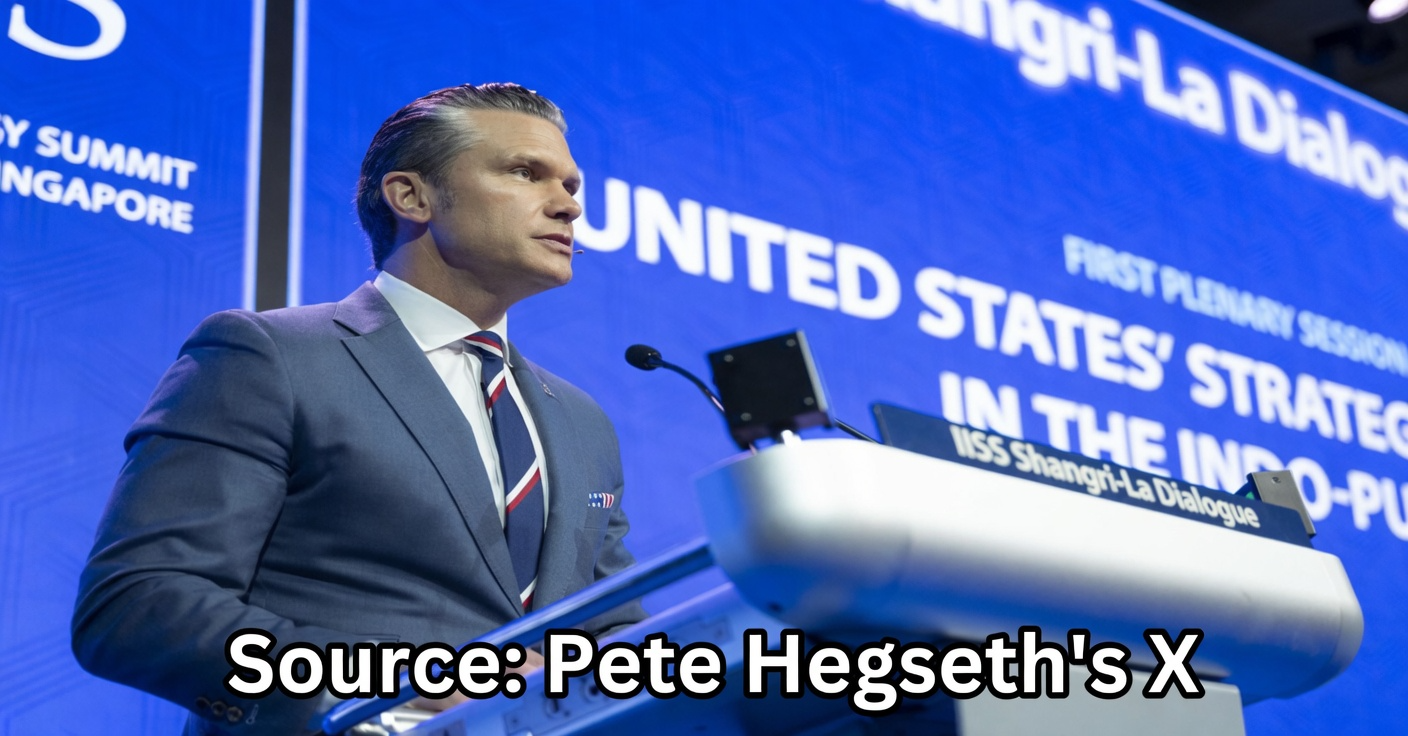
SINGAPORE May 30, 2026 — U.S. Secretary of War Pete Hegseth delivered a pointed address on Saturday during the opening plenary session of the 23rd IISS Shangri-La Dialogue, emphasizing a shift toward strategic realism, burden-sharing, and stronger partnerships to maintain a favorable balance of power in the Indo-Pacific.
In his speech titled “United States’ Strategy for Peace in the Indo-Pacific,” Hegseth told delegates that the region remains the most consequential theater for global stability. He announced a departure from models of dependency, stating: “We are moving away from a model of dependency and toward one of true partnership, to preserve a favorable balance of power that benefits us all.”
Key elements of the address included a strong call for allies and partners to increase defense spending to 3.5% of GDP, praising nations like the Philippines, Indonesia, Malaysia, Vietnam, and Singapore for stepping up their capabilities. Hegseth stressed that regional security had rested “disproportionately on American military power” for too long and urged a move toward “distributed regional deterrence.”
“We don’t need more conferences. We need more combat power,” he declared, adding, “Less Shangri-La, more ships, more subs.”
The Secretary expressed “rightful alarm” over China’s military buildup and expanding activities across the Asia-Pacific while reaffirming Washington’s commitment to preventing any single power from dominating the Pacific. He highlighted recent engagements, including meetings with Vietnamese leaders on maritime security and the broader Trump administration’s “America First” approach focused on pragmatic partnerships.
The high-profile speech comes amid elevated global tensions, including ongoing developments in the Middle East, and follows a recent Trump-Xi summit aimed at resetting U.S.-China ties. Analysts noted a measured tone compared to previous years, with less emphasis on confrontation and more on equilibrium and mutual strength.
Hegseth’s remarks were delivered to a packed hall of defense ministers, military officials, and security experts from across the region and beyond. Large screens in the ballroom displayed the session title as he spoke from the podium.
The Shangri-La Dialogue, hosted by the International Institute for Strategic Studies (IISS), continues through May 31 with bilateral meetings and further discussions on regional security challenges.
About The Author