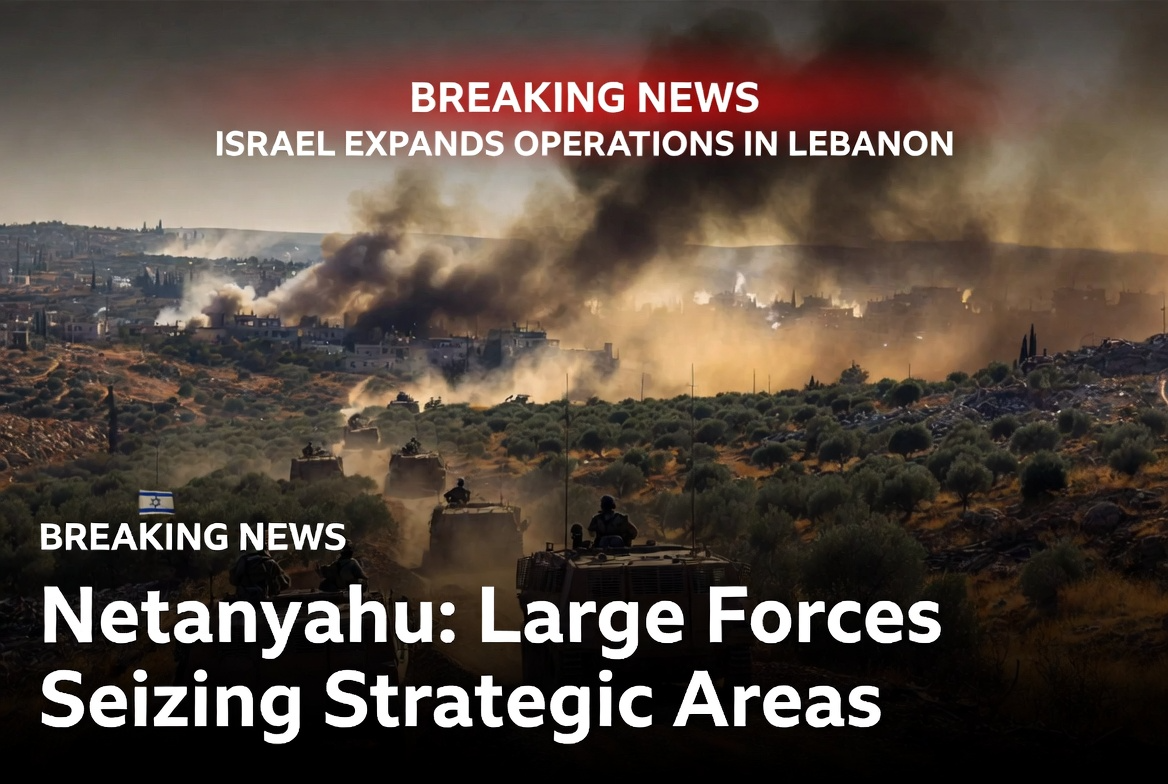
TYRE, LEBANON May 27, 2026 — Israeli Prime Minister Benjamin Netanyahu has declared that Israeli troops are operating with “large forces on the ground” in southern Lebanon, seizing control of strategic areas and expanding operations beyond a self-declared buffer zone despite a fragile US-brokered ceasefire.
In a video statement, Netanyahu said Israeli forces are “fortifying” what Israel calls a security zone, issuing evacuation orders for additional towns and vowing to intensify strikes against Hezbollah to “crush” the group. The moves come amid near-daily violations of the April 2026 ceasefire agreement.
Al Jazeera correspondent Obaida Hitto, reporting from Tyre, described the human cost on the ground. In the town of Maarakeh (also referred to as Marrakech), just outside Tyre, an Israeli strike destroyed a residential building, leaving people trapped under rubble. Rescue teams were reportedly denied access by a US-chaired joint coordination mechanism involving Israel, Lebanon, UNIFIL, and France.
“Three people are still stuck under the rubble,” Hitto reported. “Today they weren’t allowed to go to this location, and this brings up a lot of questions about their ability as medical teams.”
Lebanese officials and health authorities reported at least 31 people killed in strikes across southern Lebanon on Tuesday, including civilians, women, and children. Additional strikes hit areas like Mashghara in the Bekaa Valley, killing at least 11. Israel says it has targeted over 100 Hezbollah sites.
The escalation follows Netanyahu’s recent orders to accelerate operations, with Israeli forces pushing past the so-called “Yellow Line” — a unilateral buffer extending about 10 kilometers into Lebanese territory. Hezbollah has responded with drone and rocket attacks on Israeli positions, resulting in Israeli military casualties since March.
Over one million Lebanese have been displaced by the ongoing violence, which has claimed more than 3,000 lives in Lebanon since March according to local reports. The situation remains highly volatile, with both sides accusing the other of ceasefire violations.
International observers, including UNIFIL peacekeepers, continue to monitor the border area amid growing concerns over civilian casualties and humanitarian access.
About The Author