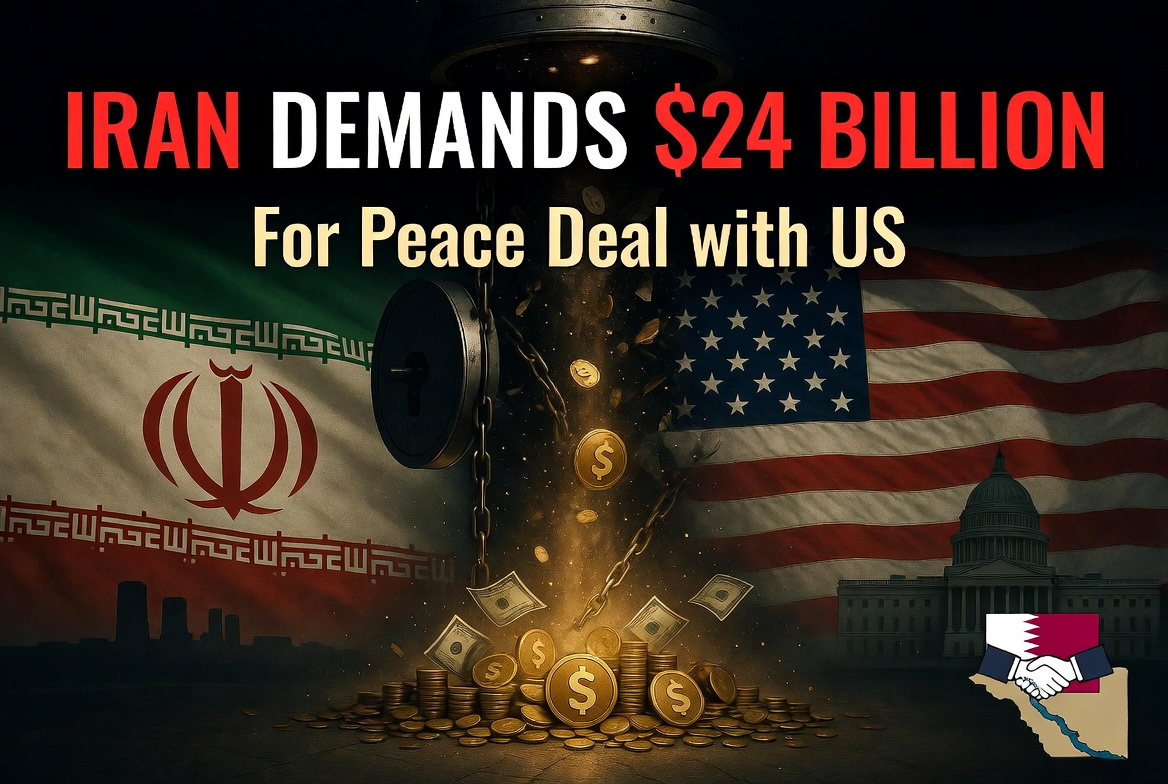
DOHA, QATAR May 27, 2026 — Iranian negotiators have made the release of approximately $24 billion in frozen overseas assets a central precondition for signing any peace agreement with the United States, according to Iranian state-linked media and sources close to the talks.
The demand comes amid ongoing negotiations hosted in Qatar aimed at formalizing a ceasefire and ending recent hostilities that escalated earlier this year. Iranian Parliament Speaker Mohammad Bagher Ghalibaf visited Qatar on Monday to advance discussions, with a focus on unlocking $12 billion in the first phase upon announcement of a memorandum of understanding (MoU), followed by the remainder within 60 days.
Background on the Assets
The frozen funds primarily consist of Iran’s own revenues from oil and gas exports, held in foreign banks due to U.S. sanctions reimposed after the 2018 withdrawal from the Joint Comprehensive Plan of Action (JCPOA). Tehran views access to these assets — estimated at $24 billion in the current framework — as its sovereign right, not aid.
Iranian sources describe the asset release as part of a broader 14-point memorandum of understanding being finalized. The framework reportedly addresses immediate de-escalation steps, including safe passage through the Strait of Hormuz, sanctions relief, and a temporary pause on certain nuclear activities, while leaving fuller nuclear negotiations for a later phase.
US Position and Context
U.S. officials have signaled that any sanctions relief or asset unfreezing would require verifiable Iranian concessions first, including limits on nuclear enrichment and regional de-escalation. Washington has emphasized that talks remain fragile, with recent incidents testing the ceasefire.
Qatar has played a key mediating role, previously facilitating transfers of smaller amounts of Iranian funds in prisoner swap deals.
Market and Regional Impact
The standoff has implications for global energy markets, as tensions around the Strait of Hormuz have already contributed to oil price volatility. A successful deal could ease supply concerns, while prolonged deadlock risks further escalation.
Negotiations continue with both sides exchanging messages, though significant gaps remain on sequencing of concessions and verification mechanisms. No final agreement has been reached.
This story is developing.
About The Author