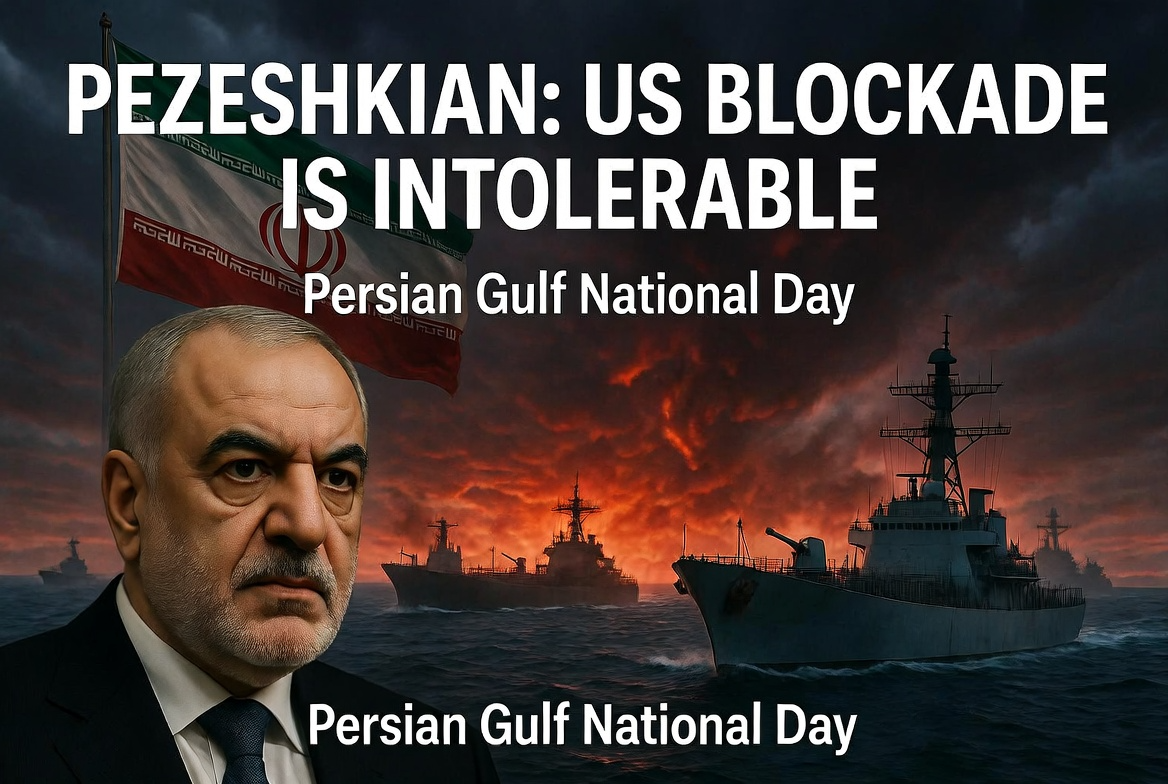
TEHRAN April 30, 2026 (Life News Agency) — Iranian President Masoud Pezeshkian sharply criticized the ongoing U.S. naval blockade of Iranian ports Thursday, framing it as an extension of military aggression against the Islamic Republic and declaring its continuation “intolerable.”
In a post on X (formerly Twitter), Pezeshkian stated: “The world has witnessed Iran’s tolerance and conciliation. What is being done under the guise of a naval blockade is an extension of military operations against a nation paying the price for its resistance and independence. Continuation of this oppressive approach is intolerable.”
The remarks were issued on Persian Gulf National Day, a date Iran marks annually to assert sovereignty over the strategic waterway. Pezeshkian also reiterated in official statements that any attempt to impose a maritime blockade or restrictions violates international law, poses a threat to regional stability, and is “doomed to fail.” He argued such measures would not enhance security but instead create tension and disrupt lasting stability in the Persian Gulf.
The U.S.-led naval blockade, enforced since mid-April 2026, targets vessels entering or exiting Iranian ports, including in the Strait of Hormuz. It aims to choke off Iran’s oil exports and pressure Tehran amid stalled nuclear negotiations and broader regional conflicts. U.S. Central Command has confirmed intercepting and redirecting dozens of vessels, describing the operation as impartial and ongoing.
Pezeshkian’s comments follow earlier calls for the blockade to be lifted as a precondition for any talks with Washington. Iranian officials have warned of potential responses while insisting the Persian Gulf’s security depends on cooperation among littoral states, not unilateral foreign actions.
The president’s statement drew immediate and widespread backlash on social media from Iranians inside and outside the country. Many accused the regime of hypocrisy, pointing to the same-day execution of 21-year-old karate champion Sasan Azadvar — a protester arrested during January unrest in Isfahan and hanged at Dastgerd Prison on charges including “enmity against God” (moharebeh).
Critics also highlighted Iran’s ongoing nationwide internet blackout, now in its third month, which has severely restricted access for most of the population and crippled businesses. Opponents called the blockade comments a distraction from domestic repression and economic hardship.
As tensions in the Gulf persist, the U.S. has signaled no immediate end to the blockade, while Iran maintains it will not negotiate under duress. The situation continues to raise concerns over global energy markets and maritime security in one of the world’s most vital oil chokepoints.
Life News Agency will continue to monitor developments.
About The Author