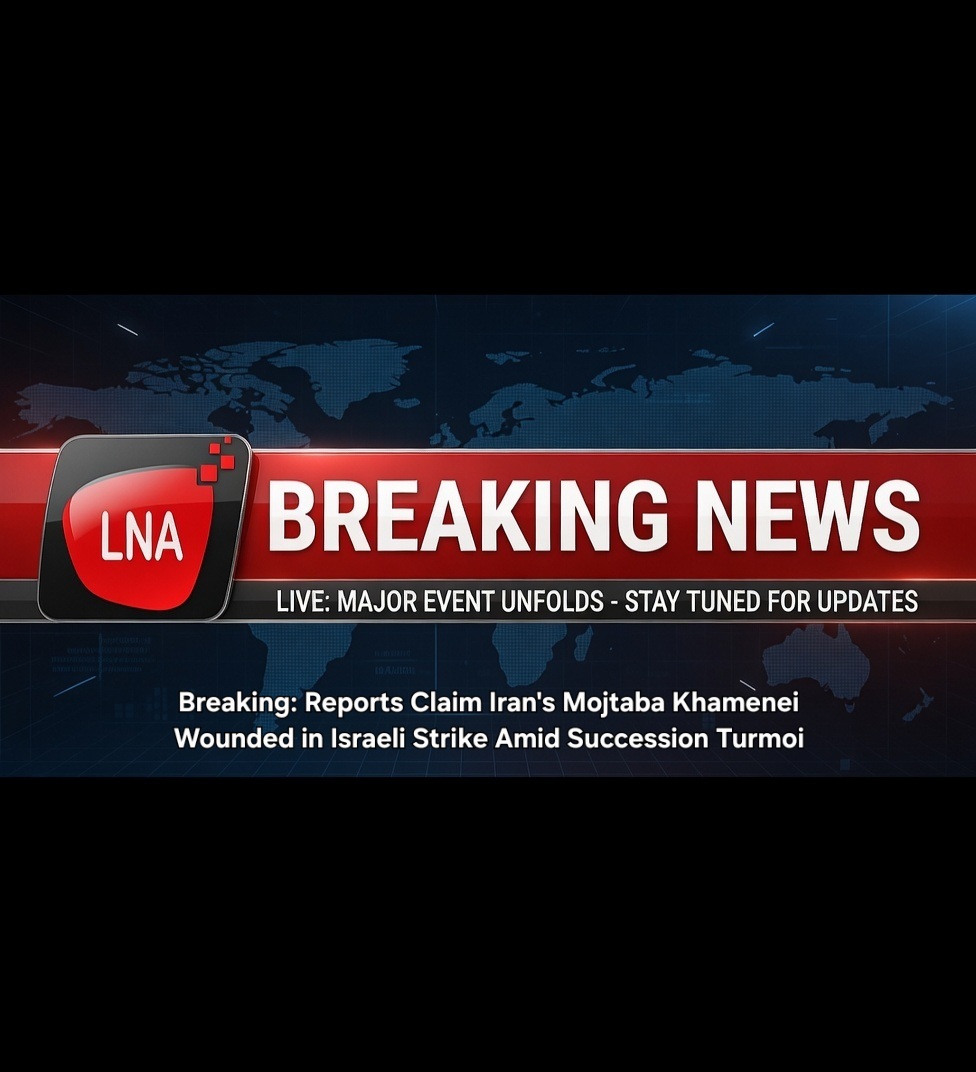
TEHRAN, IRAN March 7, 2026 – In a dramatic escalation of the ongoing conflict between Israel, the United States, and Iran, reports emerged on Saturday indicating that Mojtaba Khamenei, the 56-year-old son of Iran’s late Supreme Leader Ayatollah Ali Khamenei and a frontrunner to succeed him, was wounded during an Israeli air strike. The incident occurred as part of Israel’s “Lion’s Roar” military operation on February 28, 2026, which coincided with the U.S.-led “Operation Epic Fury.” This joint assault resulted in the death of Ayatollah Ali Khamenei and approximately 40 other high-ranking Iranian officials.
According to Israeli sources cited in media reports, Mojtaba survived what has been described as an assassination attempt but sustained injuries during the strike. Details on the severity of his wounds remain unclear, and it is uncertain whether he was targeted in the same attack that killed his father at the supreme leader’s compound in Tehran or in a separate operation. Tragically, Mojtaba’s wife, Zahra Haddad Adel, was reportedly among those killed in the strikes. Amid continued U.S. and Israeli missile barrages, Mojtaba is believed to have gone into hiding.
However, reports on Mojtaba’s status are conflicting. Some Iranian sources have told international media that he survived the attacks unscathed because he was not in Tehran at the time. Other accounts, including from semi-official Iranian outlets, initially affirmed his survival but later shifted narratives, with some even reporting his death alongside his father’s—claims that were subsequently contradicted. These discrepancies highlight the chaos and information warfare surrounding the Iranian leadership crisis.
The strikes that killed Ayatollah Ali Khamenei on February 28 have plunged Iran into its most significant leadership vacuum in decades. Iranian state media confirmed his death, describing it as occurring in his office-residence during the early hours of the assault. In response, Iran has launched retaliatory attacks on U.S. bases in the region, framing them as acts of self-defense.
Mojtaba Khamenei, a mid-ranking cleric with deep ties to the Islamic Revolutionary Guard Corps (IRGC), has long been viewed as a potential successor due to his hardline conservative views and anti-Western stance. Despite his father’s death, Iran’s Assembly of Experts—an 88-member body responsible for selecting the supreme leader—is reportedly set to convene virtually within the next 24 hours to decide on the succession. The assembly’s physical building in Qom was destroyed in subsequent Israeli strikes, forcing the shift to a remote meeting. However, internal divisions exist, with some members opposing Mojtaba’s appointment.
U.S. President Donald Trump has strongly condemned the possibility of Mojtaba ascending to power, labeling him a “lightweight” and stating that such a choice would be “unacceptable” to the United States. Trump emphasized that the U.S. seeks a new Iranian leader who will foster “harmony and peace,” while affirming that military operations will persist.
Israeli officials have described the strikes as necessary to “dominate the skies” and neutralize threats from the Islamic Republic. Meanwhile, Iranian authorities have mourned Ayatollah Khamenei’s death and vowed to rebuild leadership swiftly amid the crisis.
As tensions continue to mount, with reports of further assassination attempts on Iranian figures—including a strike on the residence of temporary leader Alireza Arafi—the region braces for potential further escalations. Life News Agency will continue to monitor developments in this rapidly evolving situation.
About The Author