PUTRAJAYA, MALAYSIA February 28. 2026 – — Malaysian Prime Minister Dato’ Seri Anwar Ibrahim has strongly condemned Israeli strikes on Iran and the accompanying United States military actions, warning that they have pushed the Middle East to “the edge of catastrophe”.
In a statement posted on X (formerly Twitter) this morning, Anwar described Israel’s initiation of the strikes as “a vile attempt to sabotage ongoing negotiations and to drag other nations into a conflict that could prove impossible to contain”.
“The Israeli strikes on Iran, and the American military action that has accompanied them, bring the Middle East to the edge of catastrophe,” he said.
Anwar called for “an immediate and unconditional cessation of hostilities” and urged Washington and Tehran to pursue a diplomatic off-ramp instead of further escalation.
He also appealed to the international community to “act with urgency and without double standards”.
The Prime Minister expressed deep concern over the safety of Malaysians currently in Iran and elsewhere in the region, adding that he would be contacting regional partners on immediate next steps to ensure their protection.
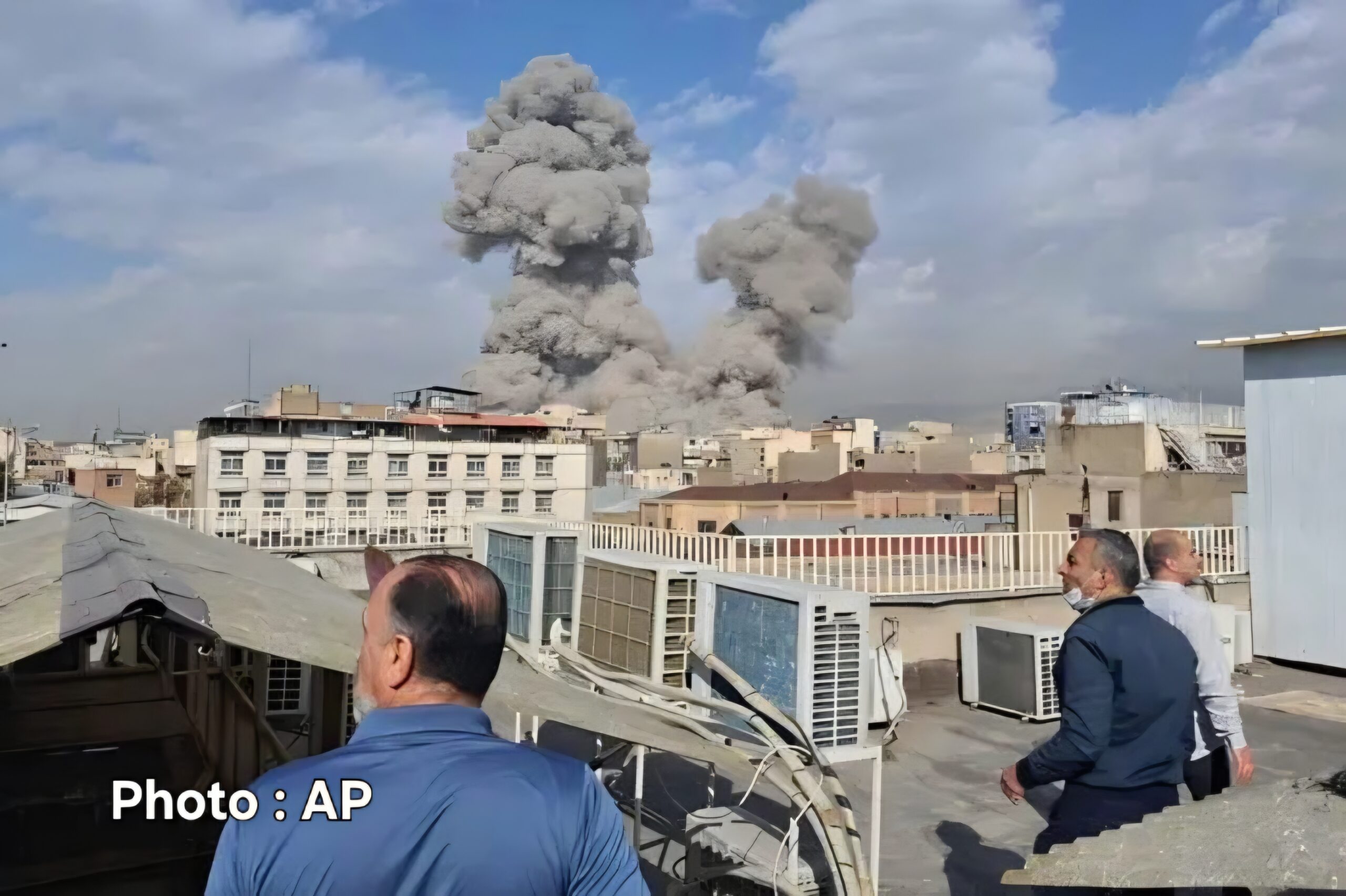
The statement was accompanied by an Associated Press photograph showing massive plumes of smoke rising over a city skyline, with civilians on a rooftop observing the scene — images widely circulated following reports of explosions in Tehran and other Iranian cities earlier today.
The remarks come hours after Israel and the United States launched coordinated pre-emptive strikes on Iranian targets. US President Donald Trump announced the beginning of “major combat operations” aimed at eliminating perceived threats from Iran’s nuclear and missile programmes. Iranian authorities have vowed a strong retaliation.
Malaysia has consistently advocated for peace and diplomacy in the Middle East, repeatedly calling for an end to violence and respect for international law.
Anwar’s latest intervention underscores Kuala Lumpur’s firm position against any actions that undermine fragile negotiations and risk a wider regional war.
About The Author