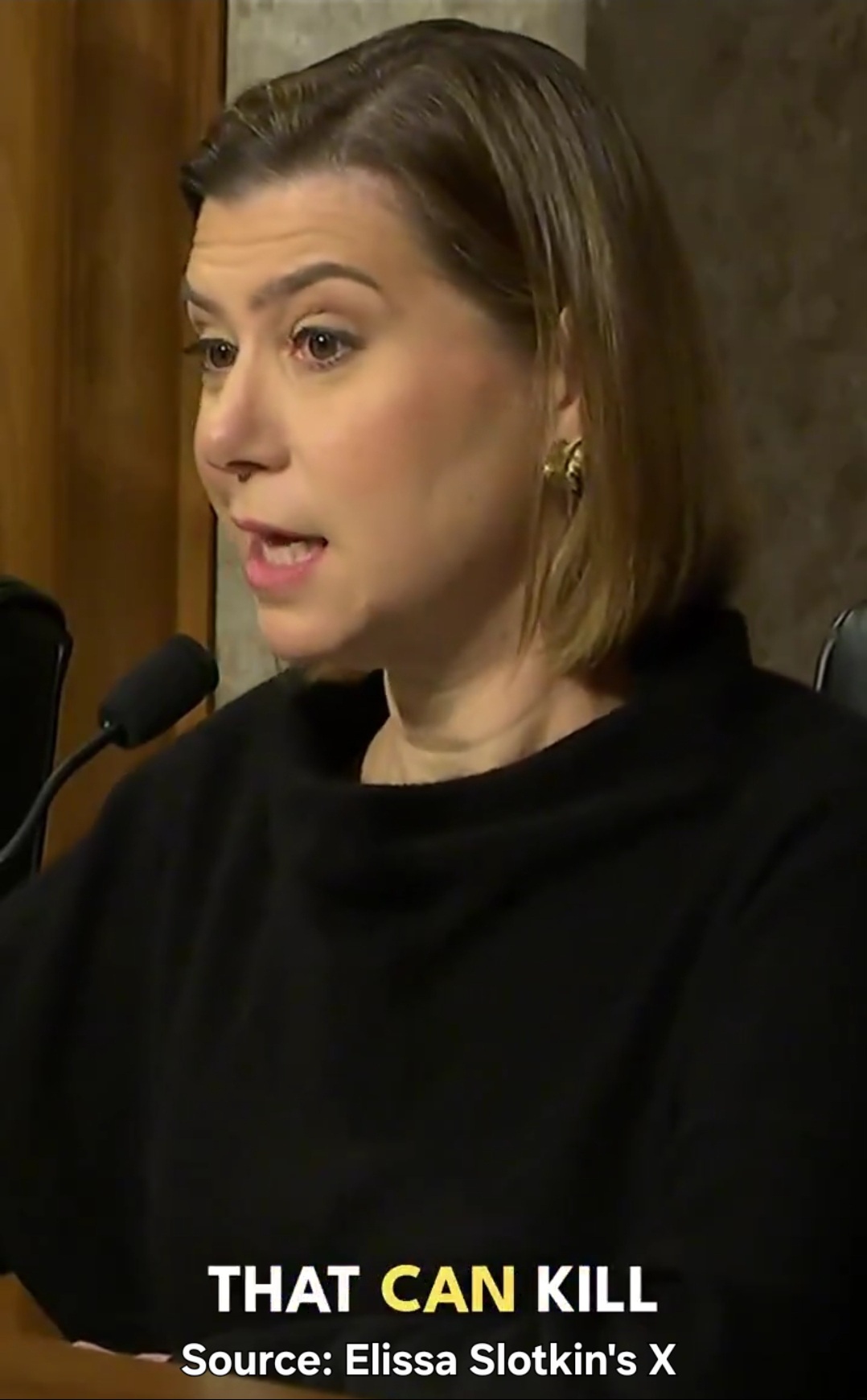
WASHINGTON, D.C. February 26, 2026 — U.S. Senator Elissa Slotkin (D-Mich.) strongly opposed allowing artificial intelligence systems to autonomously make lethal decisions in warfare or conduct mass surveillance on U.S. citizens, during remarks at a Senate Armed Services Committee hearing on weapons systems.
In a video clip she posted to X (formerly Twitter) on Thursday, Slotkin — a former CIA analyst with deep national security experience — stated:
“The average person does not think we should allow AI systems to get into war and kill people without a human being overseeing that. And I certainly don’t think any American wants AI-assisted mass surveillance on the American people.”
Her comments come as tensions rise between the Pentagon and leading AI firms over the military use of advanced models. Reports indicate Defense Secretary Pete Hegseth has pressured Anthropic, the company behind the Claude AI model, to remove safeguards that currently prohibit its technology from being used in fully autonomous “killer drones” or large-scale domestic surveillance programs. Anthropic’s CEO Dario Amodei has publicly maintained “bright red lines” against both applications, citing ethical and safety concerns.
Slotkin’s statement aligns with growing calls from lawmakers and tech leaders for “meaningful human control” over lethal autonomous weapons systems (LAWS). The Michigan Democrat has long advocated for responsible AI development, emphasizing the need to protect civil liberties while advancing U.S. technological superiority against adversaries like China.
The senator, who previously served in senior intelligence roles under multiple administrations, has also raised alarms about potential misuse of U.S. intelligence capabilities against American citizens.
Her remarks Thursday underscore a broader congressional debate on regulating AI in national security, as the U.S. military accelerates integration of AI into drones, cyber operations, and decision-support systems.
Slotkin’s full video statement is available on her official X account.
No further details on specific legislation were immediately released following the hearing.
About The Author